Acetyl-L-Carnitine 250 mg - 60 Vegetarian Capsules
Description
Acetyl-L-Carnitine 250 mg has been discontinued by the manufacturer.
The acetyl derivative of L-carnitine. Acetyl-L-carnitine is involved in the metabolism of protein, carbohydrates, and fats, as well as the conversion of fats into energy.* Acetyl-L-carnitine crosses the blood-brain barrier more readily than L-carnitine. It has antioxidant properties and supports glutathione and CoQ10 levels.* Free form amino acid, high purity, well-tolerated.
- Crucial for the metabolism of protein and carbohydrates, and converting fats into energy*
- Positively affects brain chemistry, supporting memory, mood, and energy production*
- Provides antioxidant protection for the nervous system
Ingredients
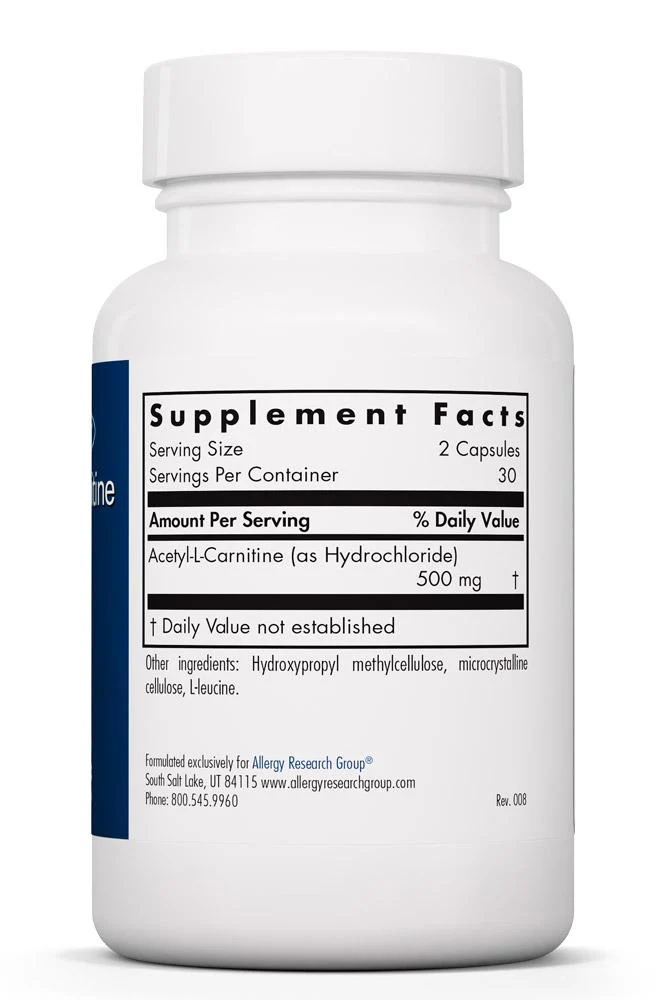
| Serving Size: 2 Capsules | Amount Per Serving |
| Acetyl-L-Carnitine (as Hydrochloride) | 500 mg |
Other Ingredients: Hydroxypropyl methylcellulose, microcrystalline cellulose, L-leucine.
Suggested Use
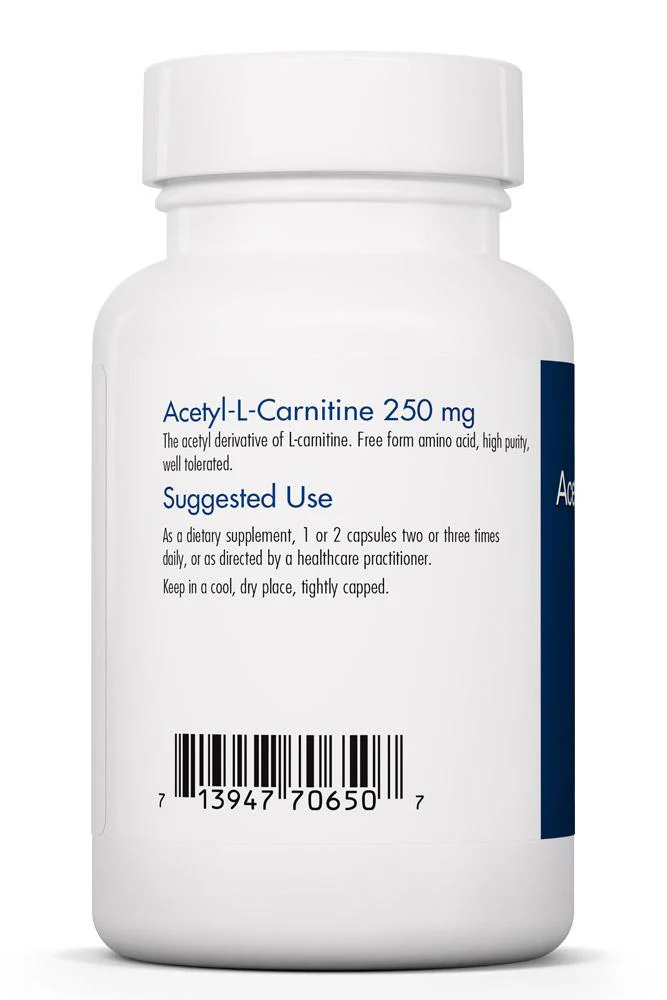
As a dietary supplement, 1 or 2 capsules two or three times daily, or as directed by a health practitioner.
More Info
Acetylcarnitine (acetyl-L-carnitine, ALC) is the acetyl-derivative of carnitine. It is a nutrient and a naturally occurring metabolite that is involved in lipid, carbohydrate, and protein metabolism. Though closely related chemically to L-carnitine, which is a semi-essential nutrient, ALC surpasses the metabolic potency of carnitine. ALC is a source of acetyl groups that facilitate energetic pathways and which can be combined with coenzyme A (CoA), metabolized from our foods, to generate acetyl-CoA. Carnitine’s major role is to link up with fatty acids and transport them into the mitochondria, the cells’ “powerhouses” for energy production. Once within the mitochondria, the fatty acids are first “activated” by CoA, then chipped into two-carbon fragments that are spliced onto CoA to become acetyl-CoA. The acetyl-CoA molecules can then feed into the tricarboxylic acid cycle that generates chemical bond energy in the form of ATP. However, acetyl-CoA is an important “branch point” metabolite, and this is probably what makes ALC metabolically so potent.
Original: $29.69
-70%$29.69
$8.91Product Information
Product Information
Shipping & Returns
Shipping & Returns
Description
Description
Acetyl-L-Carnitine 250 mg has been discontinued by the manufacturer.
The acetyl derivative of L-carnitine. Acetyl-L-carnitine is involved in the metabolism of protein, carbohydrates, and fats, as well as the conversion of fats into energy.* Acetyl-L-carnitine crosses the blood-brain barrier more readily than L-carnitine. It has antioxidant properties and supports glutathione and CoQ10 levels.* Free form amino acid, high purity, well-tolerated.
- Crucial for the metabolism of protein and carbohydrates, and converting fats into energy*
- Positively affects brain chemistry, supporting memory, mood, and energy production*
- Provides antioxidant protection for the nervous system
Ingredients
| Serving Size: 2 Capsules | Amount Per Serving |
| Acetyl-L-Carnitine (as Hydrochloride) | 500 mg |
Other Ingredients: Hydroxypropyl methylcellulose, microcrystalline cellulose, L-leucine.
Suggested Use
As a dietary supplement, 1 or 2 capsules two or three times daily, or as directed by a health practitioner.
More Info
Acetylcarnitine (acetyl-L-carnitine, ALC) is the acetyl-derivative of carnitine. It is a nutrient and a naturally occurring metabolite that is involved in lipid, carbohydrate, and protein metabolism. Though closely related chemically to L-carnitine, which is a semi-essential nutrient, ALC surpasses the metabolic potency of carnitine. ALC is a source of acetyl groups that facilitate energetic pathways and which can be combined with coenzyme A (CoA), metabolized from our foods, to generate acetyl-CoA. Carnitine’s major role is to link up with fatty acids and transport them into the mitochondria, the cells’ “powerhouses” for energy production. Once within the mitochondria, the fatty acids are first “activated” by CoA, then chipped into two-carbon fragments that are spliced onto CoA to become acetyl-CoA. The acetyl-CoA molecules can then feed into the tricarboxylic acid cycle that generates chemical bond energy in the form of ATP. However, acetyl-CoA is an important “branch point” metabolite, and this is probably what makes ALC metabolically so potent.