Electrolyte Sticks
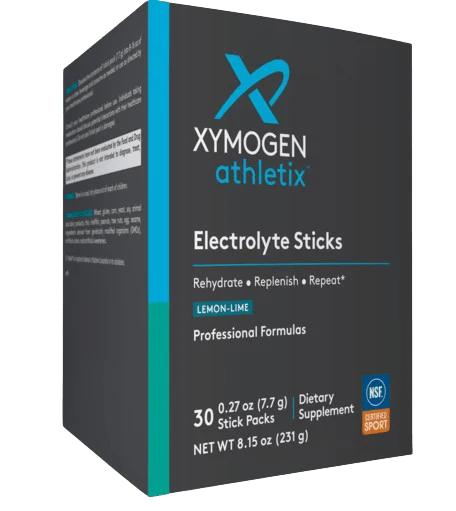
Xymogen Electrolyte Sticks
Rehydrate, Replenish, Repeat
Electrolyte Sticks is a tangy lemon-lime drink designed to support rehydration by replenishing electrolytes that are vital to fluid balance. Whether you’re a trained athlete or a weekend warrior, this sugar-free, vitamin C-infused blend helps maintain optimal cellular hydration and supports the replacement of electrolytes lost during intense physical activity or exposure to extreme weather conditions. The NSF Certified for Sport® designation ensures this product does not contain substances banned by major athletic organizations.
Key Benefits:
- Supports Replenishment of Electrolytes
- Supports Adequate Hydration
- Replenishes electrolytes that are Vital to Fluid Balance
Ingredients
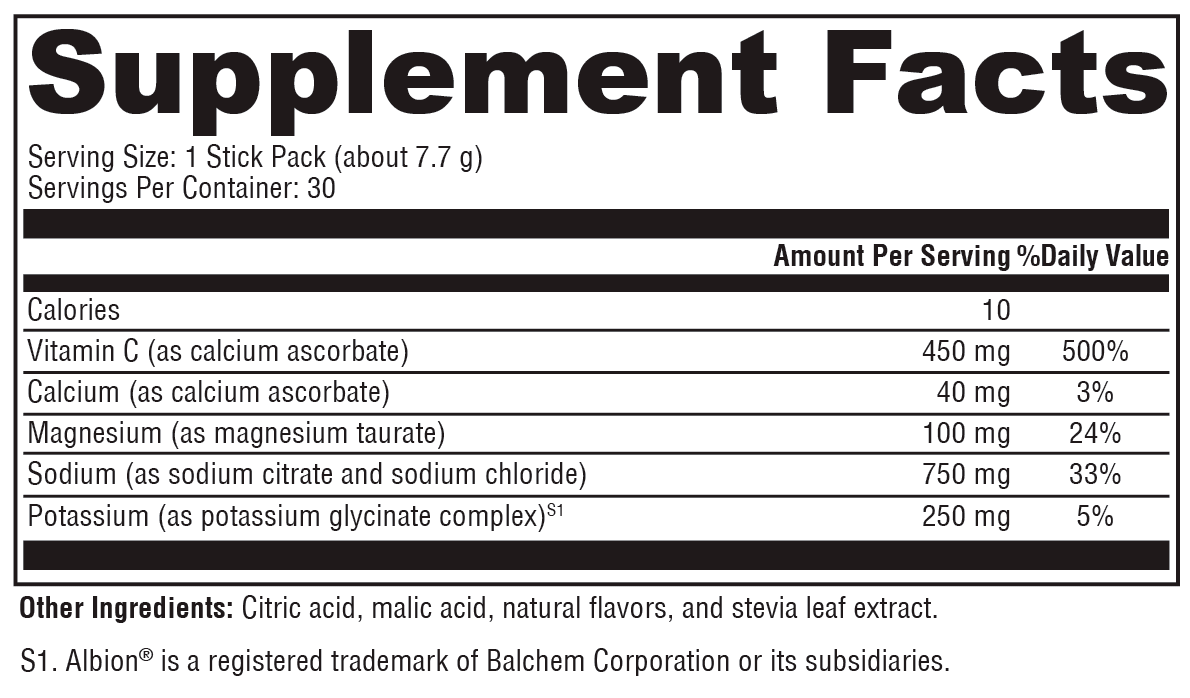
| Serving Size: 1 Stick Pack (about 7.7 g) | Amount/Serving |
| Calories | 10 |
| Vitamin C (as calcium ascorbate) | 450 mg |
| Calcium (as calcium ascorbate) | 40 mg |
| Magnesium (as magnesium taurate) | 100 mg |
| Sodium (as sodium citrate and sodium chloride) | 750 mg |
| Potassium (as potassium glycinate complex) | 250 mg |
Other Ingredients: Citric acid, malic acid, natural flavors, and stevia leaf extract.
Does Not Contain: Dairy, eggs, gluten, shellfish, soy, tree nuts, wheat, peanuts, fish, yeast, GMO, sesame, animal products, corn.
Suggested Use
Dissolve the contents of 1 stick pack (7.7 g) into 8-16 oz of water or other beverage and consume as needed, or use as directed by your healthcare professional.
Warning: Consult your healthcare professional before use. Individuals taking medication should discuss potential interactions with their healthcare professional. Do not use if the stick pack is damaged.
Storage: Store in a cool, dry place out of reach of children.
More Info.
The human body is comprised of about 60% water, compartmentalized into intracellular and extracellular fluids and blood. Electrolytes are essential minerals that dissociate in water into positively charged ions (cations)and negatively charged ions (anions), playing a vital role in physiological processes such as maintaining fluid balance. Water flows with the movement of electrolytes; if a fluid compartment has a high concentration of electrolytes, fluid moves out. When an individual is in a state of euhydration, which is the state of optimal total body water content at which the body's systems function most efficiently, intra- and extracellular fluid volumes are maintained within a minimal physiological adjustment of ± 1%. Large reductions or increases in body water, resulting in an imbalance of electrolytes, can lead to adverse health consequences. Some of the most common
symptoms of an electrolyte imbalance include headache, muscle cramping, increased thirst, poor endurance, salt cravings, irritability, brain fog, and irregular heartbeat.
The urinary system plays a crucial role in managing the body’s hydration, and one of the primary functions of the kidneys is to maintain electrolyte balance by filtering electrolytes and water from the blood, reabsorbing what is needed, and excreting excess through
the urine. The human body also loses fluid through gastrointestinal activity, respiration, and perspiration, processes that are generally offset by routine dietary and fluid intake. Perspiration, or sweating, is a normal physiological process for heat dissipation that results in the loss of the electrolytes sodium and chloride, in addition to relatively small amounts of other minerals, including potassium, magnesium, and calcium. Exposure to high ambient temperatures and/or extreme physical exertion increases thermoregulatory demands, which can lead to increased sweat production and fluid loss beyond
typical levels, placing an individual at potential risk for dehydration
and electrolyte imbalance.
Under normal circumstances, most hydration and electrolyte requirements are met through a typical diet and by consuming water when thirsty. However, individuals with high sweat rates, those engaging in intense physical activity or exercise sessions for longer than 1 hour, those exposed to extreme weather and environmental conditions, such as individuals who work long hours outdoors, or those with certain chronic conditions, may require additional support for rehydration.
Sodium (Na)
Sodium is an osmotically active cation responsible for maintaining extracellular fluid volume. It is needed to maintain blood pressure and blood volume, and to help red blood cells move oxygen. An individual’s need for sodium to support hydration varies widely
and is impacted by sweat rate, sodium content of sweat, exercise
intensity, and environmental conditions. Major sports nutrition organizations recommend sodium ingestion during prolonged exercise for those with high sweat rates and those who are considered “salty sweaters.” Sports drinks containing sodium in the range of 10-30 mmol (230-690 mg/L) have been suggested to result in optimal absorption and prevention of hyponatremia, a low sodium level in the blood. Additionally, beverages with moderate to high sodium content (~1380 mg/L) have been shown to enhance fluid restoration postexercise.
The beverage hydration index (BHI) is a tool used to assess fluid retention and analyze contributions of key beverage components, such as macronutrients and electrolytes. Studies have demonstrated that BHI is not influenced by biological sex or body mass; however, responses to fluid intake under euhydrated, rested conditions remain
largely unexplored. In a double-blind trial designed to assess BHI response, 3 cohorts of young, healthy, active men (N = 36) ingested beverages containing different concentrations of either sucrose, sodium, or caffeine under euhydrated conditions. Urine output and net fluid balance were calculated to determine BHI. The control drink
contained 161 mg/L (7 mmol/L) of sodium, followed by 345 mg/L (15 mmol/L), 621 mg/L (27 mmol/L), and 1196 mg/L (52 mmol/L). It was found that BHI was greater in the beverages with the 2 highest sodium levels. Sucrose also increased BHI, but caffeine had no effect. These results suggest that sodium is one of the key drivers promoting
differences in fluid delivery and the repletion potential of beverages.
In a randomized, controlled study designed to assess the potential of an oral salt supplementation to improve performance. It was hypothesized that salt would enhance body water and electrolyte preservation and thus improve performance. Experienced triathletes (N = 26) were given a salt beverage containing approximately 2.6 g of sodium, 3.97 g of chloride, 756 mg of potassium, and 132 mg of magnesium or cellulose placebo before and during a competition. The total race time was lower in the test group, which also demonstrated less reduction in body mass and higher post-race serum sodium
concentrations, suggesting that salt consumption increases physical performance and electrolyte concentration during intense exercise.
The 750 mg (33% DV) of sodium per serving in this formula is present as sodium citrate and sodium chloride (NaCl). Sodium chloride is commonly known as table salt and, when ingested, dissociates into and absorbs as sodium (positively charged) and chloride (negatively charged) electrolyte ions.
Chloride (Cl)
Chloride is the principal anion in extracellular fluid and is tightly regulated by the kidneys. After sodium, chloride is the most abundant electrolyte in serum and contributes to many functions, including the maintenance of acid-base balance, muscle and nervous system activity, the movement of water and solutes between fluid compartments, and it is a necessary component of gastric juice. Sodium and chloride are the most concentrated electrolytes in perspiration, with chloride losses influenced by sweat rate, degree of
heat acclimation, and age. In skeletal muscle, chloride regulates cell excitability through its movement across cell membranes as mediated by various chloride channels and transporters. Because chloride loss tends to parallel that of sodium, conditions associated
with sodium depletion, such as persistent sweating or prolonged diarrhea or vomiting, will also cause chloride loss. Chloride replenishment plays a pivotal role, working along with sodium and potassium, in the maintenance of fluid balance and support of hydration. This formula contains an estimated 580 mg of chloride per serving from NaCl.
Potassium (K)
Potassium is an essential mineral found in all body tissues and is required for normal cell function. It has many physiological roles, including being necessary for muscle contractions and nerve signaling. As the principal intracellular cation, the majority of potassium (~90%) resides within cells, with a small percentage in the extracellular fluid, and the remainder in bone and cartilage. Potassium homeostasis is tightly controlled in coordination with sodium via the sodium-potassium transporter (Na-K-ATPase), which maintains the intracellular-to-extracellular gradient necessary for normal cellular function. The kidneys play a central role by adjusting potassium excretion in response to dietary intake. Given its high intracellular concentration, alterations in extracellular potassium that occur with renal impairment, metabolic stress, or fluid loss can have
significant consequences to potassium balance, impacting muscle and nerve function. During strenuous physical activity, particularly in heat, acute shifts in potassium may occur as approximately 68% of intracellular potassium is stored in skeletal muscle. Additionally,
potassium loss through sweat may increase from elevated sweat rates and enhanced secretion by the sweat glands in hot environments.
This formula contains 250 mg (5% DV) of potassium and an estimated 470 mg of glycine per serving as a potassium glycinate complex. Glycine is a proteinogenic amino acid that plays a multifaceted role in muscle function and may play a role in nutrient absorption. As the smallest amino acid, glycine can fit into hydrophilic or hydrophobic environments and has been studied for its hydration and aggregation capabilities at the cellular level. Further research is needed to verify the role of supplemental glycine complexed with potassium as
a means to enhance electrolyte transport across cell membranes to potentially support hydration.
Calcium (Ca)
Calcium is the most abundant mineral stored in the body and has many significant physiological roles. As an electrolyte, it is predominantly an extracellular cation. The small, ionized pool of calcium in the extracellular fluid helps with many cellular processes,
including muscle contraction, blood clotting, and nerve signal transmission. Calcium levels are closely regulated by the parathyroid hormone (PTH) and vitamin D, as well as the kidneys, to maintain the narrow range for optimal function.
During periods of exercise, calcium balance shifts resulting in changes in serum calcium ion concentration. Although a small amount of calcium is lost through sweat, much of the movement appears to be internal and occurs via mechanisms that are not yet fully understood. Notably, some researchers have observed decreases in serum calcium concentration within the first 15 minutes of exercise, before the onset of sweating. This decline has been linked to an increase in PTH, which, in turn, stimulates bone resorption to restore serum calcium concentration.
While some studies examining serum calcium shifts during exercise24 use doses near the daily value (1300 mg), most electrolyte replenishment formulas contain little to no calcium, as sweat losses are typically minimal. The 40 mg (3% DV) of calcium per serving in this formula is present as calcium ascorbate. This form is included based on the utility of calcium as an electrolyte and because it is a source of vitamin C. High-intensity or prolonged exercise impacts muscle function, resulting in increased oxidative stress and
inflammation. Antioxidant nutrients such as vitamin C may inhibit the signaling pathways involved in triggering the oxidative stress that occurs in response to exercise. This formula features 450 mg (500% DV) of vitamin C per serving.
Magnesium (Mg)
Magnesium is the fourth most abundant mineral in the body and is necessary for many physiological functions. As an electrolyte, it is an intracellular ion and is mainly involved in adenosine triphosphate (ATP) metabolism, muscle and neurological function, and neurotransmitter release. The calcium transport system that regulates muscle contraction is dependent on the presence of intracellular magnesium. Approximately half of the body’s magnesium is stored in bone, and the other half is inside cells and organs, with less than 2% in the bloodstream. Cellular levels of magnesium are tightly controlled and dependent on dietary intake, absorption, renal excretion, bone storage, and tissue demand.
During physical activity, magnesium is transferred to the tissues where energy production occurs. The extent and direction of magnesium transfer are dependent on the frequency and intensity of exercise. Muscle activity in particular results in plasma and cellular
concentration shifts in magnesium, resulting in an increased demand for magnesium during strenuous periods of exercise and during hot conditions.
This formula delivers 100 mg (24% DV) of magnesium and an estimated 1,000 mg of taurine in the form of a magnesium taurate complex. Supplemental magnesium is commonly chelated with amino acids for improved bioavailability. Taurine, a sulfur-containing amino acid that is abundant in skeletal muscle, is involved in various metabolic and physiological processes and has been studied for its potential impact on athletic performance. Although not fully understood, exercise-induced increases in plasma taurine, likely due to the release of taurine from muscles, may modulate the concentration of specific ion transporters and channels, supporting ATP production, ion regulation, and muscle performance adaptations. Further research is needed to verify the role of supplemental taurine as a means to enhance cellular ion transport.
Electrolyte Sticks is a carbohydrate-free formula delivering sodium—along with a relevant blend of key electrolytes, including potassium, magnesium, calcium, and chloride—to support optimal cellular hydration and replenish losses from perspiration. Studies have indicated that electrolyte solutions, whether carbohydrate-free, sucrose-based, or amino acid-enhanced, demonstrate a higher BHI than water, with electrolytes as the primary drivers of fluid balance and hydration. This formula is intentionally formulated so that each ingredient and its molecular form serve a physiologically relevant role in supporting the body during periods of increased hydration demand.
Original: $49.99
-70%$49.99
$15.00Product Information
Product Information
Shipping & Returns
Shipping & Returns
Description
Xymogen Electrolyte Sticks
Rehydrate, Replenish, Repeat
Electrolyte Sticks is a tangy lemon-lime drink designed to support rehydration by replenishing electrolytes that are vital to fluid balance. Whether you’re a trained athlete or a weekend warrior, this sugar-free, vitamin C-infused blend helps maintain optimal cellular hydration and supports the replacement of electrolytes lost during intense physical activity or exposure to extreme weather conditions. The NSF Certified for Sport® designation ensures this product does not contain substances banned by major athletic organizations.
Key Benefits:
- Supports Replenishment of Electrolytes
- Supports Adequate Hydration
- Replenishes electrolytes that are Vital to Fluid Balance
Ingredients
| Serving Size: 1 Stick Pack (about 7.7 g) | Amount/Serving |
| Calories | 10 |
| Vitamin C (as calcium ascorbate) | 450 mg |
| Calcium (as calcium ascorbate) | 40 mg |
| Magnesium (as magnesium taurate) | 100 mg |
| Sodium (as sodium citrate and sodium chloride) | 750 mg |
| Potassium (as potassium glycinate complex) | 250 mg |
Other Ingredients: Citric acid, malic acid, natural flavors, and stevia leaf extract.
Does Not Contain: Dairy, eggs, gluten, shellfish, soy, tree nuts, wheat, peanuts, fish, yeast, GMO, sesame, animal products, corn.
Suggested Use
Dissolve the contents of 1 stick pack (7.7 g) into 8-16 oz of water or other beverage and consume as needed, or use as directed by your healthcare professional.
Warning: Consult your healthcare professional before use. Individuals taking medication should discuss potential interactions with their healthcare professional. Do not use if the stick pack is damaged.
Storage: Store in a cool, dry place out of reach of children.
More Info.
The human body is comprised of about 60% water, compartmentalized into intracellular and extracellular fluids and blood. Electrolytes are essential minerals that dissociate in water into positively charged ions (cations)and negatively charged ions (anions), playing a vital role in physiological processes such as maintaining fluid balance. Water flows with the movement of electrolytes; if a fluid compartment has a high concentration of electrolytes, fluid moves out. When an individual is in a state of euhydration, which is the state of optimal total body water content at which the body's systems function most efficiently, intra- and extracellular fluid volumes are maintained within a minimal physiological adjustment of ± 1%. Large reductions or increases in body water, resulting in an imbalance of electrolytes, can lead to adverse health consequences. Some of the most common
symptoms of an electrolyte imbalance include headache, muscle cramping, increased thirst, poor endurance, salt cravings, irritability, brain fog, and irregular heartbeat.
The urinary system plays a crucial role in managing the body’s hydration, and one of the primary functions of the kidneys is to maintain electrolyte balance by filtering electrolytes and water from the blood, reabsorbing what is needed, and excreting excess through
the urine. The human body also loses fluid through gastrointestinal activity, respiration, and perspiration, processes that are generally offset by routine dietary and fluid intake. Perspiration, or sweating, is a normal physiological process for heat dissipation that results in the loss of the electrolytes sodium and chloride, in addition to relatively small amounts of other minerals, including potassium, magnesium, and calcium. Exposure to high ambient temperatures and/or extreme physical exertion increases thermoregulatory demands, which can lead to increased sweat production and fluid loss beyond
typical levels, placing an individual at potential risk for dehydration
and electrolyte imbalance.
Under normal circumstances, most hydration and electrolyte requirements are met through a typical diet and by consuming water when thirsty. However, individuals with high sweat rates, those engaging in intense physical activity or exercise sessions for longer than 1 hour, those exposed to extreme weather and environmental conditions, such as individuals who work long hours outdoors, or those with certain chronic conditions, may require additional support for rehydration.
Sodium (Na)
Sodium is an osmotically active cation responsible for maintaining extracellular fluid volume. It is needed to maintain blood pressure and blood volume, and to help red blood cells move oxygen. An individual’s need for sodium to support hydration varies widely
and is impacted by sweat rate, sodium content of sweat, exercise
intensity, and environmental conditions. Major sports nutrition organizations recommend sodium ingestion during prolonged exercise for those with high sweat rates and those who are considered “salty sweaters.” Sports drinks containing sodium in the range of 10-30 mmol (230-690 mg/L) have been suggested to result in optimal absorption and prevention of hyponatremia, a low sodium level in the blood. Additionally, beverages with moderate to high sodium content (~1380 mg/L) have been shown to enhance fluid restoration postexercise.
The beverage hydration index (BHI) is a tool used to assess fluid retention and analyze contributions of key beverage components, such as macronutrients and electrolytes. Studies have demonstrated that BHI is not influenced by biological sex or body mass; however, responses to fluid intake under euhydrated, rested conditions remain
largely unexplored. In a double-blind trial designed to assess BHI response, 3 cohorts of young, healthy, active men (N = 36) ingested beverages containing different concentrations of either sucrose, sodium, or caffeine under euhydrated conditions. Urine output and net fluid balance were calculated to determine BHI. The control drink
contained 161 mg/L (7 mmol/L) of sodium, followed by 345 mg/L (15 mmol/L), 621 mg/L (27 mmol/L), and 1196 mg/L (52 mmol/L). It was found that BHI was greater in the beverages with the 2 highest sodium levels. Sucrose also increased BHI, but caffeine had no effect. These results suggest that sodium is one of the key drivers promoting
differences in fluid delivery and the repletion potential of beverages.
In a randomized, controlled study designed to assess the potential of an oral salt supplementation to improve performance. It was hypothesized that salt would enhance body water and electrolyte preservation and thus improve performance. Experienced triathletes (N = 26) were given a salt beverage containing approximately 2.6 g of sodium, 3.97 g of chloride, 756 mg of potassium, and 132 mg of magnesium or cellulose placebo before and during a competition. The total race time was lower in the test group, which also demonstrated less reduction in body mass and higher post-race serum sodium
concentrations, suggesting that salt consumption increases physical performance and electrolyte concentration during intense exercise.
The 750 mg (33% DV) of sodium per serving in this formula is present as sodium citrate and sodium chloride (NaCl). Sodium chloride is commonly known as table salt and, when ingested, dissociates into and absorbs as sodium (positively charged) and chloride (negatively charged) electrolyte ions.
Chloride (Cl)
Chloride is the principal anion in extracellular fluid and is tightly regulated by the kidneys. After sodium, chloride is the most abundant electrolyte in serum and contributes to many functions, including the maintenance of acid-base balance, muscle and nervous system activity, the movement of water and solutes between fluid compartments, and it is a necessary component of gastric juice. Sodium and chloride are the most concentrated electrolytes in perspiration, with chloride losses influenced by sweat rate, degree of
heat acclimation, and age. In skeletal muscle, chloride regulates cell excitability through its movement across cell membranes as mediated by various chloride channels and transporters. Because chloride loss tends to parallel that of sodium, conditions associated
with sodium depletion, such as persistent sweating or prolonged diarrhea or vomiting, will also cause chloride loss. Chloride replenishment plays a pivotal role, working along with sodium and potassium, in the maintenance of fluid balance and support of hydration. This formula contains an estimated 580 mg of chloride per serving from NaCl.
Potassium (K)
Potassium is an essential mineral found in all body tissues and is required for normal cell function. It has many physiological roles, including being necessary for muscle contractions and nerve signaling. As the principal intracellular cation, the majority of potassium (~90%) resides within cells, with a small percentage in the extracellular fluid, and the remainder in bone and cartilage. Potassium homeostasis is tightly controlled in coordination with sodium via the sodium-potassium transporter (Na-K-ATPase), which maintains the intracellular-to-extracellular gradient necessary for normal cellular function. The kidneys play a central role by adjusting potassium excretion in response to dietary intake. Given its high intracellular concentration, alterations in extracellular potassium that occur with renal impairment, metabolic stress, or fluid loss can have
significant consequences to potassium balance, impacting muscle and nerve function. During strenuous physical activity, particularly in heat, acute shifts in potassium may occur as approximately 68% of intracellular potassium is stored in skeletal muscle. Additionally,
potassium loss through sweat may increase from elevated sweat rates and enhanced secretion by the sweat glands in hot environments.
This formula contains 250 mg (5% DV) of potassium and an estimated 470 mg of glycine per serving as a potassium glycinate complex. Glycine is a proteinogenic amino acid that plays a multifaceted role in muscle function and may play a role in nutrient absorption. As the smallest amino acid, glycine can fit into hydrophilic or hydrophobic environments and has been studied for its hydration and aggregation capabilities at the cellular level. Further research is needed to verify the role of supplemental glycine complexed with potassium as
a means to enhance electrolyte transport across cell membranes to potentially support hydration.
Calcium (Ca)
Calcium is the most abundant mineral stored in the body and has many significant physiological roles. As an electrolyte, it is predominantly an extracellular cation. The small, ionized pool of calcium in the extracellular fluid helps with many cellular processes,
including muscle contraction, blood clotting, and nerve signal transmission. Calcium levels are closely regulated by the parathyroid hormone (PTH) and vitamin D, as well as the kidneys, to maintain the narrow range for optimal function.
During periods of exercise, calcium balance shifts resulting in changes in serum calcium ion concentration. Although a small amount of calcium is lost through sweat, much of the movement appears to be internal and occurs via mechanisms that are not yet fully understood. Notably, some researchers have observed decreases in serum calcium concentration within the first 15 minutes of exercise, before the onset of sweating. This decline has been linked to an increase in PTH, which, in turn, stimulates bone resorption to restore serum calcium concentration.
While some studies examining serum calcium shifts during exercise24 use doses near the daily value (1300 mg), most electrolyte replenishment formulas contain little to no calcium, as sweat losses are typically minimal. The 40 mg (3% DV) of calcium per serving in this formula is present as calcium ascorbate. This form is included based on the utility of calcium as an electrolyte and because it is a source of vitamin C. High-intensity or prolonged exercise impacts muscle function, resulting in increased oxidative stress and
inflammation. Antioxidant nutrients such as vitamin C may inhibit the signaling pathways involved in triggering the oxidative stress that occurs in response to exercise. This formula features 450 mg (500% DV) of vitamin C per serving.
Magnesium (Mg)
Magnesium is the fourth most abundant mineral in the body and is necessary for many physiological functions. As an electrolyte, it is an intracellular ion and is mainly involved in adenosine triphosphate (ATP) metabolism, muscle and neurological function, and neurotransmitter release. The calcium transport system that regulates muscle contraction is dependent on the presence of intracellular magnesium. Approximately half of the body’s magnesium is stored in bone, and the other half is inside cells and organs, with less than 2% in the bloodstream. Cellular levels of magnesium are tightly controlled and dependent on dietary intake, absorption, renal excretion, bone storage, and tissue demand.
During physical activity, magnesium is transferred to the tissues where energy production occurs. The extent and direction of magnesium transfer are dependent on the frequency and intensity of exercise. Muscle activity in particular results in plasma and cellular
concentration shifts in magnesium, resulting in an increased demand for magnesium during strenuous periods of exercise and during hot conditions.
This formula delivers 100 mg (24% DV) of magnesium and an estimated 1,000 mg of taurine in the form of a magnesium taurate complex. Supplemental magnesium is commonly chelated with amino acids for improved bioavailability. Taurine, a sulfur-containing amino acid that is abundant in skeletal muscle, is involved in various metabolic and physiological processes and has been studied for its potential impact on athletic performance. Although not fully understood, exercise-induced increases in plasma taurine, likely due to the release of taurine from muscles, may modulate the concentration of specific ion transporters and channels, supporting ATP production, ion regulation, and muscle performance adaptations. Further research is needed to verify the role of supplemental taurine as a means to enhance cellular ion transport.
Electrolyte Sticks is a carbohydrate-free formula delivering sodium—along with a relevant blend of key electrolytes, including potassium, magnesium, calcium, and chloride—to support optimal cellular hydration and replenish losses from perspiration. Studies have indicated that electrolyte solutions, whether carbohydrate-free, sucrose-based, or amino acid-enhanced, demonstrate a higher BHI than water, with electrolytes as the primary drivers of fluid balance and hydration. This formula is intentionally formulated so that each ingredient and its molecular form serve a physiologically relevant role in supporting the body during periods of increased hydration demand.