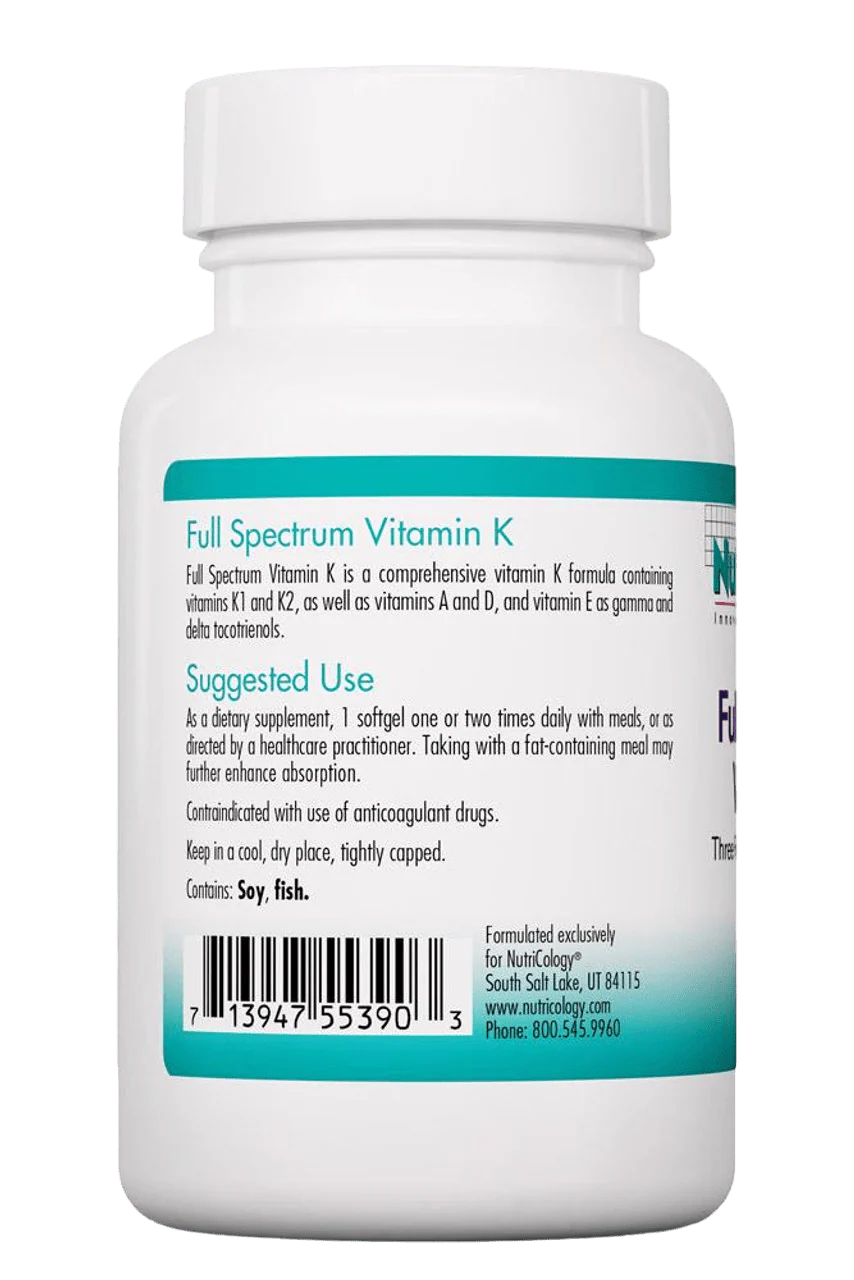
Full Spectrum Vitamin K
NutriCology Full Spectrum Vitamin K
Three Forms of K with A, D, and E
Full Spectrum Vitamin K is a comprehensive vitamin K formula containing three forms of vitamin K, as well as representative forms of the other fat-soluble vitamins, vitamins A and D, and vitamin E as gamma and delta tocotrienols. Vitamin D and K are particularly typical deficiencies, due to inadequate sun exposure (vitamin D) and low amounts in the diet (both). Delta and gamma tocotrienols are many times stronger antioxidants than delta and gamma tocopherols.
Key Features:
- Provides important nutrients for healthy bone metabolism
- May provide nutritional support for arterial and cardiovascular health
- May provide powerful antioxidant protection, inhibiting lipid peroxidation
- Includes the important K2 part of the Vitamin K family
Ingredients
| Serving Size: 1 Softgel | Amount/Serving |
| Vitamin A (as 200 IU from Cod and Fish Liver Oil) | 60 mcgRAE |
| Vitamin C (as Ascorbyl Palmitate) | 25 mg |
| Vitamin D3 (as 400 IU from Cod and Fish Liver Oil) | 10 mcg |
| Vitamin K (from 1 mg Vitamin K1 Phylloquinone, 3 mg Vitamin K2 Menaquinone-4 and 50 mcg Vitamin K2 Menaquinone-7) | 4.05 mg |
| Tocotrienols (as DeltaGOLD® Tocotrienols containing 90% delta-tocotrienol and 10% gamma-tocotrienol) | 5 mg |
Other Ingredients: Sunflower oil, gelatin, glycerin, water, yellow beeswax, soy lecithin.
Suggested Use
As a dietary supplement, 1 softgel one or two times daily with meals, or as directed by a healthcare practitioner. Taking with a fat-containing meal may further enhance absorption.
Warning: Contraindicated with use of anticoagulant drugs.
Storage: Keep in a cool, dry place, tightly capped.
More Info
Vitamin K is a generic term for a group of substances which contain the 2-methyl-1, 4-naphthoquinone ring structure. These substances support healthy coagulation properties (the term ‘vitamin K’ derives from the German word ‘koagulation’.) In addition to its antihemorrhagic activity, vitamin K is involved in bone metabolism, the cardiovascular system, and antioxidant activity.
Vitamin K1 (phylloquinone) is found in green leafy vegetables and some vegetable oils. Forms of vitamin K2 (menaquinones) are found in egg yolk, butter, liver and some other foods, and can also be produced by friendly bacteria in the gastrointestinal (GI) tract. (Vitamin K3 or menadione is a synthetic compound used in animal feed.) All forms of Vitamin K are fat-soluble. The forms of vitamin K2 (menaquinones) are characterized by the number of isoprene residues that make up the characteristic side chain. For instance, menaquinone-4 (MK-4) possesses four isoprene residues in the side chain, and MK-7 has seven isoprene units.
Vitamin K, especially in the form of K2, helps calcium to get into the blood and bones where it belongs, and studies indicate that it potentially supports both bone mineral density and vascular elasticity within normal levels. Vitamin K is required for the gamma-carboxylation of glutamyl residues on many bone and other proteins. Gamma-carboxylation is catalyzed by the vitamin K-dependent gamma-carboxylases. When vitamin K is in short supply in the body, these proteins are formed without the gamma-carboxy glutamic acid (GCGA) component.
The tissues of the liver, bones, cartilage and arterial vessel walls all receive vitamin K from the blood. However, the uptake into the liver is much greater than for other tissues, and it appears that the liver’s production of clotting factor takes priority over other vitamin K-dependent processes. The current dose recommendations for vitamin K are based solely on the liver’s requirements. The enzymes that do not receive GCGA because of a vitamin K1 or K2 deficiency will be under-carboxylated and unable to support proper calcium metabolism. This may not be optimal for the bones, the cardiovascular system and the cartilage.
Product Information
Product Information
Shipping & Returns
Shipping & Returns
Description
NutriCology Full Spectrum Vitamin K
Three Forms of K with A, D, and E
Full Spectrum Vitamin K is a comprehensive vitamin K formula containing three forms of vitamin K, as well as representative forms of the other fat-soluble vitamins, vitamins A and D, and vitamin E as gamma and delta tocotrienols. Vitamin D and K are particularly typical deficiencies, due to inadequate sun exposure (vitamin D) and low amounts in the diet (both). Delta and gamma tocotrienols are many times stronger antioxidants than delta and gamma tocopherols.
Key Features:
- Provides important nutrients for healthy bone metabolism
- May provide nutritional support for arterial and cardiovascular health
- May provide powerful antioxidant protection, inhibiting lipid peroxidation
- Includes the important K2 part of the Vitamin K family
Ingredients
| Serving Size: 1 Softgel | Amount/Serving |
| Vitamin A (as 200 IU from Cod and Fish Liver Oil) | 60 mcgRAE |
| Vitamin C (as Ascorbyl Palmitate) | 25 mg |
| Vitamin D3 (as 400 IU from Cod and Fish Liver Oil) | 10 mcg |
| Vitamin K (from 1 mg Vitamin K1 Phylloquinone, 3 mg Vitamin K2 Menaquinone-4 and 50 mcg Vitamin K2 Menaquinone-7) | 4.05 mg |
| Tocotrienols (as DeltaGOLD® Tocotrienols containing 90% delta-tocotrienol and 10% gamma-tocotrienol) | 5 mg |
Other Ingredients: Sunflower oil, gelatin, glycerin, water, yellow beeswax, soy lecithin.
Suggested Use
As a dietary supplement, 1 softgel one or two times daily with meals, or as directed by a healthcare practitioner. Taking with a fat-containing meal may further enhance absorption.
Warning: Contraindicated with use of anticoagulant drugs.
Storage: Keep in a cool, dry place, tightly capped.
More Info
Vitamin K is a generic term for a group of substances which contain the 2-methyl-1, 4-naphthoquinone ring structure. These substances support healthy coagulation properties (the term ‘vitamin K’ derives from the German word ‘koagulation’.) In addition to its antihemorrhagic activity, vitamin K is involved in bone metabolism, the cardiovascular system, and antioxidant activity.
Vitamin K1 (phylloquinone) is found in green leafy vegetables and some vegetable oils. Forms of vitamin K2 (menaquinones) are found in egg yolk, butter, liver and some other foods, and can also be produced by friendly bacteria in the gastrointestinal (GI) tract. (Vitamin K3 or menadione is a synthetic compound used in animal feed.) All forms of Vitamin K are fat-soluble. The forms of vitamin K2 (menaquinones) are characterized by the number of isoprene residues that make up the characteristic side chain. For instance, menaquinone-4 (MK-4) possesses four isoprene residues in the side chain, and MK-7 has seven isoprene units.
Vitamin K, especially in the form of K2, helps calcium to get into the blood and bones where it belongs, and studies indicate that it potentially supports both bone mineral density and vascular elasticity within normal levels. Vitamin K is required for the gamma-carboxylation of glutamyl residues on many bone and other proteins. Gamma-carboxylation is catalyzed by the vitamin K-dependent gamma-carboxylases. When vitamin K is in short supply in the body, these proteins are formed without the gamma-carboxy glutamic acid (GCGA) component.
The tissues of the liver, bones, cartilage and arterial vessel walls all receive vitamin K from the blood. However, the uptake into the liver is much greater than for other tissues, and it appears that the liver’s production of clotting factor takes priority over other vitamin K-dependent processes. The current dose recommendations for vitamin K are based solely on the liver’s requirements. The enzymes that do not receive GCGA because of a vitamin K1 or K2 deficiency will be under-carboxylated and unable to support proper calcium metabolism. This may not be optimal for the bones, the cardiovascular system and the cartilage.