Lactobacillus - 100 Capsules
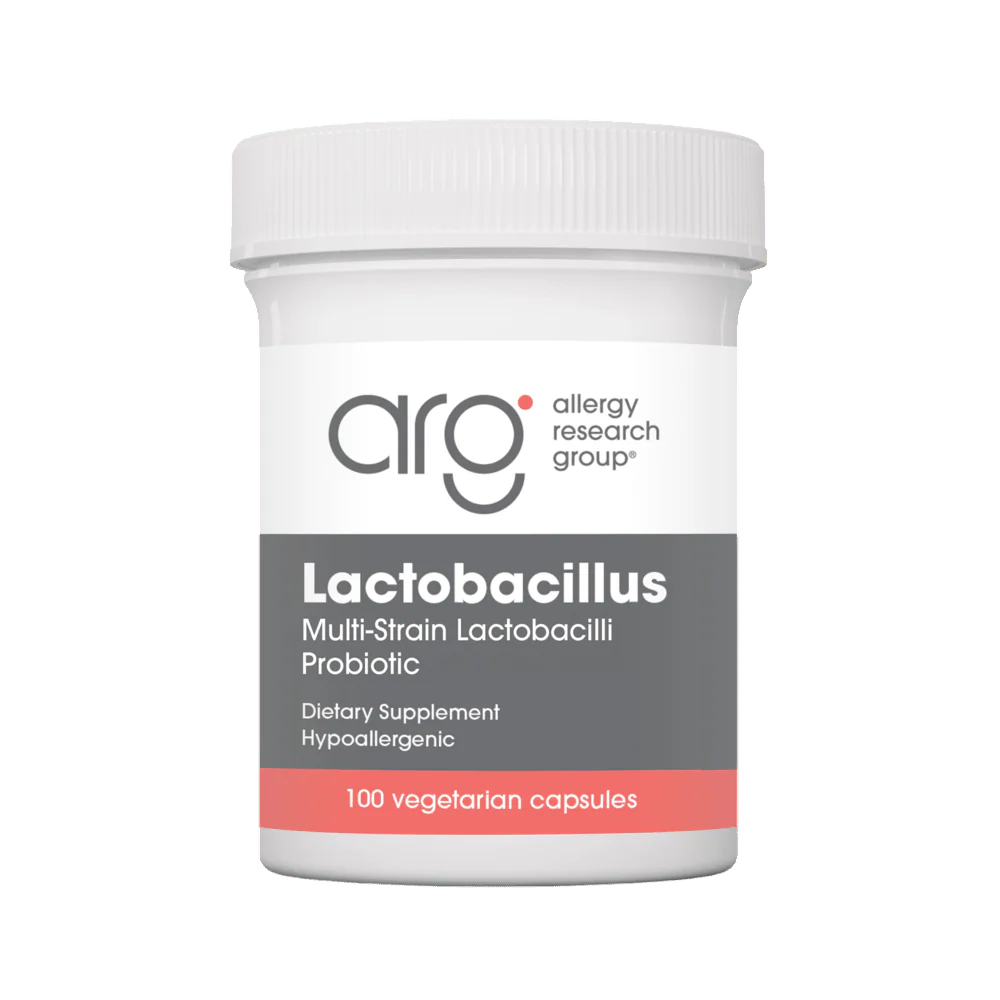
Allergy Research Group Lactobacillus
Multi-Strain Lactobacillus Probiotic
Contains three hardy strains of the friendly Lactobacillus probiotic bacteria. This may be a more appropriate product for individuals who do not derive benefit from less hardy strains of Lactobacillus, such as acidophilus. Lyophilized (freeze-dried).
Key Benefits
- Three hardy strains of Lactobacilli
- Supports the structure and functional integrity of the epithelial lining
- May boost the immune response
- Can produce vitamins, enzymes, and organic acids that support normal intestinal pH
Ingredients
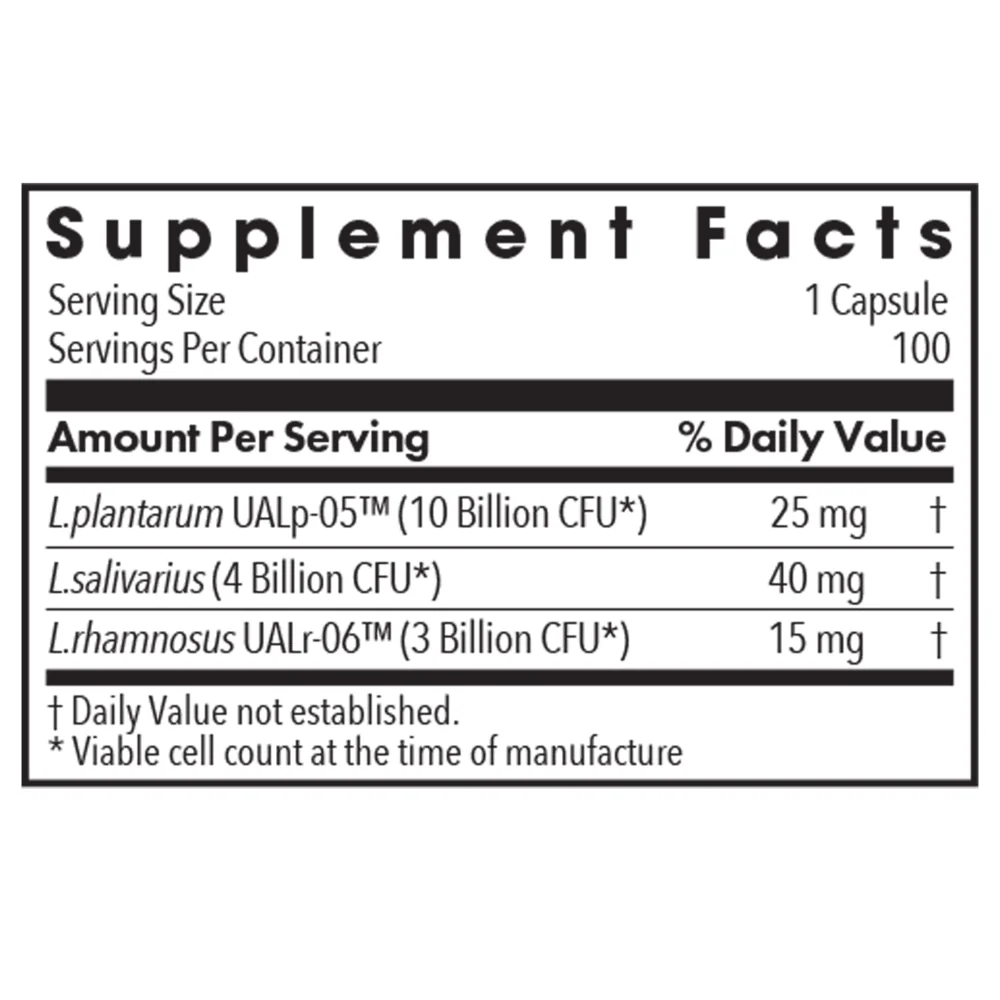
| Serving Size: 1 Vegetarian Capsule |
Amount/Serving |
| L. plantarum UALp-05™ (10 Billion CFU) | 25 mg |
|
L. salivarius (4 Billion CFU)
|
40 mg |
|
L. rhamnosus UALr-06™ (3 Billion CFU)
|
15 mg |
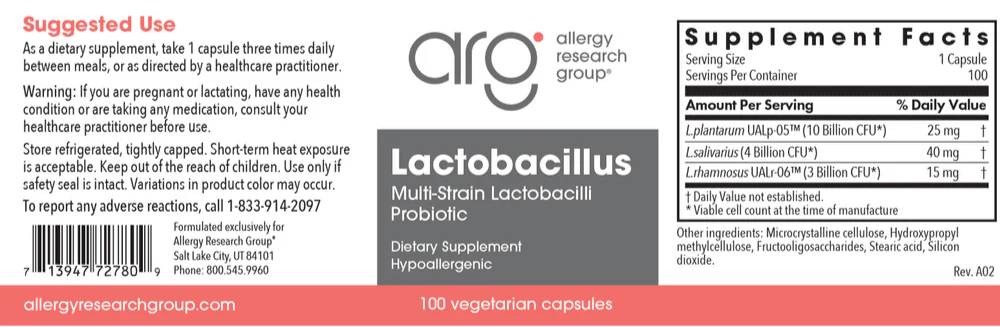
Other Ingredients: Microcrystalline cellulose, Hydroxypropyl methylcellulose, Fructooligosaccharides, Stearic acid, Silicon dioxide.
Non-Dairy and Gluten-Free.
Suggested Use
As a dietary supplement, take 1 capsule three times daily between meals, or as directed by a healthcare practitioner.
Warning: If you are pregnant or lactating, have any health condition or are taking any medication, consult your healthcare practitioner before use.
Storage: Store in a cool, dry place, tightly capped, away from light. Keep out of the reach of children. Use only if safety seal is intact. Variations in product color may occur.
More Info
An optimally functioning intestinal system is crucial to the health of the whole body. The human gastrointestinal tract harbors trillions of microorganisms, some beneficial to our health and some not. The cells that line the intestines, called villi, form a single layer that regulates digestion and absorbs the digested products. Friendly (probiotic) bacteria live attached to the villi, finding food and shelter, and in turn providing benefits to their host. Probiotic bacteria naturally occur in fermented foods, such as live-culture yogurt and sauerkraut. Nobel Prize laureate Elie Metchnikoff observed in the 19th century that people in the Balkans who ate yogurt and other foods cultured with lactobacilli were longer-lived. He theorized that ingestion of lactobacilli could prolong life by competitively inhibiting undesirable microbes, preventing them from taking up residence and producing toxins. Intestinal dysbiosis occurs when unfriendly bacteria imbalance probiotic bacteria. Factors that can promote dysbiosis include antibiotics, steroids including birth control pills, alcohol, bacterial infections, stress, traveling, or a poor diet.
Trillions of probiotic microflora are found in the healthy small and large intestines, from as many as 400 strains. They can support the structure and functional integrity of the epithelial lining by helping to metabolize vitamins, minerals, and hormones, improve intestinal motility, and assist in detoxification. They can boost immune function and have been shown to support resistance.
Product Information
Product Information
Shipping & Returns
Shipping & Returns
Description
Allergy Research Group Lactobacillus
Multi-Strain Lactobacillus Probiotic
Contains three hardy strains of the friendly Lactobacillus probiotic bacteria. This may be a more appropriate product for individuals who do not derive benefit from less hardy strains of Lactobacillus, such as acidophilus. Lyophilized (freeze-dried).
Key Benefits
- Three hardy strains of Lactobacilli
- Supports the structure and functional integrity of the epithelial lining
- May boost the immune response
- Can produce vitamins, enzymes, and organic acids that support normal intestinal pH
Ingredients
| Serving Size: 1 Vegetarian Capsule |
Amount/Serving |
| L. plantarum UALp-05™ (10 Billion CFU) | 25 mg |
|
L. salivarius (4 Billion CFU)
|
40 mg |
|
L. rhamnosus UALr-06™ (3 Billion CFU)
|
15 mg |
Other Ingredients: Microcrystalline cellulose, Hydroxypropyl methylcellulose, Fructooligosaccharides, Stearic acid, Silicon dioxide.
Non-Dairy and Gluten-Free.
Suggested Use
As a dietary supplement, take 1 capsule three times daily between meals, or as directed by a healthcare practitioner.
Warning: If you are pregnant or lactating, have any health condition or are taking any medication, consult your healthcare practitioner before use.
Storage: Store in a cool, dry place, tightly capped, away from light. Keep out of the reach of children. Use only if safety seal is intact. Variations in product color may occur.
More Info
An optimally functioning intestinal system is crucial to the health of the whole body. The human gastrointestinal tract harbors trillions of microorganisms, some beneficial to our health and some not. The cells that line the intestines, called villi, form a single layer that regulates digestion and absorbs the digested products. Friendly (probiotic) bacteria live attached to the villi, finding food and shelter, and in turn providing benefits to their host. Probiotic bacteria naturally occur in fermented foods, such as live-culture yogurt and sauerkraut. Nobel Prize laureate Elie Metchnikoff observed in the 19th century that people in the Balkans who ate yogurt and other foods cultured with lactobacilli were longer-lived. He theorized that ingestion of lactobacilli could prolong life by competitively inhibiting undesirable microbes, preventing them from taking up residence and producing toxins. Intestinal dysbiosis occurs when unfriendly bacteria imbalance probiotic bacteria. Factors that can promote dysbiosis include antibiotics, steroids including birth control pills, alcohol, bacterial infections, stress, traveling, or a poor diet.
Trillions of probiotic microflora are found in the healthy small and large intestines, from as many as 400 strains. They can support the structure and functional integrity of the epithelial lining by helping to metabolize vitamins, minerals, and hormones, improve intestinal motility, and assist in detoxification. They can boost immune function and have been shown to support resistance.