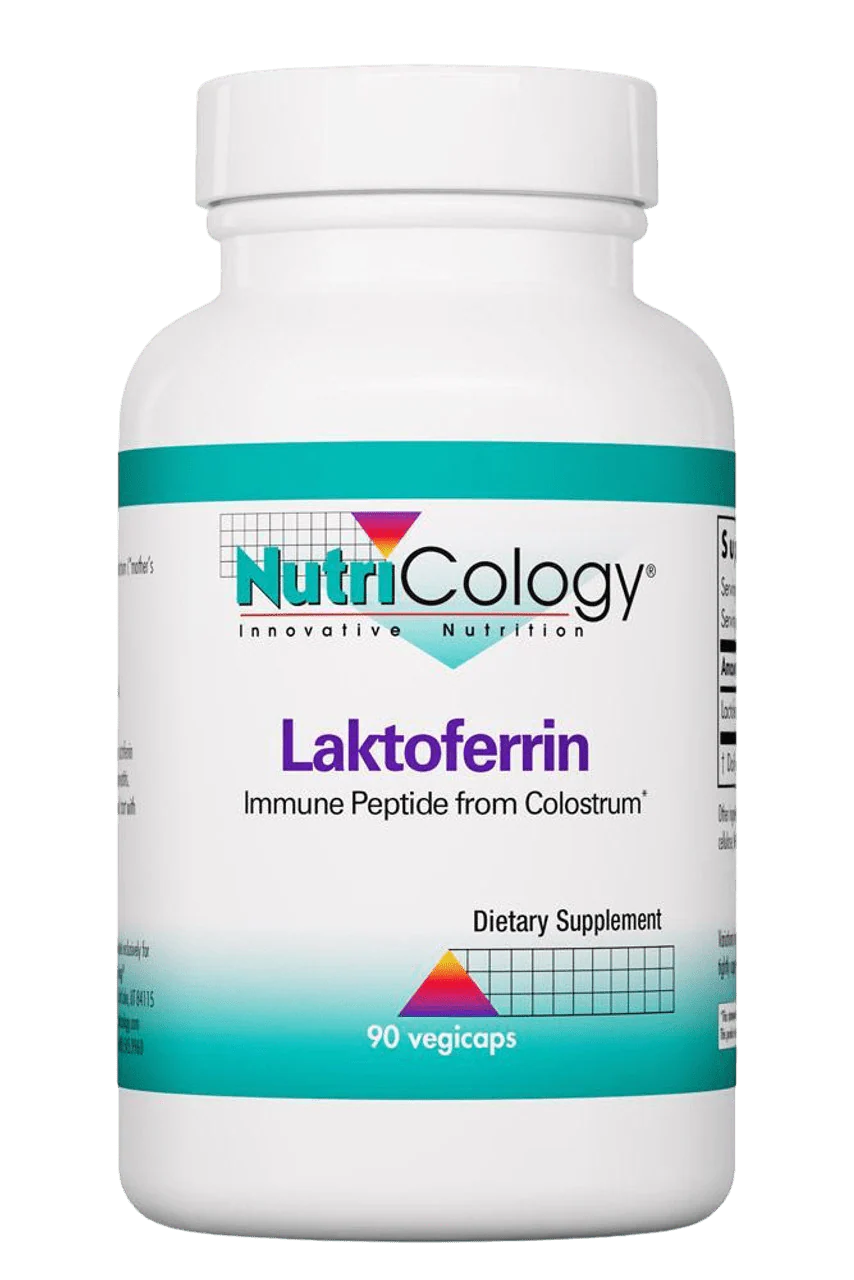
Laktoferrin 350 mg
NutriCology Laktoferrin 350 mg
Immune Peptide from Colostrum
Laktoferrin contains lactoferrin, a peptide glycoprotein that belongs to the transferrin family, which is responsible for binding and transporting iron in the body. Small amounts are found in bovine colostrum (“mothers’ first milk”). Additionally, lactoferrin occurs in mammalian exocrine secretions, and is released from neutrophil granules during inflammation.
Key Features:
- Supports iron binding and transport, and has antioxidant activity
- May help deprive undesirable gastrointestinal microbes from needed iron
- May enhance and modulate immune activities
Ingredients
| Serving Size: 1 Vegetarian Capsule | Amount/Serving |
| Lactoferrin (milk) | 350 mg |
Other Ingredients: Hydroxypropyl methylcellulose, microcrystalline cellulose, Nu-MAG® (rice extract, rice hulls, gum arabic, sunflower oil).
Suggested Use
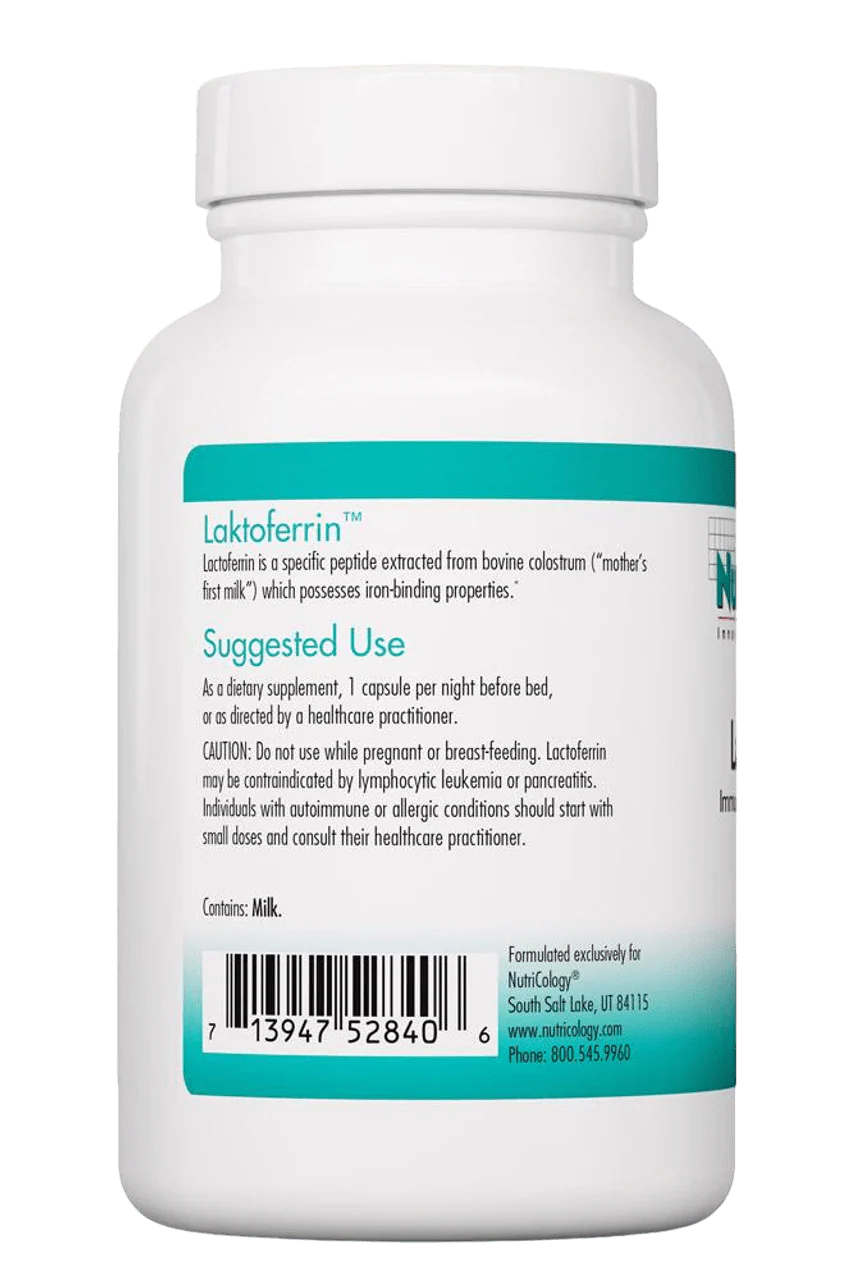
As a dietary supplement, 1 capsule at night before bed, or as directed by a healthcare practitioner.
Warning: Do not use while pregnant or breast-feeding. Lactoferrin may be contraindicated by lymphocytic leukemia or pancreatitis. Individuals with autoimmune or allergic conditions should start with small doses and consult their healthcare practitioner.
Storage: Variations in product color may occur. Keep in a cool, dry place, tightly capped.
More Info
Lactoferrin plays roles in multiple biochemical functions. For example, lactoferrin is crucial to the uptake of iron in the intestinal mucosa of breast-fed infants, through its iron-binding activity. Lactoferrin also has other important iron-binding activities, as well as immunomodulatory and antioxidant activities.
The gastrointestinal tract is a primary area of activity for supplemental lactoferrin. Lactoferrin binds strongly to iron, potentially depriving undesirable gut microbes from iron that they need for their growth. It may also help inhibit these microbes from attaching to the intestinal lining.
Receptors for lactoferrin are found in intestinal tissue, on some bacteria, and on immune system cells such as monocytes, lymphocytes and neutrophils. Lactoferrin is involved in the growth and differentiation of T lymphocytes, and also in the regulation of cytokines and lymphokines, such as tumor necrosis-alpha and interleukin-6. Because free iron can generate reactive oxygen species via the Fenton reaction, lactoferrin’s iron-binding properties potentially make it a powerful antioxidant substance. Lactoferrin also produces the bioactive peptide lactoferricin.
Original: $131.39
-70%$131.39
$39.42Product Information
Product Information
Shipping & Returns
Shipping & Returns
Description
NutriCology Laktoferrin 350 mg
Immune Peptide from Colostrum
Laktoferrin contains lactoferrin, a peptide glycoprotein that belongs to the transferrin family, which is responsible for binding and transporting iron in the body. Small amounts are found in bovine colostrum (“mothers’ first milk”). Additionally, lactoferrin occurs in mammalian exocrine secretions, and is released from neutrophil granules during inflammation.
Key Features:
- Supports iron binding and transport, and has antioxidant activity
- May help deprive undesirable gastrointestinal microbes from needed iron
- May enhance and modulate immune activities
Ingredients
| Serving Size: 1 Vegetarian Capsule | Amount/Serving |
| Lactoferrin (milk) | 350 mg |
Other Ingredients: Hydroxypropyl methylcellulose, microcrystalline cellulose, Nu-MAG® (rice extract, rice hulls, gum arabic, sunflower oil).
Suggested Use
As a dietary supplement, 1 capsule at night before bed, or as directed by a healthcare practitioner.
Warning: Do not use while pregnant or breast-feeding. Lactoferrin may be contraindicated by lymphocytic leukemia or pancreatitis. Individuals with autoimmune or allergic conditions should start with small doses and consult their healthcare practitioner.
Storage: Variations in product color may occur. Keep in a cool, dry place, tightly capped.
More Info
Lactoferrin plays roles in multiple biochemical functions. For example, lactoferrin is crucial to the uptake of iron in the intestinal mucosa of breast-fed infants, through its iron-binding activity. Lactoferrin also has other important iron-binding activities, as well as immunomodulatory and antioxidant activities.
The gastrointestinal tract is a primary area of activity for supplemental lactoferrin. Lactoferrin binds strongly to iron, potentially depriving undesirable gut microbes from iron that they need for their growth. It may also help inhibit these microbes from attaching to the intestinal lining.
Receptors for lactoferrin are found in intestinal tissue, on some bacteria, and on immune system cells such as monocytes, lymphocytes and neutrophils. Lactoferrin is involved in the growth and differentiation of T lymphocytes, and also in the regulation of cytokines and lymphokines, such as tumor necrosis-alpha and interleukin-6. Because free iron can generate reactive oxygen species via the Fenton reaction, lactoferrin’s iron-binding properties potentially make it a powerful antioxidant substance. Lactoferrin also produces the bioactive peptide lactoferricin.