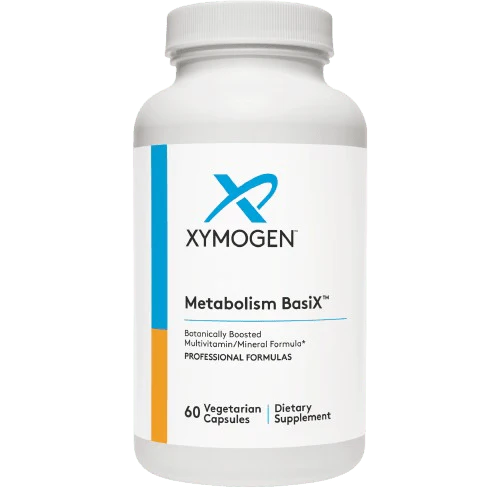

Metabolism BasiX™
Xymogen Metabolism BasiX™
Botanically Boosted Multivitamin/Mineral Formula
Metabolism BasiX™ is a premium, foundational nutrition formula with metabolically active B vitamins, bioavailable mineral complexes, and a powerful botanical blend that supports the body’s antioxidant and cell-protective mechanisms to counter oxidative stress.
Ingredients
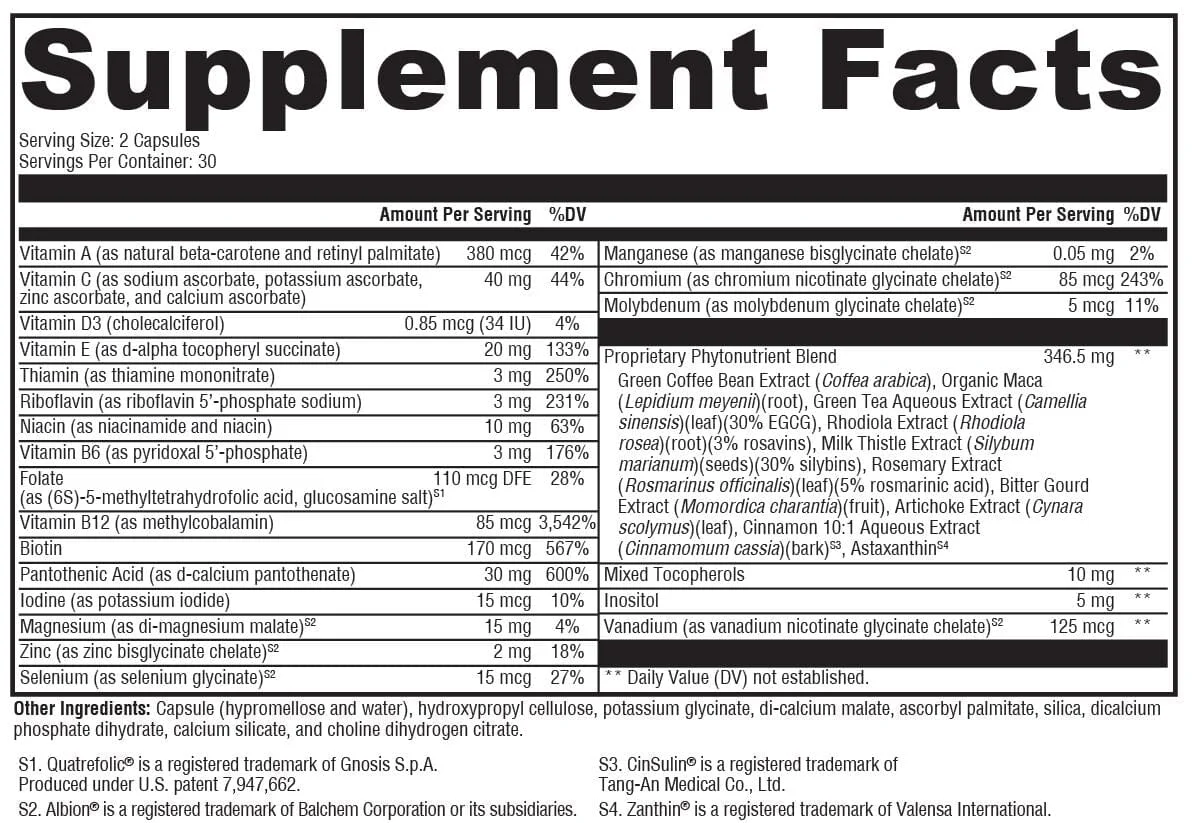
| Serving Size: 2 Capsules | Amount/Serving |
| Vitamin A (as natural beta-carotene and retinyl palmitate) | 380 mcg |
| Vitamin C (as sodium ascorbate, potassium ascorbate, zinc ascorbate, and calcium ascorbate) | 40 mg |
| Vitamin D3 (cholecalciferol) | 0.85 mcg (34 IU) |
| Vitamin E (as d-alpha tocopheryl succinate) | 20 mg |
| Thiamin (as thiamine mononitrate) | 3 mg |
| Riboflavin (as riboflavin 5'-phosphate sodium) | 3 mg |
| Niacin (as niacinamide and niacin) | 10 mg |
| Vitamin B6 (as pyridoxal 5'-phosphate) | 3 mg |
| Folate (as (6S)-5-methyltetrahydrofolic acid, glucosamine salt) |
110 mcg DFE |
| Vitamin B12 (as methylcobalamin) | 85 mcg |
| Biotin | 170 mcg |
| Pantothenic Acid (as d-calcium pantothenate) | 30 mg |
| Iodine (as potassium iodide) | 15 mcg |
| Magnesium (as di-calcium malate) | 15 mg |
| Zinc (as zinc bisglycinate chelate) | 2 mg |
| Selenium (as selenium glycinate) | 15 mcg |
| Manganese (as manganese bisglycinate chelate) | 0.05 mg |
| Chromium (as chromium nicotinate glycinate chelate) | 85 mcg |
| Molybdenum (as molybdenum glycinate chelate) | 5 mcg |
| Proprietary Phytonutrient Blend | 346.5 mg |
| Green Coffee Bean Extract (Coffea arabica), Organic Maca (Lepidium meyenii)(root), Green Tea Aqueous Extract (Camellia sinensis)(leaf)(30% EGCG), Rhodiola Extract (Rhodiola rosea)(root)(3% rosavins), Milk Thistle Extract (Silybum marianum)(seeds)(30% silybins), Rosemary Extract (Rosmarinus officinalis)(leaf)(5% rosmarinic acid), Bitter Gourd Extract (Momordica charantia)(fruit), Artichoke Extract (Cynara scolymus)(leaf), Cinnamon 10:1 Aqueous Extract (Cinnamomum cassia)(bark)S3, Astaxanthin | |
| Mixed Tocopherols | 10 mg |
| Inositol | 5 mg |
| Vanadium (as vanadium nicotinate glycinate chelate) | 125 mcg |
Other Ingredients: Capsule (hypromellose and water), hydroxypropyl cellulose, potassium glycinate, di-calcium malate, ascorbyl palmitate, silica, dicalcium phosphate dihydrate, calcium silicate, and choline dihydrogen citrate.
Does Not Contain: Wheat, gluten, yeast, soy protein, dairy products, fish, shellfish, peanuts, tree nuts, egg, sesame, ingredients derived from genetically modified organisms (GMOs), artificial colors, and artificial sweeteners.
Suggested Use
Take two capsules daily, or use as directed by your healthcare professional.
Warning: Consult your healthcare professional before use. Individuals taking medication should discuss potential interactions with their healthcare professional. Do not use if the tamper seal is damaged. Keep out of reach of children.
Storage: Keep closed in a cool, dry place out of reach of children.
More Info.
Metabolism BasiX™ provides foundational nutrition support with bioavailable vitamins and minerals needed for healthy metabolism, enhanced with a targeted phytonutrient blend formulated with botanicals traditionally used to support blood sugar metabolism.
Astaxanthin (Haematococcus pluvialis extract)
A naturally occurring xanthophyll carotenoid, astaxanthin has a distinctive molecular structure with a polarity arrangement that mirrors the phospholipid bilayer of the cell membrane. This allows astaxanthin to traverse the cell membrane, a feature that bolsters its antioxidant activity and accounts for its ability to quench free radicals inside and outside cells. Studied extensively, astaxanthin has demonstrated systemic benefits attributed to its molecular structure and powerful antioxidant activity. Astaxanthin continues to be explored and researched for its potential to mediate oxidative stress.
Cinnamon (Cinnamomum cassia extract)
Cinnamon has long been used in traditional Eastern medicine systems. Its health-promoting qualities are attributed to the antioxidant activity of its polyphenol-rich bark that has roles in glucose uptake, glycogen synthesis, insulin action, and blood lipid metabolism. This cinnamon extract is provided as CinSulin®, a concentrated (10:1) water extract that retains type-A polyphenolic polymers, the doubly linked procyanidin oligomers of catechins and/or epicatechins for which cinnamon is known.
Green Coffee Bean (Coffea arabica extract)
The beverage coffee, made from the beans of various Coffea species, has been used as a tonic since the 1700s, becoming known as an “ancient wonder drug.” While modern coffee is made from roasted beans, there is a spectrum of beneficial phytonutrients in green coffee beans that can only be harvested from unroasted (or green) coffee beans. The polyphenols from green coffee bean are strong antioxidants with free radical scavenging qualities associated with reducing oxidative stress. From a class of polyphenols known as chlorogenic acids, these phytonutrients mediate many of the health benefits associated with green coffee bean. The effects of green coffee bean extract on vascular health, body composition, and glycemic and lipid profiles continue to be areas of interest for human research.
Maca Root (Lepidium meyenii)
Consumed as a food and used as traditional medicine in the Andes of Peru for over 2,000 years, maca root is known today for its vitality-, aphrodisiac-, and fertility-promoting qualities.10 Characteristic of many folk medicines, maca has numerous applications, but its mechanisms still need to be elucidated. Maca root has demonstrated antioxidant, neuroprotective, and antiviral activities in animal studies. These benefits are primarily attributed to macaenes, which are octadecadienoic acid derivatives (CLAs), and macamides, which are fatty acid amide hydrolase inhibitors that are unique to maca. These metabolites work with the powerful composition of glucosinolates, alkaloids, and sterols that also contribute to maca’s beneficial effects.
Green Tea (Camellia sinensis extract)
Green tea was first exported from India to Japan in the 1600s, and it is now consumed worldwide. Since then, Camellia sinensis has flourished as a plant, beverage, and traditional tonic. The leaves of green tea are rich in flavonoids known as catechins, including the extensively studied epigallocatechin-3-gallate (EGCG). In vitro research has demonstrated that green tea catechins are effective antioxidants that can quench free radicals, may have potential as transition metal chelators, and may also have indirect effects through the upregulation of phase II antioxidant enzymes. In vivo research has demonstrated that these catechins increase plasma antioxidant activity, suppress oxidative stress markers, and protect against degenerative processes.
Rhodiola (Rhodiola rosea extract)
An adaptogenic herb, rhodiola has been used in Eastern European and Asian traditional medicine systems for centuries and is described in medical and pharmacological texts as useful for immune, psychiatric, and neurological health. Rhodiola root is rich in the antioxidant phenolic compounds salidroside and rosavin. Research into Rhodiola’s antioxidant activity has revealed its protective effects against oxidative damage in the nervous system and how it impacts memory and cognition by improving resistance to physical and emotional stress.
Milk Thistle (Silybum marianum extract)
Milk thistle is a familiar herb that has been used traditionally as a medicine for over 2,000 years around the world. It is valued for its silymarin, a complex of flavonolignans and the flavonoid taxifolin, which plays a role in moderating fat peroxidation and fibrous liver tissue formation, supporting healthy immune and inflammatory responses, and promoting protein synthesis and normal liver tissue regeneration. Silymarin supports antioxidant activity, neutralizes toxins, and may have hepatoprotective effects.
Rosemary (Rosmarinus officinalis extract)
An aromatic plant originating from the Mediterranean region, rosemary is the most cultivated culinary herb worldwide. It is rich in antioxidant phytonutrients with cytokine-balancing properties. The antioxidant power of rosemary is attributed to its phenolic compounds, including carnosic acid and rosmarinic acid, which are considered rosemary’s most biologically active phenols and have multiple molecular targets described in literature.
Bitter Gourd (Momordica charantia extract)
With a rich history of use in traditional and folk medicine, bitter gourd fruit has a unique phytochemistry that includes terpenoids, glycosides, flavonoids, alkaloids, tannins, and saponins. Best known for its traditional use to support blood sugar metabolism, bitter gourd has since been recognized for its mechanisms of action, including free radical scavenging antioxidant activity and moderating NF-ĸB and TNF-α cytokine cascades. These mechanisms are recognized as being cellular- and organ-protective.
Artichoke (Cynara scolymus extract)
Consumed as food and used as a traditional medicine in the Mediterranean region, Turkey, and Pakistan, artichoke leaf is recognized for its digestive and liver health properties. Modern research attributes these benefits to polyphenols and flavonoids that accumulate in the artichoke leaf, including cynarin and chlorogenic acid. In vitro research has elucidated that the antioxidant potential of artichoke leaf extract is in its free-radical scavenging and metal ion−chelating capabilities.
Foundational Nutrition
Adequate nourishment is the foundation for overall health and wellness, and good nutrition typically translates into a stronger immune system and better health. The human body uses dietary proteins, fats, and carbohydrates, known as macronutrients, to provide the energy (calories) needed to fuel physiological functions. Vitamins and minerals, known as micronutrients, are needed in much smaller quantities. Unlike their macro counterparts, micronutrients do not give energy, but they do participate in converting food to energy; building and repairing tissues and DNA; manufacturing neurotransmitters, hormones, and other modulators in the body; breaking down and detoxifying xenobiotics and medications; and maintaining growth, reproduction, and health.
According to the Dietary Guidelines for Americans 2020-2025 (DGA) and additional data from the USDA and other agencies and organizations, the American diet lacks micronutrients.28-30 Mass food production, storage techniques, poor food choices, and nutrient-depleting preparation methods may be contributing to this deficit. Furthermore, the percent daily values (%DV) for micronutrients are based on the minimum amount needed to meet the basic needs of a healthy person of a specific age and gender group. The %DV is not always indicative of the amount needed for optimal functioning of all individuals, especially those who are chronically ill.
When considering where American diets fall short in nutrients, the DGA shows that low intakes of potassium, dietary fiber, calcium, and vitamin D are a public health concern.28 Other nutrients that have notably low intakes or require increased intake subsequent to life stage include vitamins A, B6, B12, C, E, and folate; the minerals magnesium and iron; and choline. Data from the National Health and Nutrition Examination Surveys (NHANES) suggest a pervasive deficiency in A, C, D, E, and zinc—nutrients linked to immune health.30 Inadequate intake of most of these nutrients is attributable to an overall unhealthy eating pattern due to low intakes of nutrient-rich foods such as vegetables, fruits, whole grains, and dairy that contain these nutrients. In cases when food is not enough for an individual to get adequate micronutrients, multivitamin/mineral supplements are recognized as being of value to help fill dietary nutritional shortfalls.
This formula is designed to meet the foundational nutrition needs for a variety of protocols and life stages and provides:
A Balanced Profile
Vitamins and minerals are required for healthy metabolism and work cooperatively when present in sufficient amounts. However, imbalances between micronutrients can disrupt this synergistic relationship, possibly leading to instances of competitive intestinal absorption or displacement at the metabolic/cellular level, which can produce relative excesses and insufficiencies. For this reason, this formula features a balanced nutrient profile that includes calcium and magnesium, vitamins C and E, bioactive folate, bioactive vitamin B12, B vitamin complex, beta-carotene, and trace elements.
Bioavailable Nutrient Forms
Metabolism is supported by the biologically active forms of vitamins. In this formula, micronutrients are provided in bioactive forms so they can be adequately absorbed and used. This includes a full complement of patented mineral chelates and complexes from Albion®, a recognized world leader in highly bioavailable mineral amino acid chelates. This formula also contains natural vitamin E, which is more bioavailable than synthetic dl-alpha-tocopherol, and mixed tocopherols to more closely approximate how much vitamin E an individual might gain when consuming healthful foods. The folate source is methyltetrahydrofolate (5-MTHF)—the most bioactive form of folate—in the form of Quatrefolic®, which has greater stability, solubility, and bioavailability over calcium salt forms of 5-MTHF. Supplementing with bioactive 5-MTHF facilitates the bypassing of steps in folate metabolism. This may be especially beneficial to individuals with genetic variations in folate metabolism. Vitamins B2, B6, and B12 are provided in metabolically active forms.
Support for Energy Production and Stress Response
This formula provides generous levels of B vitamins, which are important in many metabolic processes, including as prime coenzymes in glycolysis and oxidative phosphorylation and as cofactors in amino acid and lipid metabolism. Sufficient levels of the B vitamins are critical for energy production and cell growth and division, and they have many other essential roles in the body, including support for nervous system function. The balanced presence of B vitamins is essential to their cooperative functioning and excellent for individuals with stressful lifestyles.
Antioxidant Protection
Vitamins E and C, selenium, zinc, beta-carotene, and trace elements provide broad-spectrum antioxidant activity. Their combined presence supports their ability to regenerate each other and maintain consistent levels of antioxidant activity both intra- and extracellularly.
Detoxification Support
Xenobiotics, including environmental pollutants and medications, must undergo biotransformation into molecules that can be easily excreted from the body. Detoxification of xenobiotics is a complex process that requires micronutrients, phytonutrients, energy, and adequate antioxidant support for safe and effective completion. There are significant levels of bioavailable riboflavin, niacin, folate, and B12 present in this formula to support phase I detoxification. Beta-carotene, vitamin C, tocopherols, selenium, zinc, and manganese are present to support tissues when reactive intermediates are formed between phase I and phase II detoxification.
Metabolism BasiX offers foundational multivitamin and mineral support designed to compensate for dietary nutritional shortfalls, nourish optimal wellness, and support a healthy metabolism, paired with a complement of botanical extracts traditionally used to support blood sugar metabolism that also adds a wide spectrum of antioxidant support.
Product Information
Product Information
Shipping & Returns
Shipping & Returns
Description
Xymogen Metabolism BasiX™
Botanically Boosted Multivitamin/Mineral Formula
Metabolism BasiX™ is a premium, foundational nutrition formula with metabolically active B vitamins, bioavailable mineral complexes, and a powerful botanical blend that supports the body’s antioxidant and cell-protective mechanisms to counter oxidative stress.
Ingredients
| Serving Size: 2 Capsules | Amount/Serving |
| Vitamin A (as natural beta-carotene and retinyl palmitate) | 380 mcg |
| Vitamin C (as sodium ascorbate, potassium ascorbate, zinc ascorbate, and calcium ascorbate) | 40 mg |
| Vitamin D3 (cholecalciferol) | 0.85 mcg (34 IU) |
| Vitamin E (as d-alpha tocopheryl succinate) | 20 mg |
| Thiamin (as thiamine mononitrate) | 3 mg |
| Riboflavin (as riboflavin 5'-phosphate sodium) | 3 mg |
| Niacin (as niacinamide and niacin) | 10 mg |
| Vitamin B6 (as pyridoxal 5'-phosphate) | 3 mg |
| Folate (as (6S)-5-methyltetrahydrofolic acid, glucosamine salt) |
110 mcg DFE |
| Vitamin B12 (as methylcobalamin) | 85 mcg |
| Biotin | 170 mcg |
| Pantothenic Acid (as d-calcium pantothenate) | 30 mg |
| Iodine (as potassium iodide) | 15 mcg |
| Magnesium (as di-calcium malate) | 15 mg |
| Zinc (as zinc bisglycinate chelate) | 2 mg |
| Selenium (as selenium glycinate) | 15 mcg |
| Manganese (as manganese bisglycinate chelate) | 0.05 mg |
| Chromium (as chromium nicotinate glycinate chelate) | 85 mcg |
| Molybdenum (as molybdenum glycinate chelate) | 5 mcg |
| Proprietary Phytonutrient Blend | 346.5 mg |
| Green Coffee Bean Extract (Coffea arabica), Organic Maca (Lepidium meyenii)(root), Green Tea Aqueous Extract (Camellia sinensis)(leaf)(30% EGCG), Rhodiola Extract (Rhodiola rosea)(root)(3% rosavins), Milk Thistle Extract (Silybum marianum)(seeds)(30% silybins), Rosemary Extract (Rosmarinus officinalis)(leaf)(5% rosmarinic acid), Bitter Gourd Extract (Momordica charantia)(fruit), Artichoke Extract (Cynara scolymus)(leaf), Cinnamon 10:1 Aqueous Extract (Cinnamomum cassia)(bark)S3, Astaxanthin | |
| Mixed Tocopherols | 10 mg |
| Inositol | 5 mg |
| Vanadium (as vanadium nicotinate glycinate chelate) | 125 mcg |
Other Ingredients: Capsule (hypromellose and water), hydroxypropyl cellulose, potassium glycinate, di-calcium malate, ascorbyl palmitate, silica, dicalcium phosphate dihydrate, calcium silicate, and choline dihydrogen citrate.
Does Not Contain: Wheat, gluten, yeast, soy protein, dairy products, fish, shellfish, peanuts, tree nuts, egg, sesame, ingredients derived from genetically modified organisms (GMOs), artificial colors, and artificial sweeteners.
Suggested Use
Take two capsules daily, or use as directed by your healthcare professional.
Warning: Consult your healthcare professional before use. Individuals taking medication should discuss potential interactions with their healthcare professional. Do not use if the tamper seal is damaged. Keep out of reach of children.
Storage: Keep closed in a cool, dry place out of reach of children.
More Info.
Metabolism BasiX™ provides foundational nutrition support with bioavailable vitamins and minerals needed for healthy metabolism, enhanced with a targeted phytonutrient blend formulated with botanicals traditionally used to support blood sugar metabolism.
Astaxanthin (Haematococcus pluvialis extract)
A naturally occurring xanthophyll carotenoid, astaxanthin has a distinctive molecular structure with a polarity arrangement that mirrors the phospholipid bilayer of the cell membrane. This allows astaxanthin to traverse the cell membrane, a feature that bolsters its antioxidant activity and accounts for its ability to quench free radicals inside and outside cells. Studied extensively, astaxanthin has demonstrated systemic benefits attributed to its molecular structure and powerful antioxidant activity. Astaxanthin continues to be explored and researched for its potential to mediate oxidative stress.
Cinnamon (Cinnamomum cassia extract)
Cinnamon has long been used in traditional Eastern medicine systems. Its health-promoting qualities are attributed to the antioxidant activity of its polyphenol-rich bark that has roles in glucose uptake, glycogen synthesis, insulin action, and blood lipid metabolism. This cinnamon extract is provided as CinSulin®, a concentrated (10:1) water extract that retains type-A polyphenolic polymers, the doubly linked procyanidin oligomers of catechins and/or epicatechins for which cinnamon is known.
Green Coffee Bean (Coffea arabica extract)
The beverage coffee, made from the beans of various Coffea species, has been used as a tonic since the 1700s, becoming known as an “ancient wonder drug.” While modern coffee is made from roasted beans, there is a spectrum of beneficial phytonutrients in green coffee beans that can only be harvested from unroasted (or green) coffee beans. The polyphenols from green coffee bean are strong antioxidants with free radical scavenging qualities associated with reducing oxidative stress. From a class of polyphenols known as chlorogenic acids, these phytonutrients mediate many of the health benefits associated with green coffee bean. The effects of green coffee bean extract on vascular health, body composition, and glycemic and lipid profiles continue to be areas of interest for human research.
Maca Root (Lepidium meyenii)
Consumed as a food and used as traditional medicine in the Andes of Peru for over 2,000 years, maca root is known today for its vitality-, aphrodisiac-, and fertility-promoting qualities.10 Characteristic of many folk medicines, maca has numerous applications, but its mechanisms still need to be elucidated. Maca root has demonstrated antioxidant, neuroprotective, and antiviral activities in animal studies. These benefits are primarily attributed to macaenes, which are octadecadienoic acid derivatives (CLAs), and macamides, which are fatty acid amide hydrolase inhibitors that are unique to maca. These metabolites work with the powerful composition of glucosinolates, alkaloids, and sterols that also contribute to maca’s beneficial effects.
Green Tea (Camellia sinensis extract)
Green tea was first exported from India to Japan in the 1600s, and it is now consumed worldwide. Since then, Camellia sinensis has flourished as a plant, beverage, and traditional tonic. The leaves of green tea are rich in flavonoids known as catechins, including the extensively studied epigallocatechin-3-gallate (EGCG). In vitro research has demonstrated that green tea catechins are effective antioxidants that can quench free radicals, may have potential as transition metal chelators, and may also have indirect effects through the upregulation of phase II antioxidant enzymes. In vivo research has demonstrated that these catechins increase plasma antioxidant activity, suppress oxidative stress markers, and protect against degenerative processes.
Rhodiola (Rhodiola rosea extract)
An adaptogenic herb, rhodiola has been used in Eastern European and Asian traditional medicine systems for centuries and is described in medical and pharmacological texts as useful for immune, psychiatric, and neurological health. Rhodiola root is rich in the antioxidant phenolic compounds salidroside and rosavin. Research into Rhodiola’s antioxidant activity has revealed its protective effects against oxidative damage in the nervous system and how it impacts memory and cognition by improving resistance to physical and emotional stress.
Milk Thistle (Silybum marianum extract)
Milk thistle is a familiar herb that has been used traditionally as a medicine for over 2,000 years around the world. It is valued for its silymarin, a complex of flavonolignans and the flavonoid taxifolin, which plays a role in moderating fat peroxidation and fibrous liver tissue formation, supporting healthy immune and inflammatory responses, and promoting protein synthesis and normal liver tissue regeneration. Silymarin supports antioxidant activity, neutralizes toxins, and may have hepatoprotective effects.
Rosemary (Rosmarinus officinalis extract)
An aromatic plant originating from the Mediterranean region, rosemary is the most cultivated culinary herb worldwide. It is rich in antioxidant phytonutrients with cytokine-balancing properties. The antioxidant power of rosemary is attributed to its phenolic compounds, including carnosic acid and rosmarinic acid, which are considered rosemary’s most biologically active phenols and have multiple molecular targets described in literature.
Bitter Gourd (Momordica charantia extract)
With a rich history of use in traditional and folk medicine, bitter gourd fruit has a unique phytochemistry that includes terpenoids, glycosides, flavonoids, alkaloids, tannins, and saponins. Best known for its traditional use to support blood sugar metabolism, bitter gourd has since been recognized for its mechanisms of action, including free radical scavenging antioxidant activity and moderating NF-ĸB and TNF-α cytokine cascades. These mechanisms are recognized as being cellular- and organ-protective.
Artichoke (Cynara scolymus extract)
Consumed as food and used as a traditional medicine in the Mediterranean region, Turkey, and Pakistan, artichoke leaf is recognized for its digestive and liver health properties. Modern research attributes these benefits to polyphenols and flavonoids that accumulate in the artichoke leaf, including cynarin and chlorogenic acid. In vitro research has elucidated that the antioxidant potential of artichoke leaf extract is in its free-radical scavenging and metal ion−chelating capabilities.
Foundational Nutrition
Adequate nourishment is the foundation for overall health and wellness, and good nutrition typically translates into a stronger immune system and better health. The human body uses dietary proteins, fats, and carbohydrates, known as macronutrients, to provide the energy (calories) needed to fuel physiological functions. Vitamins and minerals, known as micronutrients, are needed in much smaller quantities. Unlike their macro counterparts, micronutrients do not give energy, but they do participate in converting food to energy; building and repairing tissues and DNA; manufacturing neurotransmitters, hormones, and other modulators in the body; breaking down and detoxifying xenobiotics and medications; and maintaining growth, reproduction, and health.
According to the Dietary Guidelines for Americans 2020-2025 (DGA) and additional data from the USDA and other agencies and organizations, the American diet lacks micronutrients.28-30 Mass food production, storage techniques, poor food choices, and nutrient-depleting preparation methods may be contributing to this deficit. Furthermore, the percent daily values (%DV) for micronutrients are based on the minimum amount needed to meet the basic needs of a healthy person of a specific age and gender group. The %DV is not always indicative of the amount needed for optimal functioning of all individuals, especially those who are chronically ill.
When considering where American diets fall short in nutrients, the DGA shows that low intakes of potassium, dietary fiber, calcium, and vitamin D are a public health concern.28 Other nutrients that have notably low intakes or require increased intake subsequent to life stage include vitamins A, B6, B12, C, E, and folate; the minerals magnesium and iron; and choline. Data from the National Health and Nutrition Examination Surveys (NHANES) suggest a pervasive deficiency in A, C, D, E, and zinc—nutrients linked to immune health.30 Inadequate intake of most of these nutrients is attributable to an overall unhealthy eating pattern due to low intakes of nutrient-rich foods such as vegetables, fruits, whole grains, and dairy that contain these nutrients. In cases when food is not enough for an individual to get adequate micronutrients, multivitamin/mineral supplements are recognized as being of value to help fill dietary nutritional shortfalls.
This formula is designed to meet the foundational nutrition needs for a variety of protocols and life stages and provides:
A Balanced Profile
Vitamins and minerals are required for healthy metabolism and work cooperatively when present in sufficient amounts. However, imbalances between micronutrients can disrupt this synergistic relationship, possibly leading to instances of competitive intestinal absorption or displacement at the metabolic/cellular level, which can produce relative excesses and insufficiencies. For this reason, this formula features a balanced nutrient profile that includes calcium and magnesium, vitamins C and E, bioactive folate, bioactive vitamin B12, B vitamin complex, beta-carotene, and trace elements.
Bioavailable Nutrient Forms
Metabolism is supported by the biologically active forms of vitamins. In this formula, micronutrients are provided in bioactive forms so they can be adequately absorbed and used. This includes a full complement of patented mineral chelates and complexes from Albion®, a recognized world leader in highly bioavailable mineral amino acid chelates. This formula also contains natural vitamin E, which is more bioavailable than synthetic dl-alpha-tocopherol, and mixed tocopherols to more closely approximate how much vitamin E an individual might gain when consuming healthful foods. The folate source is methyltetrahydrofolate (5-MTHF)—the most bioactive form of folate—in the form of Quatrefolic®, which has greater stability, solubility, and bioavailability over calcium salt forms of 5-MTHF. Supplementing with bioactive 5-MTHF facilitates the bypassing of steps in folate metabolism. This may be especially beneficial to individuals with genetic variations in folate metabolism. Vitamins B2, B6, and B12 are provided in metabolically active forms.
Support for Energy Production and Stress Response
This formula provides generous levels of B vitamins, which are important in many metabolic processes, including as prime coenzymes in glycolysis and oxidative phosphorylation and as cofactors in amino acid and lipid metabolism. Sufficient levels of the B vitamins are critical for energy production and cell growth and division, and they have many other essential roles in the body, including support for nervous system function. The balanced presence of B vitamins is essential to their cooperative functioning and excellent for individuals with stressful lifestyles.
Antioxidant Protection
Vitamins E and C, selenium, zinc, beta-carotene, and trace elements provide broad-spectrum antioxidant activity. Their combined presence supports their ability to regenerate each other and maintain consistent levels of antioxidant activity both intra- and extracellularly.
Detoxification Support
Xenobiotics, including environmental pollutants and medications, must undergo biotransformation into molecules that can be easily excreted from the body. Detoxification of xenobiotics is a complex process that requires micronutrients, phytonutrients, energy, and adequate antioxidant support for safe and effective completion. There are significant levels of bioavailable riboflavin, niacin, folate, and B12 present in this formula to support phase I detoxification. Beta-carotene, vitamin C, tocopherols, selenium, zinc, and manganese are present to support tissues when reactive intermediates are formed between phase I and phase II detoxification.
Metabolism BasiX offers foundational multivitamin and mineral support designed to compensate for dietary nutritional shortfalls, nourish optimal wellness, and support a healthy metabolism, paired with a complement of botanical extracts traditionally used to support blood sugar metabolism that also adds a wide spectrum of antioxidant support.