Mitochondrial Cofactors Cellular Energy Formula
NutriCology Mitochondrial Cofactors
Cellular Energy Formula
The body is a complex organism that requires substantial energy for everyday functioning. The energy that drives biological activity comes from adenosine triphosphate (ATP), which contains high-energy bonds for use in biochemical reactions. Because ATP cannot be stored, it must constantly be replenished. ATP is produced in a series of enzymatic steps within the mitochondria. If this process is disturbed by nutrient deficiencies, stress, or a myriad of other conditions, fatigue can occur.
Mitochondrial Cofactors (Cellular Energy Formula) contains coenzyme Q10, PANMOL® NADH, acteyl-L-carnitine, magnesium, and vitamin B6 as pyridoxal5-phosphate. These bioactive cofactors have been shown to enhance energy production, with particular benefits for skeletal muscles, heart, and brain.
Key Features:
- Supports ATP production by activating key mitochondrial enzymes.
- Facilitates the transport of fatty acids into the mitochondria for use as fuel.
- May alleviate normal everyday mental and physical fatigue.
Ingredients
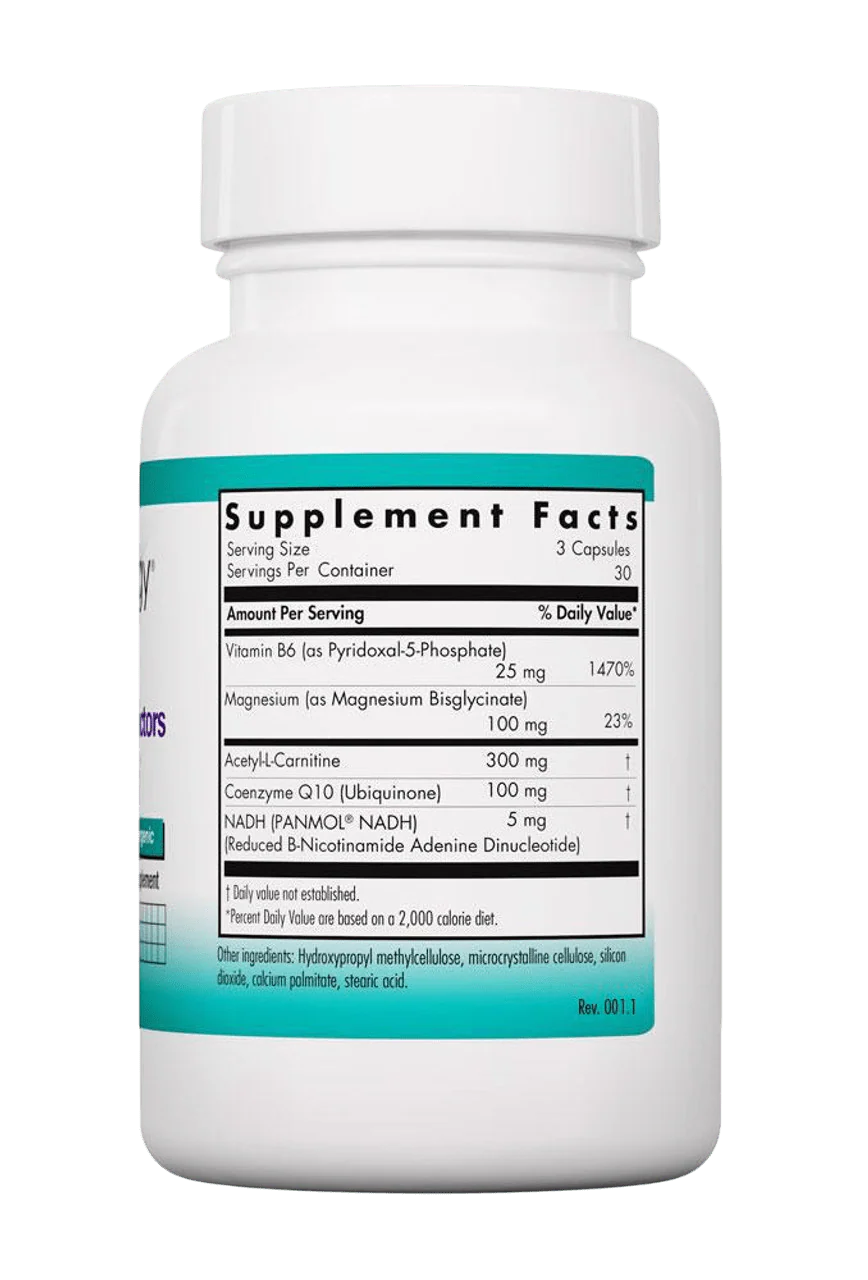
| Serving Size: 3 Vegetarian Capsules | Amount/Serving |
| Vitamin B6 (as Pyridoxal-5-Phosphate) | 25 mg |
| Magnesium (as Magnesium Bisglycinate | 100 mg |
| Acetyl-L-Carnitine | 300 mg |
| CoQ10 Ubiquinone (Ubidecarenone) | 100 mg |
| NADH (PANMOL® NADH) (Reduced B-Nicotinamide Adenine Dinucleotide) | 5 mg |
Other Ingredients: Hydroxypropyl methylcellulose, microcrystalline cellulose, silicon dioxide, calcium palmitate, stearic acid.
Suggested Use
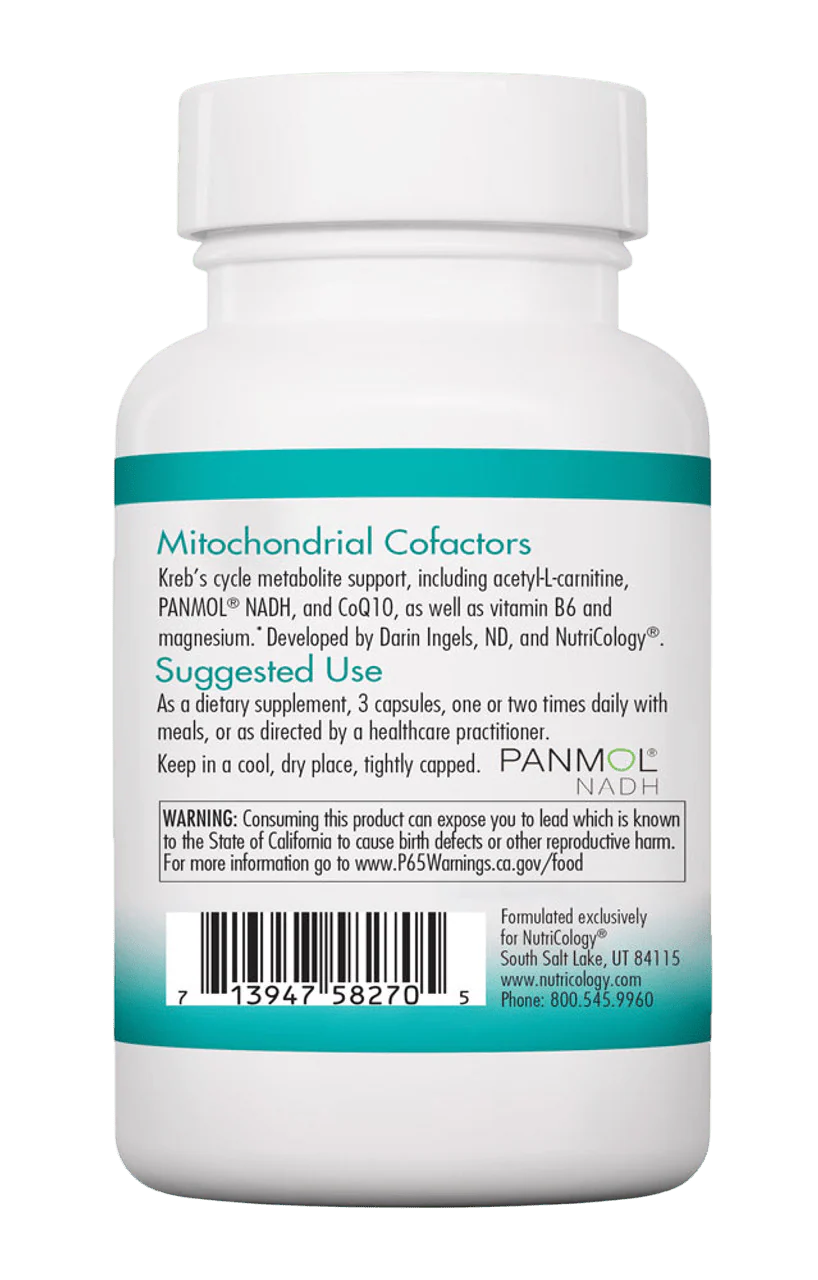
As a dietary supplement, 3 capsules, one or two times daily with meals, or as directed by a healthcare practitioner.
Storage: Keep in a cool, dry place, tightly capped.
More Info
CoQ10 Ubiquinone (Ubidecarenone) is an excellent source of coenzyme Q10, a cofactor that has both bioenergetic and antioxidant properties. The main function of CoQ10 is to transfer electrons along the complexes of the mitochondrial electron transport chain, culminating in the formation of ATP. Low levels of CoQ10 are consistently associated with fatigue. In human studies, supplementation with CoQ10 increased mitochondrial efficiency in the brain. Healthy adults consuming CoQ10 experienced significantly less fatigue and greater exercise capacity compared to placebo groups.
NADH (PANMOL®) is a microencapsulated form of nicotinamide adenine dinucleotide (NADH), a bioactive derivative of niacin (vitamin B3). NADH serves an electron carrier for the ultimate production of ATP. An analysis of human mitochondria revealed that NADH metabolism was one of the most important biological determinants of fatigue. In a clinical study, individuals were asked to rate the extent to which fatigue had interfered with certain aspects of their day-to-day functioning. Those who received supplemental NADH, along with CoQ10, reported improvements in physical and cognitive functioning after eight weeks.
Acetyl-L-Carnitine is a short-chain ester of L-carnitine that is naturally produced in the body. However, the biosynthesis of carnitine only accounts for 25% of daily needs. Carnitine plays a key role in energy metabolism, since it enables fatty acids to enter the mitochondria, where they are broken down to form ATP. Low blood and tissue carnitine levels often correlate with fatigue. Supplemental carnitine was shown to increase energy production in the brain and to reduce muscle fatigue under various conditions. In clinical studies, individuals receiving carnitine reported greater subjective energy levels compared to placebo groups.
Pyridoxal-5-phosphate (PLP, also known as P5P) is a form of vitamin B6 that serves as a cofactor for numerous biosynthetic enzymes. PLP is needed for the synthesis of heme, the oxygen-binding molecule within hemoglobin, which supplies oxygen to every tissue in the body. A supply of PLP is important for normal heart and skeletal muscle contractions. The intake of vitamin B6 also upregulates pathways that promote the growth and repair of skeletal muscle. Low PLP levels are associated with decreased mitochondrial oxidative capacity and fatigue.
Magnesium Bisglycinate Chelate is a highly soluble form of magnesium that is chelated with the neutral amino acid, glycine. Magnesium influences the rate of ATP production by stimulating the activity of several enzymes in the trichloroacetic acid cycle (TCA, also known as the Kreb’s cycle). Additionally, magnesium plays a pivotal role in the activity of the mitochondrial ATP synthase, the enzyme that produces the bulk of cellular ATP. Human and animal studies have shown that magnesium supports the normal daily functioning of the heart, brain, and skeletal muscle. Healthy adults experiencing fatigue reported improved energy levels after magnesium supplementation.
Product Information
Product Information
Shipping & Returns
Shipping & Returns
Description
NutriCology Mitochondrial Cofactors
Cellular Energy Formula
The body is a complex organism that requires substantial energy for everyday functioning. The energy that drives biological activity comes from adenosine triphosphate (ATP), which contains high-energy bonds for use in biochemical reactions. Because ATP cannot be stored, it must constantly be replenished. ATP is produced in a series of enzymatic steps within the mitochondria. If this process is disturbed by nutrient deficiencies, stress, or a myriad of other conditions, fatigue can occur.
Mitochondrial Cofactors (Cellular Energy Formula) contains coenzyme Q10, PANMOL® NADH, acteyl-L-carnitine, magnesium, and vitamin B6 as pyridoxal5-phosphate. These bioactive cofactors have been shown to enhance energy production, with particular benefits for skeletal muscles, heart, and brain.
Key Features:
- Supports ATP production by activating key mitochondrial enzymes.
- Facilitates the transport of fatty acids into the mitochondria for use as fuel.
- May alleviate normal everyday mental and physical fatigue.
Ingredients
| Serving Size: 3 Vegetarian Capsules | Amount/Serving |
| Vitamin B6 (as Pyridoxal-5-Phosphate) | 25 mg |
| Magnesium (as Magnesium Bisglycinate | 100 mg |
| Acetyl-L-Carnitine | 300 mg |
| CoQ10 Ubiquinone (Ubidecarenone) | 100 mg |
| NADH (PANMOL® NADH) (Reduced B-Nicotinamide Adenine Dinucleotide) | 5 mg |
Other Ingredients: Hydroxypropyl methylcellulose, microcrystalline cellulose, silicon dioxide, calcium palmitate, stearic acid.
Suggested Use
As a dietary supplement, 3 capsules, one or two times daily with meals, or as directed by a healthcare practitioner.
Storage: Keep in a cool, dry place, tightly capped.
More Info
CoQ10 Ubiquinone (Ubidecarenone) is an excellent source of coenzyme Q10, a cofactor that has both bioenergetic and antioxidant properties. The main function of CoQ10 is to transfer electrons along the complexes of the mitochondrial electron transport chain, culminating in the formation of ATP. Low levels of CoQ10 are consistently associated with fatigue. In human studies, supplementation with CoQ10 increased mitochondrial efficiency in the brain. Healthy adults consuming CoQ10 experienced significantly less fatigue and greater exercise capacity compared to placebo groups.
NADH (PANMOL®) is a microencapsulated form of nicotinamide adenine dinucleotide (NADH), a bioactive derivative of niacin (vitamin B3). NADH serves an electron carrier for the ultimate production of ATP. An analysis of human mitochondria revealed that NADH metabolism was one of the most important biological determinants of fatigue. In a clinical study, individuals were asked to rate the extent to which fatigue had interfered with certain aspects of their day-to-day functioning. Those who received supplemental NADH, along with CoQ10, reported improvements in physical and cognitive functioning after eight weeks.
Acetyl-L-Carnitine is a short-chain ester of L-carnitine that is naturally produced in the body. However, the biosynthesis of carnitine only accounts for 25% of daily needs. Carnitine plays a key role in energy metabolism, since it enables fatty acids to enter the mitochondria, where they are broken down to form ATP. Low blood and tissue carnitine levels often correlate with fatigue. Supplemental carnitine was shown to increase energy production in the brain and to reduce muscle fatigue under various conditions. In clinical studies, individuals receiving carnitine reported greater subjective energy levels compared to placebo groups.
Pyridoxal-5-phosphate (PLP, also known as P5P) is a form of vitamin B6 that serves as a cofactor for numerous biosynthetic enzymes. PLP is needed for the synthesis of heme, the oxygen-binding molecule within hemoglobin, which supplies oxygen to every tissue in the body. A supply of PLP is important for normal heart and skeletal muscle contractions. The intake of vitamin B6 also upregulates pathways that promote the growth and repair of skeletal muscle. Low PLP levels are associated with decreased mitochondrial oxidative capacity and fatigue.
Magnesium Bisglycinate Chelate is a highly soluble form of magnesium that is chelated with the neutral amino acid, glycine. Magnesium influences the rate of ATP production by stimulating the activity of several enzymes in the trichloroacetic acid cycle (TCA, also known as the Kreb’s cycle). Additionally, magnesium plays a pivotal role in the activity of the mitochondrial ATP synthase, the enzyme that produces the bulk of cellular ATP. Human and animal studies have shown that magnesium supports the normal daily functioning of the heart, brain, and skeletal muscle. Healthy adults experiencing fatigue reported improved energy levels after magnesium supplementation.