Monolaurin-Avail™ - 120 Capsules
Designs For Health Monolaurin-Avail™
Monolaurin-Avail™ is an encapsulated formula of monolaurin (glycerol monolaurate), a form of lauric acid, which is the predominant fatty acid in coconut and palm kernel oils and is also present in human breast milk (as 3.5-6.6 percent of total calories). This product is designed to offer potent support for immune health without adverse effects on beneficial intestinal flora. It contains vitamin C for the added immune benefit, and sunflower lecithin to enhance absorption of the monolaurin.
Ingredients
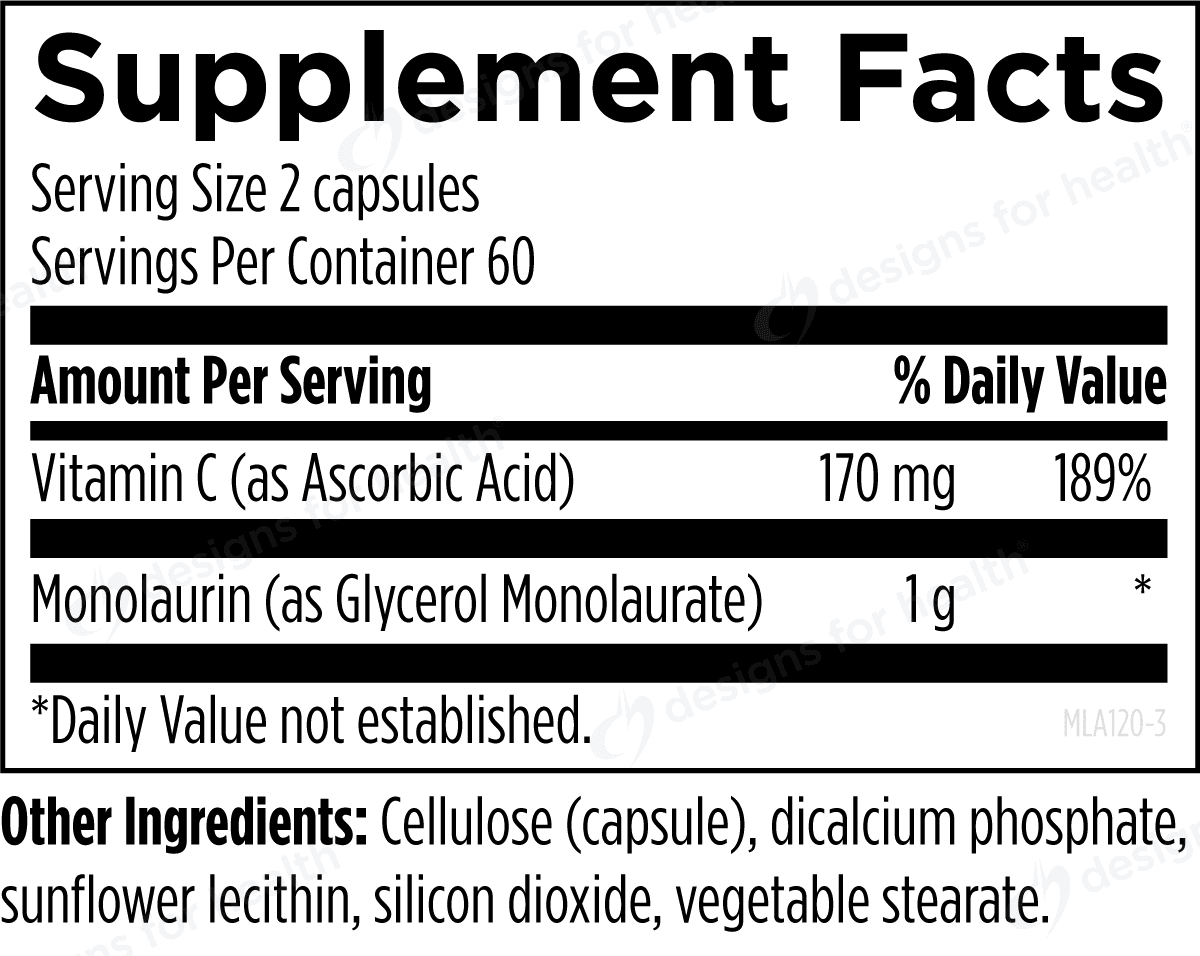
| Serving Size: 2 Vegetable Capsules | Amount/Serving |
| Vitamin C (as Ascorbic Acid) |
170 mg |
| Monolaurin (as Glycerol Monolaurate) | 1 g |
Other Ingredients: Cellulose (capsule), dicalcium phosphate, sunflower lecithin, silicon dioxide, vegetable stearate.
Gluten Free. Dairy Free. Soy Free. Vegetarian. Non-GMO. Vegan.
Suggested Use
As a dietary supplement, take two capsules per day with a meal, or as directed by your healthcare practitioner.
More Info.
Monolaurin (glycerol monolaurate) is a potent virucidal and bactericidal agent with efficacy across an impressive array of pathogenic organisms and viruses. Unlike conventional antibiotics, it has not been shown to result in antibacterial resistance, nor to have adverse effects on beneficial intestinal flora. As such, in addition to acute use it may also be used as a potential preventive measure during cold and flu season, or taken on an ongoing basis by those susceptible to recurrent infection and illness.
Mechanism and Targets of Action
Monolaurin is believed to inactivate lipid-coated viruses by binding to the lipid-protein viral envelope, thereby preventing it from attaching to and entering host cells. Additionally, as a lipid-based surfactant, monolaurin has been shown to be effective against microbial biofilms. Biofilm-associated bacteria are typically less susceptible to antibiotic therapy than are free-living bacteria, possibly owing to the inability of some antibiotics to fully penetrate the biofilm and interact directly with bacteria.
Product Information
Product Information
Shipping & Returns
Shipping & Returns
Description
Designs For Health Monolaurin-Avail™
Monolaurin-Avail™ is an encapsulated formula of monolaurin (glycerol monolaurate), a form of lauric acid, which is the predominant fatty acid in coconut and palm kernel oils and is also present in human breast milk (as 3.5-6.6 percent of total calories). This product is designed to offer potent support for immune health without adverse effects on beneficial intestinal flora. It contains vitamin C for the added immune benefit, and sunflower lecithin to enhance absorption of the monolaurin.
Ingredients
| Serving Size: 2 Vegetable Capsules | Amount/Serving |
| Vitamin C (as Ascorbic Acid) |
170 mg |
| Monolaurin (as Glycerol Monolaurate) | 1 g |
Other Ingredients: Cellulose (capsule), dicalcium phosphate, sunflower lecithin, silicon dioxide, vegetable stearate.
Gluten Free. Dairy Free. Soy Free. Vegetarian. Non-GMO. Vegan.
Suggested Use
As a dietary supplement, take two capsules per day with a meal, or as directed by your healthcare practitioner.
More Info.
Monolaurin (glycerol monolaurate) is a potent virucidal and bactericidal agent with efficacy across an impressive array of pathogenic organisms and viruses. Unlike conventional antibiotics, it has not been shown to result in antibacterial resistance, nor to have adverse effects on beneficial intestinal flora. As such, in addition to acute use it may also be used as a potential preventive measure during cold and flu season, or taken on an ongoing basis by those susceptible to recurrent infection and illness.
Mechanism and Targets of Action
Monolaurin is believed to inactivate lipid-coated viruses by binding to the lipid-protein viral envelope, thereby preventing it from attaching to and entering host cells. Additionally, as a lipid-based surfactant, monolaurin has been shown to be effective against microbial biofilms. Biofilm-associated bacteria are typically less susceptible to antibiotic therapy than are free-living bacteria, possibly owing to the inability of some antibiotics to fully penetrate the biofilm and interact directly with bacteria.