N-Acetyl Glucosamine (NAG)
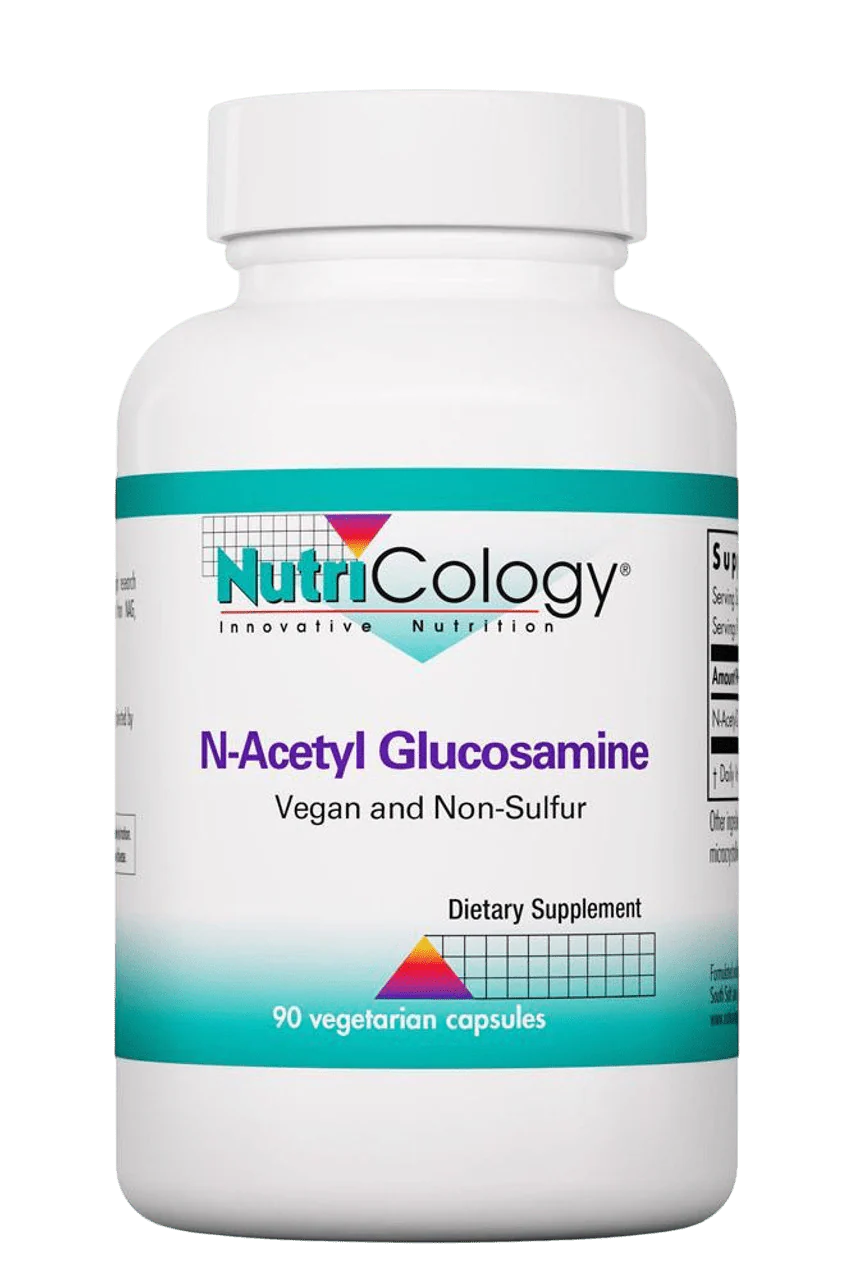
NutriCology N-Acetyl Glucosamine (NAG)
Vegan and Non-Sulfur
N-Acetyl-Glucosamine (NAG) is a simple amino sugar, a monosaccharide with an amino group as part of its structure. NAG is a nutrient, an intermediary metabolite, and a component of the glycocalyx coat carried by all the body’s cells. The glycocalyx is a layer of carbohydrate and proteins complexed together, sometimes also with lipid components, and anchored in the outer cell membrane. As a major contributor to the glycocalyx, NAG is involved in cell-to-cell attachment, contributes to the cell surface antigen patterns, and augments receptor functions. Although located on the cell’s exterior surface, NAG is important for cell function.
Key Features:
- Supports gastrointestinal function by enhancing mucosal integrity
- Provides a key building block molecule for connective tissue formation
- Better tolerated than glucosamine sulfate for those sensitive to sulfur
Ingredients
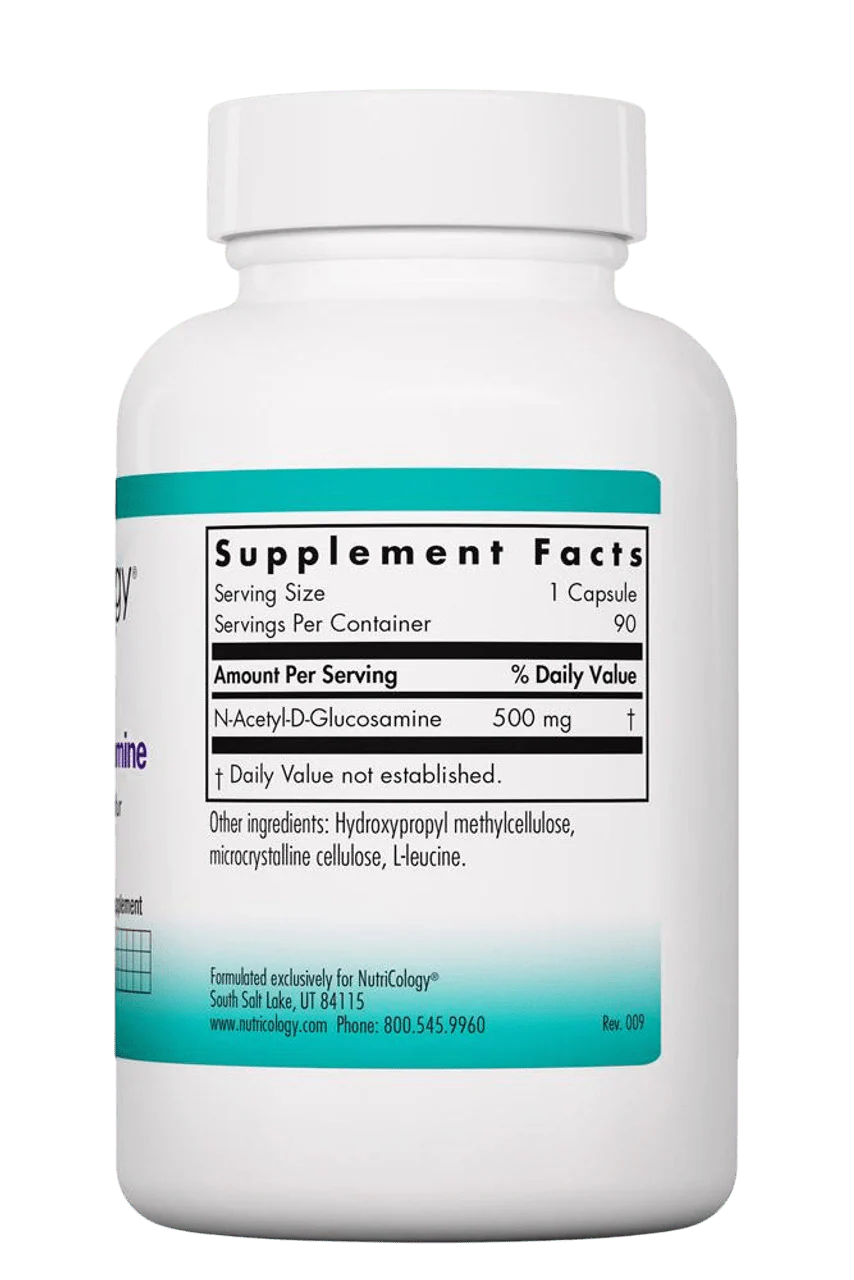
| Serving Size: 1 Vegetarian Capsule | Amount/Serving |
| N-Acetyl-D-Glucosamine | 500 mg |
Other Ingredients: Hydroxypropyl methylcellulose, microcrystalline cellulose, L-leucine.
Suggested Use
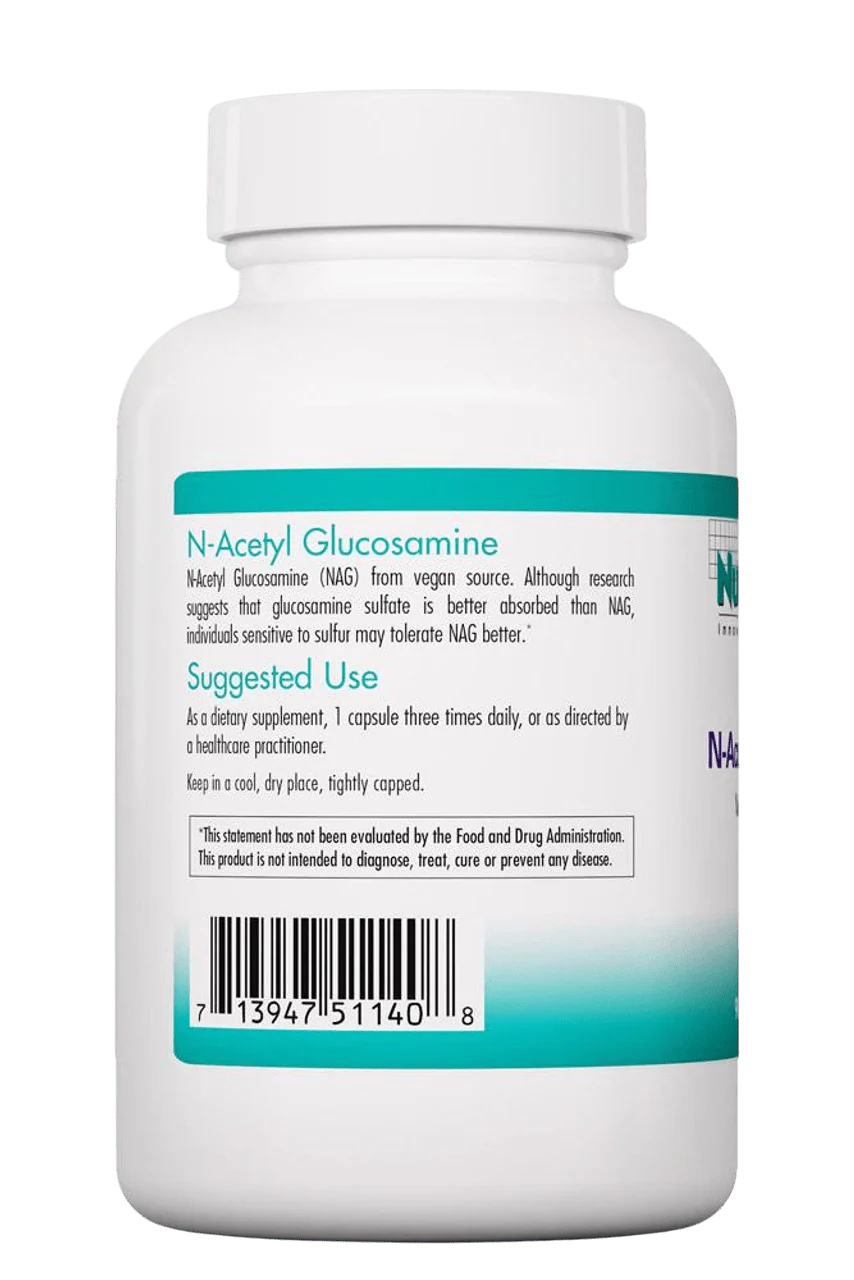
As a dietary supplement, 1 capsule three times daily, or as directed by a healthcare practitioner.
Storage: Keep in a cool, dry place, tightly capped.
More Info
In addition to sugar-coating our cells, NAG is also a building block for large molecular complexes, the extracellular cements that add bulk and strength to the connective tissues. NAG is a metabolic jumping-off point for a complex, enzyme-regulated polymerization process that generates glycosaminoglycans (GAG), which in turn become further organized into cartilage, bone, ligaments, tendons, sclera, and other specialized connective tissues. GAG are major structural contributors to the basement membranes of the skin and internal epithelia, the intima of the blood vessels, the heart valves, and the lens and sclera of the eye, as well as synovial fluid and the linings of the joints. Among the major known GAG are chondroitin sulfate, dermatan sulfate, heparan sulfate, heparin, and keratan sulfate. These GAG are enzymatically polymerized primarily from NAG, then subsequently become attached to protein chains, which serve as scaffolding for the GAG. The proteoglycans (PG) that result then become further organized and aggregated into the matrix materials for the diverse connective tissues. The extracellular matrix materials that surround the cells of solid tissues are integrated into the homeostatic mechanisms that support tissue and organ functions. The biological roles of GAG, both as cell surface glycocalyx and polymerized into PG, range from relatively straightforward mechanical support for the connective tissues, to effects on more dynamic and complex processes such as cell adhesion, motility, and aggregation; tissue morphogenesis and renewal, and growth factor effects; angiogenesis; and the initiation, amplification, and termination of inflammatory cascades.
NAG is important for intestinal function. It is prominent both in the glycocalyx of the absorptive cells of the intestinal mucosa, and in the mucus that is secreted from other cells of the mucosa. NAG is a major constituent of the mucosal barrier layer that protects the living epithelium from digestive enzymes and other potentially damaging intestinal contents. For this barrier layer to be adequately maintained, its rate of replacement must match or exceed the rate at which it is being worn away. Insufficiency of NAG can limit the synthesis of PG for mucus production. NAG is further along the critical pathway for GAG formation than is glucosamine: D-glucosamine → N-acetyl-D-glucosamine (NAG) → GAG → PG. The enterocyte cells should have the enzyme capacity to make NAG from glucosamine, but two of the necessary enzymes, glucosamine-6P-synthetase and acetyl-CoA-synthetase, can be blocked by alcohol and other substances. By supplying preformed NAG as a nutritional supplement, this vulnerable step in the pathway for mucus synthesis can be bypassed.
NAG is also a major component of several GAG that are prominent in the linings of the joints. The joints include the zones of friction between moving bones, and are sites where connective tissues are worn away most rapidly. Therefore the joints place a high demand on the capacity of their lining epithelia to produce new cartilage and other connective tissues. Glucosamine has been shown to be of clinical importance in joint maintenance and renewal. However, as with the production of mucus by the intestinal lining, in the connective tissues of the joints NAG is further along the same metabolic pathway towards GAG and PG production than is glucosamine. Furthermore, NAG appears to participate in the homeostatic regulation of immune cell activity in the joint. There is good reason to expect that an objective comparison of glucosamine with NAG for joint renewal would demonstrate the latter to be superior.
Product Information
Product Information
Shipping & Returns
Shipping & Returns
Description
NutriCology N-Acetyl Glucosamine (NAG)
Vegan and Non-Sulfur
N-Acetyl-Glucosamine (NAG) is a simple amino sugar, a monosaccharide with an amino group as part of its structure. NAG is a nutrient, an intermediary metabolite, and a component of the glycocalyx coat carried by all the body’s cells. The glycocalyx is a layer of carbohydrate and proteins complexed together, sometimes also with lipid components, and anchored in the outer cell membrane. As a major contributor to the glycocalyx, NAG is involved in cell-to-cell attachment, contributes to the cell surface antigen patterns, and augments receptor functions. Although located on the cell’s exterior surface, NAG is important for cell function.
Key Features:
- Supports gastrointestinal function by enhancing mucosal integrity
- Provides a key building block molecule for connective tissue formation
- Better tolerated than glucosamine sulfate for those sensitive to sulfur
Ingredients
| Serving Size: 1 Vegetarian Capsule | Amount/Serving |
| N-Acetyl-D-Glucosamine | 500 mg |
Other Ingredients: Hydroxypropyl methylcellulose, microcrystalline cellulose, L-leucine.
Suggested Use
As a dietary supplement, 1 capsule three times daily, or as directed by a healthcare practitioner.
Storage: Keep in a cool, dry place, tightly capped.
More Info
In addition to sugar-coating our cells, NAG is also a building block for large molecular complexes, the extracellular cements that add bulk and strength to the connective tissues. NAG is a metabolic jumping-off point for a complex, enzyme-regulated polymerization process that generates glycosaminoglycans (GAG), which in turn become further organized into cartilage, bone, ligaments, tendons, sclera, and other specialized connective tissues. GAG are major structural contributors to the basement membranes of the skin and internal epithelia, the intima of the blood vessels, the heart valves, and the lens and sclera of the eye, as well as synovial fluid and the linings of the joints. Among the major known GAG are chondroitin sulfate, dermatan sulfate, heparan sulfate, heparin, and keratan sulfate. These GAG are enzymatically polymerized primarily from NAG, then subsequently become attached to protein chains, which serve as scaffolding for the GAG. The proteoglycans (PG) that result then become further organized and aggregated into the matrix materials for the diverse connective tissues. The extracellular matrix materials that surround the cells of solid tissues are integrated into the homeostatic mechanisms that support tissue and organ functions. The biological roles of GAG, both as cell surface glycocalyx and polymerized into PG, range from relatively straightforward mechanical support for the connective tissues, to effects on more dynamic and complex processes such as cell adhesion, motility, and aggregation; tissue morphogenesis and renewal, and growth factor effects; angiogenesis; and the initiation, amplification, and termination of inflammatory cascades.
NAG is important for intestinal function. It is prominent both in the glycocalyx of the absorptive cells of the intestinal mucosa, and in the mucus that is secreted from other cells of the mucosa. NAG is a major constituent of the mucosal barrier layer that protects the living epithelium from digestive enzymes and other potentially damaging intestinal contents. For this barrier layer to be adequately maintained, its rate of replacement must match or exceed the rate at which it is being worn away. Insufficiency of NAG can limit the synthesis of PG for mucus production. NAG is further along the critical pathway for GAG formation than is glucosamine: D-glucosamine → N-acetyl-D-glucosamine (NAG) → GAG → PG. The enterocyte cells should have the enzyme capacity to make NAG from glucosamine, but two of the necessary enzymes, glucosamine-6P-synthetase and acetyl-CoA-synthetase, can be blocked by alcohol and other substances. By supplying preformed NAG as a nutritional supplement, this vulnerable step in the pathway for mucus synthesis can be bypassed.
NAG is also a major component of several GAG that are prominent in the linings of the joints. The joints include the zones of friction between moving bones, and are sites where connective tissues are worn away most rapidly. Therefore the joints place a high demand on the capacity of their lining epithelia to produce new cartilage and other connective tissues. Glucosamine has been shown to be of clinical importance in joint maintenance and renewal. However, as with the production of mucus by the intestinal lining, in the connective tissues of the joints NAG is further along the same metabolic pathway towards GAG and PG production than is glucosamine. Furthermore, NAG appears to participate in the homeostatic regulation of immune cell activity in the joint. There is good reason to expect that an objective comparison of glucosamine with NAG for joint renewal would demonstrate the latter to be superior.