Super D3
Allergy Research Group Super D3
Cholecalciferol with C and E
Natural source Vitamin D3 is produced from the lanolin of sheep wool. Vitamin D3 supports the regulation of calcium metabolism and absorption from the gut.
Key Benefits:
- Promotes gut absorption and normal blood levels of calcium and phosphorus
- Supports bone mineralization and skeletal health
Ingredients
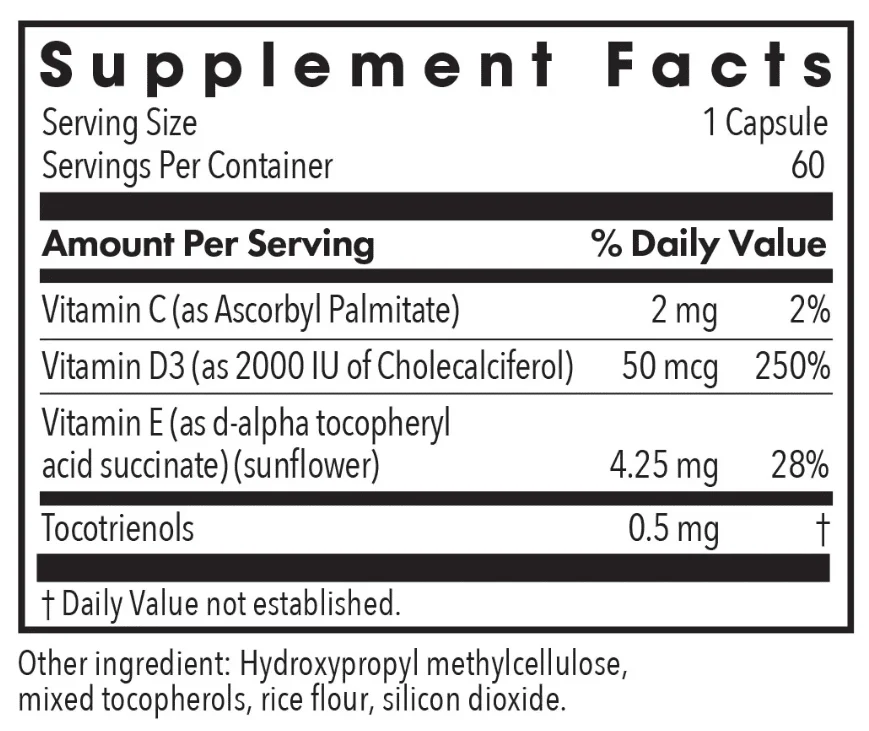
| Serving Size: 1 Capsule | Amount Per Serving |
|
Vitamin C (as Ascorbyl Palmitate)
|
2 mg |
|
Vitamin D3 (as 2000 IU of Cholecalciferol)
|
50 mcg
|
|
Vitamin E (as d-alpha tocopheryl acid succinate)(sunflower)
|
4.25 mg
|
|
Tocotrienols
|
0.5 mg
|
Other Ingredients: Hydroxypropyl methylcellulose, mixed tocopherols, rice flour, silicon dioxide.
Suggested Use
As a dietary supplement, 1 capsule daily, or as directed by a healthcare practitioner. Do not exceed the recommended dose or use long-term without proper blood monitoring.
Warning: If you are pregnant or lactating, have any health condition, or are taking any medication, consult your healthcare practitioner before use. Keep out of the reach of children. Use only if the safety seal is intact. Variations in product color may occur.
Storage: Store in a cool, dry place, tightly capped, away from light.
More Info
The primary source of vitamin D3 is sunlight, which converts 7-dehydrocholesterol in the skin to vitamin D3 via photochemical reactions using ultraviolet B radiation (UV-B). Numerous factors such as latitude, season, air pollution, pigmentation of skin, and sunscreen affect UV-ray exposure. The US is between 30° and 45° latitude, and six months or more of each year has insufficient UV-B sunlight to produce optimal D levels. People with dark skin produce less vitamin D since melanin, a skin pigment, acts as a natural sunscreen, absorbing UV radiation. Only a few foods naturally contain vitamin D: fatty fish, fish liver oils and eggs from hens that have been fed vitamin D. Fortified foods, such as milk and breakfast cereals, are the major sources of dietary vitamin D intake.
Original: $24.05
-70%$24.05
$7.21Product Information
Product Information
Shipping & Returns
Shipping & Returns
Description
Allergy Research Group Super D3
Cholecalciferol with C and E
Natural source Vitamin D3 is produced from the lanolin of sheep wool. Vitamin D3 supports the regulation of calcium metabolism and absorption from the gut.
Key Benefits:
- Promotes gut absorption and normal blood levels of calcium and phosphorus
- Supports bone mineralization and skeletal health
Ingredients
| Serving Size: 1 Capsule | Amount Per Serving |
|
Vitamin C (as Ascorbyl Palmitate)
|
2 mg |
|
Vitamin D3 (as 2000 IU of Cholecalciferol)
|
50 mcg
|
|
Vitamin E (as d-alpha tocopheryl acid succinate)(sunflower)
|
4.25 mg
|
|
Tocotrienols
|
0.5 mg
|
Other Ingredients: Hydroxypropyl methylcellulose, mixed tocopherols, rice flour, silicon dioxide.
Suggested Use
As a dietary supplement, 1 capsule daily, or as directed by a healthcare practitioner. Do not exceed the recommended dose or use long-term without proper blood monitoring.
Warning: If you are pregnant or lactating, have any health condition, or are taking any medication, consult your healthcare practitioner before use. Keep out of the reach of children. Use only if the safety seal is intact. Variations in product color may occur.
Storage: Store in a cool, dry place, tightly capped, away from light.
More Info
The primary source of vitamin D3 is sunlight, which converts 7-dehydrocholesterol in the skin to vitamin D3 via photochemical reactions using ultraviolet B radiation (UV-B). Numerous factors such as latitude, season, air pollution, pigmentation of skin, and sunscreen affect UV-ray exposure. The US is between 30° and 45° latitude, and six months or more of each year has insufficient UV-B sunlight to produce optimal D levels. People with dark skin produce less vitamin D since melanin, a skin pigment, acts as a natural sunscreen, absorbing UV radiation. Only a few foods naturally contain vitamin D: fatty fish, fish liver oils and eggs from hens that have been fed vitamin D. Fortified foods, such as milk and breakfast cereals, are the major sources of dietary vitamin D intake.