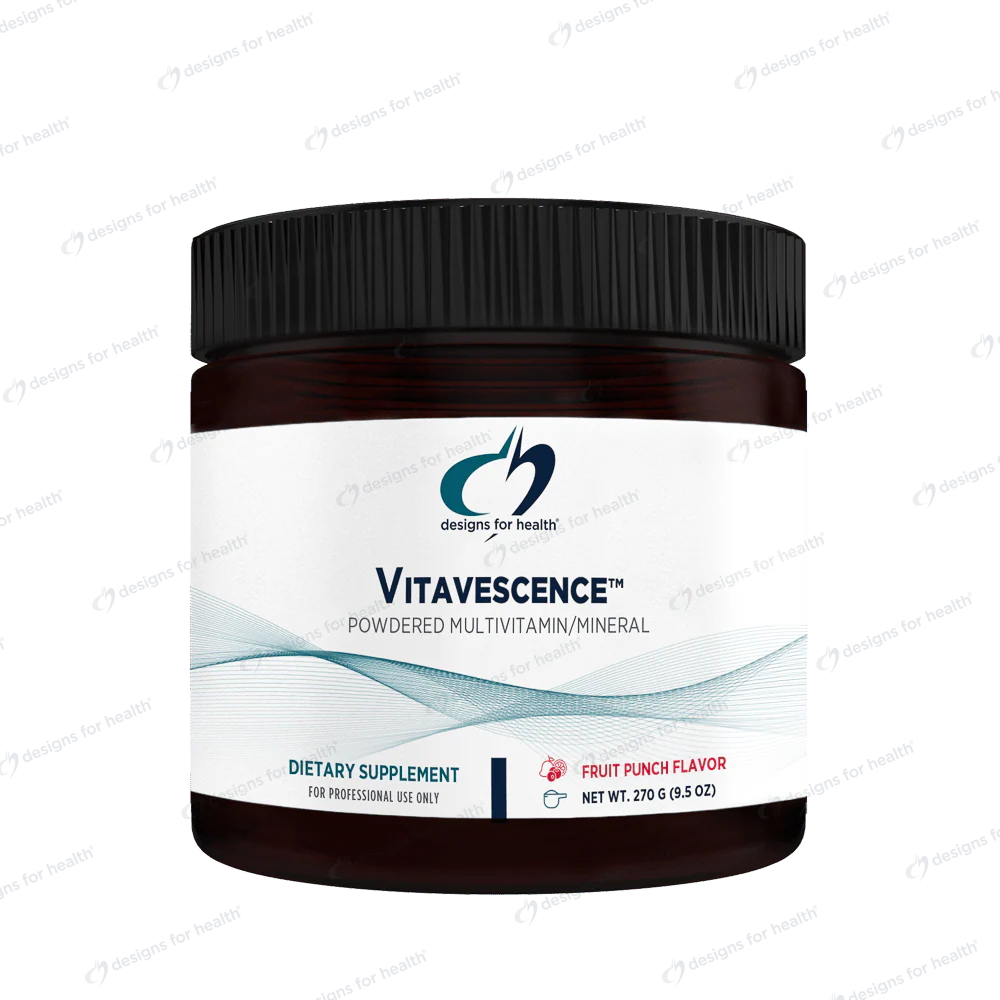
Vitavescence™ Powder - 30 Servings
Designs For Health Vitavescence™
Vitavescence™ is a delicious and exceptional multivitamin/multimineral supplement in powdered form. It consists of a comprehensive and well-balanced blend of vitamins, minerals, and phytonutrients, providing a strong nutritional foundation to help support optimal health. Vitavescence™ also contains an impressive array of health-promoting nutrients that are not typically found in multivitamins, such as alpha-lipoic acid, along with N-acetyl cysteine (NAC), green tea, rosemary, and grape extracts.
Not only are these compounds unique to most formulations, but they are also generally lacking in the standard American diet and play important roles in human health. Vitavescence™ powder offers a convenient delivery system that mixes easily in water or other beverages and turns into an effervescent, great-tasting nutritious drink. It has a natural fruit punch flavor and is sweetened with organic stevia leaf extract. It is the ideal multivitamin/multimineral for children, the elderly, and anyone who prefers not to take pills.
Ingredients
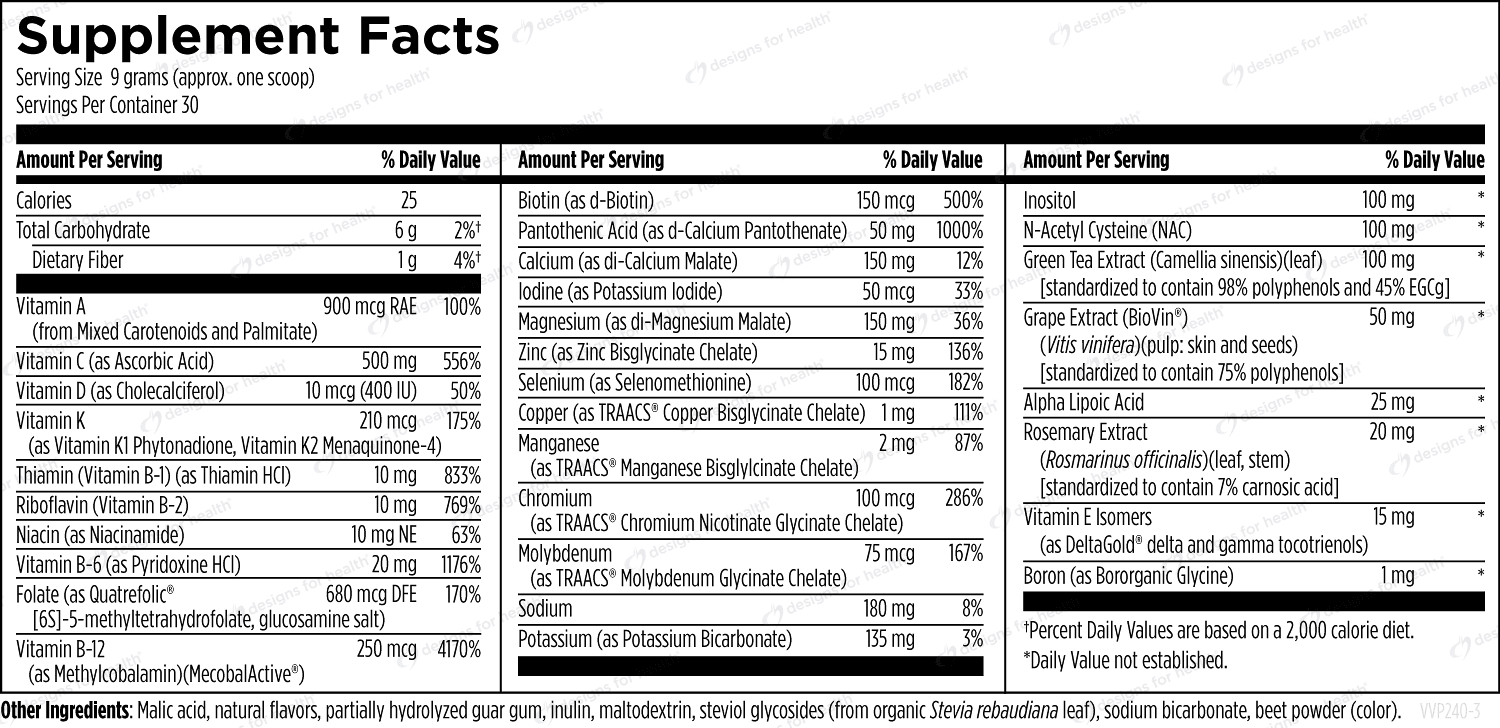
| Serving Size: 9 Grams (Approx. One Scoop) | Amount/Serving |
| Calories | 25 |
| Total Carbohydrate | 6 g |
| Dietary Fiber | 1 g |
| Vitamin A (from Mixed Carotenoids and Palmitate) |
900 mcg RAE |
| Vitamin C (as Ascorbic Acid) |
500 mg |
| Vitamin D (as Cholecalciferol) |
10 mcg (400 IU) |
| Vitamin K (as Vitamin K1 Phytonadione, Vitamin K2 Menaquinone-4) |
210 mcg |
| Thiamin (Vitamin B-1) (as Thiamin HCI) | 10 mg |
| Riboflavin (Vitamin B-2) | 10 mg |
| Niacin (as Niacinamide) | 10 mg NE |
| Vitamin B-6 (as Pyridoxine HCI) | 20 mg |
| Folate (as Quatrefolic® [6S]-5-methyltetrahydrofolate, glucosamine salt) |
680 mcg DFE |
| Vitamin B-12 (as Methylcobalamin)(MecobalActive®) |
250 mcg |
| Biotin (as d-Biotin) | 150 mcg |
| Panthothenic Acid (as d-Calcium Pantothenate) | 50 mg |
| Calcium (as di-Calcium Malate) | 150 mg |
| Iodine (as Potassium Iodide) | 50 mcg |
| Magnesium (as di-Magnesium Malate) | 150 mg |
| Zinc (as Zinc Bisglycinate Chelate) | 15 mg |
| Selenium (as Selenomethionine) | 100 mcg |
| Copper (as TRAACS® Copper Bisglycinate Chelate) | 1 mg |
| Manganese (as TRAACS® Maganese Bisglycinate Chelate) |
2 mg |
| Chromium (as TRAACS® Molybdenum Glycinate Chelate) |
75 mcg |
| Sodium |
180 mg |
| Potassium (as Potassium Bicarbonate) |
135 mg |
| Inositol | 100 mg |
| N-Acetyl Cysteine (NAC) | 100 mg |
| Green Tea Extract (Camellia sinesis) (leaf) [standardized to contain 98% polyphenols and 45% EGCg] |
100 mg |
| Grape Extract (BioVin®) (Vitis vinifera)(pulp: skin and seeds) [standardized to contain 75% polyphenols] |
50 mg |
| Alpha Lipoic Acid | 25 mg |
| Rosemary Extract (Rosmarinus officinalis)(leaf, stem) [standardized to contain 7% carnosic acid] |
20 mg |
| Vitamin E Isomers (as DeltaGold® delta and gamma tocotrienols) |
15 mg |
| Boron (as Bororganic Glycine) | 1 mg |
Other Ingredients: Malic acid, natural flavors, partially hyrolyzed guar gum, inulin, maltodextrin, steviol glycosides (from organic Stevia rebaudiana leaf), sodium bicarbonate, beet powder (color).
Gluten Free. Dairy Free. Soy Free. Vegetarian. Non-GMO.
Suggested Use
As a dietary supplement, mix 9 grams (approx. one scoop) in 8 ounces of water per day, or as directed by your healthcare practitioner.
Warning: Consult your health care practitioner before using this product if you are taking Coumadin, warfarin or other anticoagulant medications.
More Info.
Folate is provided as naturally-occurring folates with Quatrefolic®, a glucosamine salt 5-methyl tetrahydrofolate (5-MTHF). Natural folate is more easily assimilated by the body than synthetic folic acid, particularly in those with genetic polymorphisms in folate metabolism. Unmetabolized serum folic acid is a common occurrence, owing in part to the fortification of grain products and multivitamins with folic acid rather than natural folates. Elevated levels of unmetabolized synthetic folic acid have been associated with increased risk of cancer, as well as reduced cognitive function in older adults.
N-Acetyl Cysteine (NAC) is the precursor to glutathione, which is considered the body’s most powerful “master” antioxidant. Glutathione is utilized in nearly all tissues of the body, with the highest concentrations occurring in the liver, eyes, pancreas, and kidneys. It is especially critical for phase II hepatic biotransformation and sulfation pathways in the liver, helping improve xenobiotic metabolism. Systematic reviews demonstrate the significant positive effects of NAC on enhancing enzymatic antioxidant activity and inhibition of oxidative stress, and mitigating age-related cell death.
Alpha Lipoic Acid (ALA) is a sulfur-containing compound that exhibits amphipathic antioxidant properties, making it effective in both water and lipid-based environments. This unique property allows it to quench free radicals in hydrophilic and lipophilic environments alike, such as cytosol, plasma membranes, serum, and lipoproteins. ALA is best known for its antioxidant capacity, but this molecule has also been shown to have potent effects on blood glucose control by improved insulin secretion and sensitivity, and by contributing to metal detoxification. Lipoic acid also serves as an important cofactor for mitochondrial enzymes involved in adenosine triphopshate (ATP) generation. There is a growing body of evidence supporting the role of ALA in its ability to improve insulin sensitivity and to enhance cellular glucose uptake by affecting insulin receptors and glucose transporters.
Green Tea Extract (Camellia sinensis) (standardized to contain 98% polyphenols and 45% epigallocatechin gallate [EGCg]) has powerful antioxidant and chemoprotective properties. Green tea extracts have demonstrated their free radical scavenging ability in a variety of tissue types. Green tea and its constituent compounds have also been shown to inhibit cyclooxygenase (COX-1 and COX-2), enzymes involved in inflammatory regulation, and inflammatory gene and protein expression such as interleukin (IL)-1β, tumor necrosis factor (TNF)-α, IL-6, matrix metalloproteinase (MMP), and nuclear factor (NF)-κβ. Regarding chemoprotection, the antioxidant and anti-inflammatory properties of green tea may inhibit the development of precancerous lesions and also protect against metabolic abnormalities implicated in carcinogenesis. Consumption of green tea has also been linked to lower fasting blood glucose levels and reduced hemoglobin A1c, and reduced systolic and diastolic blood pressure, suggesting that it may be protective against glucose dysregulation, insulin resistance, and metabolic syndrome.
Grape Seed/Skin Extract (Vitis vinifera) as BioVin® (standardized to contain 75% polyphenols) offers brain, metabolic, and cardiovascular support. Grape polyphenols exert a number of cardioprotective effects. They have been shown to be antiatherosclerotic, anti-arrhythmic, and to help improve endothelial function and contribute to vasorelaxation. They have also demonstrated the ability to reduce blood pressure and platelet aggregation, inhibit the oxidation of low-denisty lipoprotein (LDL) particles, and significantly reduce fasting blood glucose, total cholesterol, LDL-C, triglycerides, and C-reactive protein concentrations, suggesting grape seed extracts (GSE) as a potential candidate for the prevention of obesity and metabolic syndrome. GSE may protect against toxin-induced damage to DNA, thus playing a role in chemoprevention. Furthermore, some grape extract fractions have pro-oxidant properties, which may account for the apoptosis-inducing and cytotoxic effects of some of the polyphenols against cancer cells. GSE, in general, were shown to have promise for reducing the progression and pathology of neurodegenerative diseases and brain aging. GSE, in general, were shown to have promise for reducing the progression and pathology of neurodegenerative diseases and brain aging.
Rosemary Extract (Rosmarinus officinalis) (standardized to contain 7% carnosic acid) is a potent, fat-soluble antioxidant. Ninety percent of the antioxidant capacity of rosemary is due to carnosol, one of the plant’s polyphenol constituents, but other compounds in the herb, namely, carnosic acid and rosmarinic acid, have also shown antioxidant capacity and potent anti-proliferative properties. The phenolic compounds in R. officinalis also possess anti-infectious, anti-inflammatory, analgesic, cytoprotective, and central nervous and endocrine system activities. Rosemary may be a helpful adjunct in inflammatory conditions associated with insulin resistance. Studies show that carnosic acid extracted from rosemary led to reduced levels of the inflammatory markers, TNF-α and NF-κB, and it was also shown to help improve blood glucose and triglyceride levels.
Product Information
Product Information
Shipping & Returns
Shipping & Returns
Description
Designs For Health Vitavescence™
Vitavescence™ is a delicious and exceptional multivitamin/multimineral supplement in powdered form. It consists of a comprehensive and well-balanced blend of vitamins, minerals, and phytonutrients, providing a strong nutritional foundation to help support optimal health. Vitavescence™ also contains an impressive array of health-promoting nutrients that are not typically found in multivitamins, such as alpha-lipoic acid, along with N-acetyl cysteine (NAC), green tea, rosemary, and grape extracts.
Not only are these compounds unique to most formulations, but they are also generally lacking in the standard American diet and play important roles in human health. Vitavescence™ powder offers a convenient delivery system that mixes easily in water or other beverages and turns into an effervescent, great-tasting nutritious drink. It has a natural fruit punch flavor and is sweetened with organic stevia leaf extract. It is the ideal multivitamin/multimineral for children, the elderly, and anyone who prefers not to take pills.
Ingredients
| Serving Size: 9 Grams (Approx. One Scoop) | Amount/Serving |
| Calories | 25 |
| Total Carbohydrate | 6 g |
| Dietary Fiber | 1 g |
| Vitamin A (from Mixed Carotenoids and Palmitate) |
900 mcg RAE |
| Vitamin C (as Ascorbic Acid) |
500 mg |
| Vitamin D (as Cholecalciferol) |
10 mcg (400 IU) |
| Vitamin K (as Vitamin K1 Phytonadione, Vitamin K2 Menaquinone-4) |
210 mcg |
| Thiamin (Vitamin B-1) (as Thiamin HCI) | 10 mg |
| Riboflavin (Vitamin B-2) | 10 mg |
| Niacin (as Niacinamide) | 10 mg NE |
| Vitamin B-6 (as Pyridoxine HCI) | 20 mg |
| Folate (as Quatrefolic® [6S]-5-methyltetrahydrofolate, glucosamine salt) |
680 mcg DFE |
| Vitamin B-12 (as Methylcobalamin)(MecobalActive®) |
250 mcg |
| Biotin (as d-Biotin) | 150 mcg |
| Panthothenic Acid (as d-Calcium Pantothenate) | 50 mg |
| Calcium (as di-Calcium Malate) | 150 mg |
| Iodine (as Potassium Iodide) | 50 mcg |
| Magnesium (as di-Magnesium Malate) | 150 mg |
| Zinc (as Zinc Bisglycinate Chelate) | 15 mg |
| Selenium (as Selenomethionine) | 100 mcg |
| Copper (as TRAACS® Copper Bisglycinate Chelate) | 1 mg |
| Manganese (as TRAACS® Maganese Bisglycinate Chelate) |
2 mg |
| Chromium (as TRAACS® Molybdenum Glycinate Chelate) |
75 mcg |
| Sodium |
180 mg |
| Potassium (as Potassium Bicarbonate) |
135 mg |
| Inositol | 100 mg |
| N-Acetyl Cysteine (NAC) | 100 mg |
| Green Tea Extract (Camellia sinesis) (leaf) [standardized to contain 98% polyphenols and 45% EGCg] |
100 mg |
| Grape Extract (BioVin®) (Vitis vinifera)(pulp: skin and seeds) [standardized to contain 75% polyphenols] |
50 mg |
| Alpha Lipoic Acid | 25 mg |
| Rosemary Extract (Rosmarinus officinalis)(leaf, stem) [standardized to contain 7% carnosic acid] |
20 mg |
| Vitamin E Isomers (as DeltaGold® delta and gamma tocotrienols) |
15 mg |
| Boron (as Bororganic Glycine) | 1 mg |
Other Ingredients: Malic acid, natural flavors, partially hyrolyzed guar gum, inulin, maltodextrin, steviol glycosides (from organic Stevia rebaudiana leaf), sodium bicarbonate, beet powder (color).
Gluten Free. Dairy Free. Soy Free. Vegetarian. Non-GMO.
Suggested Use
As a dietary supplement, mix 9 grams (approx. one scoop) in 8 ounces of water per day, or as directed by your healthcare practitioner.
Warning: Consult your health care practitioner before using this product if you are taking Coumadin, warfarin or other anticoagulant medications.
More Info.
Folate is provided as naturally-occurring folates with Quatrefolic®, a glucosamine salt 5-methyl tetrahydrofolate (5-MTHF). Natural folate is more easily assimilated by the body than synthetic folic acid, particularly in those with genetic polymorphisms in folate metabolism. Unmetabolized serum folic acid is a common occurrence, owing in part to the fortification of grain products and multivitamins with folic acid rather than natural folates. Elevated levels of unmetabolized synthetic folic acid have been associated with increased risk of cancer, as well as reduced cognitive function in older adults.
N-Acetyl Cysteine (NAC) is the precursor to glutathione, which is considered the body’s most powerful “master” antioxidant. Glutathione is utilized in nearly all tissues of the body, with the highest concentrations occurring in the liver, eyes, pancreas, and kidneys. It is especially critical for phase II hepatic biotransformation and sulfation pathways in the liver, helping improve xenobiotic metabolism. Systematic reviews demonstrate the significant positive effects of NAC on enhancing enzymatic antioxidant activity and inhibition of oxidative stress, and mitigating age-related cell death.
Alpha Lipoic Acid (ALA) is a sulfur-containing compound that exhibits amphipathic antioxidant properties, making it effective in both water and lipid-based environments. This unique property allows it to quench free radicals in hydrophilic and lipophilic environments alike, such as cytosol, plasma membranes, serum, and lipoproteins. ALA is best known for its antioxidant capacity, but this molecule has also been shown to have potent effects on blood glucose control by improved insulin secretion and sensitivity, and by contributing to metal detoxification. Lipoic acid also serves as an important cofactor for mitochondrial enzymes involved in adenosine triphopshate (ATP) generation. There is a growing body of evidence supporting the role of ALA in its ability to improve insulin sensitivity and to enhance cellular glucose uptake by affecting insulin receptors and glucose transporters.
Green Tea Extract (Camellia sinensis) (standardized to contain 98% polyphenols and 45% epigallocatechin gallate [EGCg]) has powerful antioxidant and chemoprotective properties. Green tea extracts have demonstrated their free radical scavenging ability in a variety of tissue types. Green tea and its constituent compounds have also been shown to inhibit cyclooxygenase (COX-1 and COX-2), enzymes involved in inflammatory regulation, and inflammatory gene and protein expression such as interleukin (IL)-1β, tumor necrosis factor (TNF)-α, IL-6, matrix metalloproteinase (MMP), and nuclear factor (NF)-κβ. Regarding chemoprotection, the antioxidant and anti-inflammatory properties of green tea may inhibit the development of precancerous lesions and also protect against metabolic abnormalities implicated in carcinogenesis. Consumption of green tea has also been linked to lower fasting blood glucose levels and reduced hemoglobin A1c, and reduced systolic and diastolic blood pressure, suggesting that it may be protective against glucose dysregulation, insulin resistance, and metabolic syndrome.
Grape Seed/Skin Extract (Vitis vinifera) as BioVin® (standardized to contain 75% polyphenols) offers brain, metabolic, and cardiovascular support. Grape polyphenols exert a number of cardioprotective effects. They have been shown to be antiatherosclerotic, anti-arrhythmic, and to help improve endothelial function and contribute to vasorelaxation. They have also demonstrated the ability to reduce blood pressure and platelet aggregation, inhibit the oxidation of low-denisty lipoprotein (LDL) particles, and significantly reduce fasting blood glucose, total cholesterol, LDL-C, triglycerides, and C-reactive protein concentrations, suggesting grape seed extracts (GSE) as a potential candidate for the prevention of obesity and metabolic syndrome. GSE may protect against toxin-induced damage to DNA, thus playing a role in chemoprevention. Furthermore, some grape extract fractions have pro-oxidant properties, which may account for the apoptosis-inducing and cytotoxic effects of some of the polyphenols against cancer cells. GSE, in general, were shown to have promise for reducing the progression and pathology of neurodegenerative diseases and brain aging. GSE, in general, were shown to have promise for reducing the progression and pathology of neurodegenerative diseases and brain aging.
Rosemary Extract (Rosmarinus officinalis) (standardized to contain 7% carnosic acid) is a potent, fat-soluble antioxidant. Ninety percent of the antioxidant capacity of rosemary is due to carnosol, one of the plant’s polyphenol constituents, but other compounds in the herb, namely, carnosic acid and rosmarinic acid, have also shown antioxidant capacity and potent anti-proliferative properties. The phenolic compounds in R. officinalis also possess anti-infectious, anti-inflammatory, analgesic, cytoprotective, and central nervous and endocrine system activities. Rosemary may be a helpful adjunct in inflammatory conditions associated with insulin resistance. Studies show that carnosic acid extracted from rosemary led to reduced levels of the inflammatory markers, TNF-α and NF-κB, and it was also shown to help improve blood glucose and triglyceride levels.