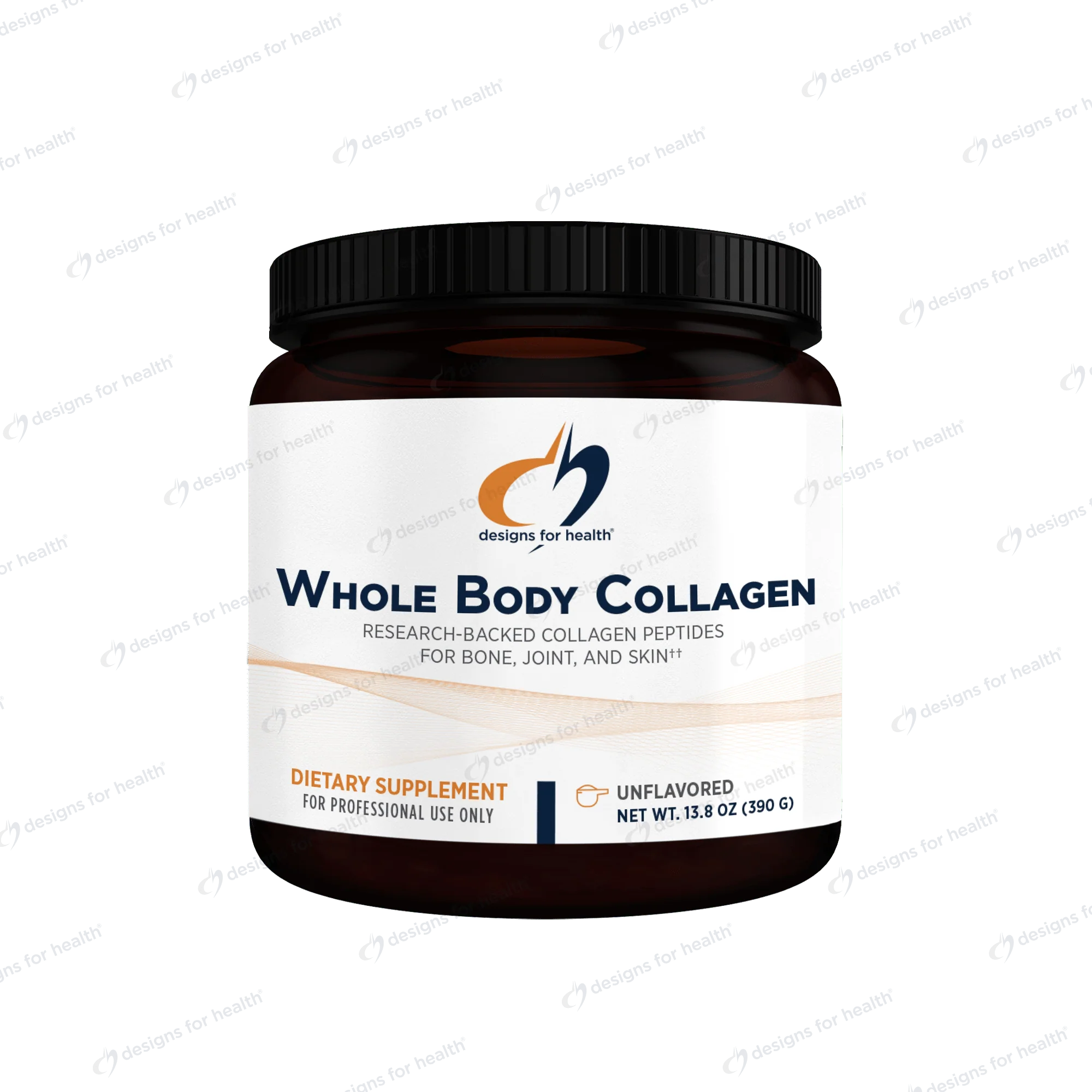
Whole Body Collagen - 30 Servings
Designs for Health Whole Body Collagen
Whole Body Collagen contains a unique blend of three patented collagen peptides supported by clinical research showing their efficacy for supporting collagen production, bone strength, joint health and integrity, skin elasticity, and more.
Collagen is a special type of protein that accounts for as much as 30% of the body’s total protein. In particular, it’s a primary structural component of connective tissue. The amino acid composition of dietary collagens are very similar to those in human collagens, making dietary collagen peptides ideal for supporting normal body collagen turnover and renewal.
Many individuals — the elderly, in particular — do not consume adequate protein. Even among those with a higher protein intake, the richest sources of collagen — animal skins, bone broth, and tendons — are not typically part of the modern Western diet. Whole Body Collagen can be incorporated into shakes, smoothies, and other foods and beverages, making it convenient to ensure the adequate intake of collagen’s unique amino acids.
Ingredients
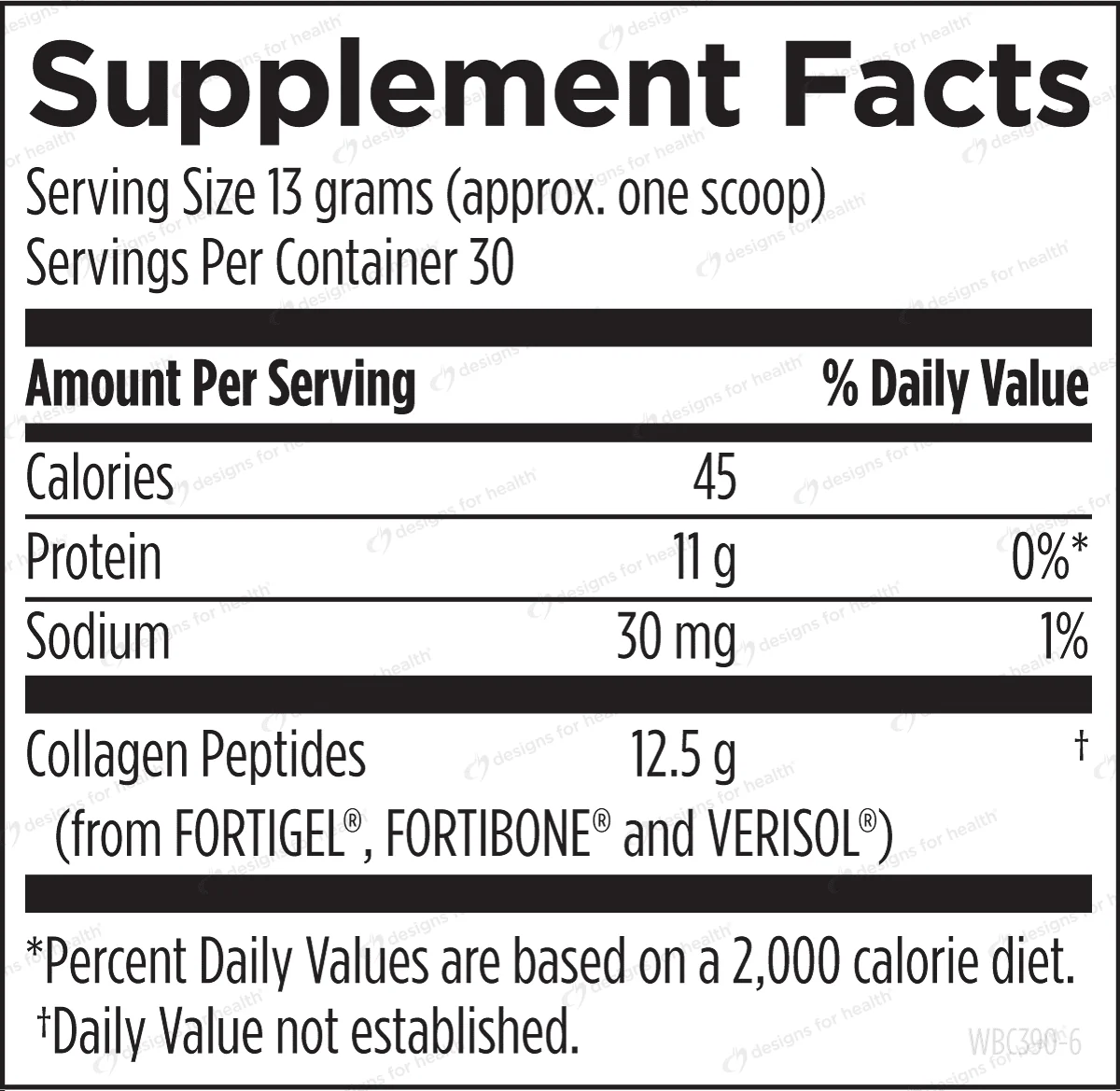
| Serving Size: 13 Grams (Approx. One Scoop) |
Amount/Serving |
| Calories | 45 |
| Protein | 11 g |
| Sodium | 30 mg |
| Collagen Peptides (from FORTIGEL® , FORTIBONE®, and VERISOL®) |
12.5 g |
Gluten Free. Dairy Free. Soy Free. Non-GMO.
Fortigel®, Verisol® and Fortibone® are registered trademarks of GELITA AG
Suggested Use
As a dietary supplement, mix 13 grams (approx. one scoop) in eight ounces of water per day, or as directed by your healthcare practitioner. For best results, add powder prior to adding water.
More Info.
Collagen is a special type of protein that accounts for as much as 30% of the body’s total protein. It acts as a primary structural component of connective tissue and supports a variety of tissues that include the tendons, skin, teeth, joints, and bones. Collagen has many roles in the body that include the development of organs, healing of wounds and tissues, and the repair of the cornea, gums, scalp, bones, and blood vessels. Collagen is present in the bones, tendons, ligaments, skin, and muscles.
There are at least 29 distinct types of collagens grouped into eight families, differing by sequence, structure, and function. Type I collagen is considered the major fibrillar collagen in vertebrae connective tissues and the most abundant collagen in the skin, bones, teeth, tendons, ligaments, and organs. Type II collagen is found in the cartilage, and type III is found in the skin, muscles, and blood vessels.
Collagen‑specific helical structures are supported by the amino acids (AAs) of glycine, proline, and hydroxyproline. Although other dietary proteins can provide these specific amino acids, collagen is a more concentrated source, so it may be a more effective choice when the clinical goal is related to supporting structural components of bones, tendons, cartilage, and skin integrity. Collagen also supports overall protein and amino acid needs. As one article concludes, it was estimated that when 36% of an adequate protein intake is substituted by collagen, the need for essential AAs is still met, along with a significant supply of the collagen essential AAs of glycine and proline.
Approximately 25% to 30% of the human body’s proteins are represented by collagen type proteins, which are essential in human anatomy and physiology. These are signaling molecules and significant structural components, which consist of 75% skin, 64% corneal tissues, 50% cartilage, 65% to 80% tendons, 70% ligaments, 10% to 11% muscles, 16% bones, 10% lungs, 12% to 24% aorta, and 30% tooth dentin. These are signaling molecules and significant structural components, which consist of 75% skin, 64% corneal tissues, 50% cartilage, 65% to 80% tendons, 70% ligaments, 10% to 11% muscles, 16% bones, 10% lungs, 12% to 24% aorta, and 30% tooth dentin.
Body collagens have a normal turnover similar to other body proteins, such as muscle proteins. Their rate of turnover is affected by nutritional status, physical stimulus (exercise, stretching), and hormones. Thus, it makes sense to incorporate collagen peptides in a balanced daily protein consumption. Collagen protein has been classically viewed as incomplete solely based on its content of essential amino acids (EAAs), but it should be viewed similarly to vegetarian proteins, which contribute to total AA intake, such that the daily need of EAAs is met in the context of the average Western diet.
The benefits of body collagens are explained by the fact that they are absorbed and transported to cells in various amino acid sequences and lengths. Body collagens are similar to the collagen peptides produced naturally in the body from connective tissue turnover. Endogenously produced collagen peptides are viewed as signals for stimulating repair or renewal of connective tissues. Diet‑derived collagen peptides act in concert with endogenous peptides to enhance this type of signaling. Collagen peptides are eventually broken down to individual amino acids inside cells, providing building blocks for new collagen synthesis. Cofactors, such as vitamin C, silicon, iron, sulfur, and copper are crucial for stabilizing newly synthesized pro‑collagens, a process that converts them to tissue‑usable collagens.
Whole Body Collagen is formulated with three clinically supported collagen peptides. These unique peptides exhibit a range of structural and physiological benefits as noted in studies conducted by researchers at the universities of Harvard, Tufts, and Penn State.
Fortibone® collagen peptide blend has been found in studies to help improve bone health. One study compared 5 g of Fortibone® per day with a placebo in postmenopausal females with osteopenia or osteoporosis. The Fortibone® group experienced an improvement in bone mineral density (BMD) in the femoral neck and spine, along with increased markers of bone formation (procollagen type I propeptides [P1NP]) with no change in markers of bone breakdown (C‑telopeptide of type I collagen [CTX‑1]). Similarly, in a small follow‑up, observational study of postmenopausal women with reduced BMD, a daily intake of 5 g of Fortibone® resulted in a steady increase in BMD and the T‑score in the spine and femoral neck after 4 years. Another study found that the addition of 5 g of Fortibone® to a supplement with 500 mg of elemental calcium and 400 IU of vitamin D3 in postmenopausal females with osteopenia led to a significant decrease of both P1NP and CTX‑1 within 3 months, demonstrating a decrease in bone turnover. The group taking only the calcium and vitamin D3 experienced no change.
Fortigel® collagen peptide blend has been found to benefit osteoarthritis, including knee pain and low back pain, in clinical trials. One randomized controlled trial found that kinesitherapy, along with Fortigel®, vitamin C, sodium hyaluronate, manganese, and copper, led to a more marked improvement in pain and quality of life. Fortigel® collagen peptide blend has been found to benefit osteoarthritis, including knee pain and low back pain, in clinical trials. One randomized controlled trial found that kinesitherapy, along with Fortigel®, vitamin C, sodium hyaluronate, manganese, and copper, led to a more marked improvement in pain and quality of life. In another study, athletes with functional knee problems during sports used 5 g of Fortigel® for 12 weeks. The Fortigel® group experienced a statistically significant improvement in activity‑related pain intensity and some improvement in pain under resting conditions, although it did not reach statistical significance.17 In another randomized controlled trial of young active adults between 18 and 30 years old suffering with knee joint discomfort, a daily intake of 5 g of Fortigel® specific collagen peptides for 12 weeks led to a significantly higher reduction of exercise‑related knee pain compared to a placebo.
Verisol® collagen peptide blend has been shown to benefit skin health. Studies have found that it upregulates the synthesis of collagen, elastin, fibrillin, and glycosaminoglycans in the dermal layer of facial skin, resulting in reduced wrinkles and improved skin elasticity that can last for at least 4 weeks after collagen supplementation ends. Verisol® has also demonstrated the ability to improve cellulite appearance by increasing dermal thickness and elasticity. Another study has shown that Verisol® supplementation resulted in improved nail growth and reduced occurrence of brittle and broken nails.
Skin Aging and Elasticity
Declines in collagen are associated with skin aging. Collagen loss begins between the ages of 18 and 29, and after age 40, it is estimated that the body loses roughly 1% annually. By age 80, it is estimated that the collagen production in the body may be decreased by 75% compared to young adults. In addition to aging, oxidative stress, diet, certain conditions, and various lifestyle factors may contribute to increased collagen loss.
Collagen loss begins between the ages of 18 and 29, and after age 40, it is estimated that the body loses roughly 1% annually. By age 80, it is estimated that the collagen production in the body may be decreased by 75% compared to young adults. In addition to aging, oxidative stress, diet, certain conditions, and various lifestyle factors may contribute to increased collagen loss. Collagen loss begins between the ages of 18 and 29, and after age 40, it is estimated that the body loses roughly 1% annually. By age 80, it is estimated that the collagen production in the body may be decreased by 75% compared to young adults. In addition to aging, oxidative stress, diet, certain conditions, and various lifestyle factors may contribute to increased collagen loss.
Joint Support
Alterations in collagen may also affect joint health. Collagen damage is associated with osteoarthritis (OA), with damage common in two or more joints, such as the hips, knees, lower back, neck, or fingers. A meta‑analysis of randomized, placebo‑controlled trials found that oral supplementation of collagen led to a significant improvement in both total Western Ontario and McMaster Universities Osteoarthritis Index (WOMAC) score and Visual Analog Scale (VAS) score in patients with osteoarthritis, demonstrating improvement in OA symptoms.
A meta‑analysis of randomized, placebo‑controlled trials found that oral supplementation of collagen led to a significant improvement in both total Western Ontario and McMaster Universities Osteoarthritis Index (WOMAC) score and Visual Analog Scale (VAS) score in patients with osteoarthritis, demonstrating improvement in OA symptoms. A meta‑analysis of randomized, placebo‑controlled trials found that oral supplementation of collagen led to a significant improvement in both total Western Ontario and McMaster Universities Osteoarthritis Index (WOMAC) score and Visual Analog Scale (VAS) score in patients with osteoarthritis, demonstrating improvement in OA symptoms.
Bone Health
Bones are composed of minerals (70%), whereas the balance is composed of organic mass (20%) and water (10%). Organic bone mass consists of 80% collagen and the balance consists of elastin, proteoglycans, osteocalcin, osteopontin, and other proteins and cells. Collagen fibrills act as connecting coils that bind the bone mineral crystals of calcium and phosphate. Thus, collagen contributes to bone elasticity and resilience. Collagen content, fibril diameter, and its organization are all important determinants of bone quality, and thus, of fracture risk. Mechanisms of action that may explain the benefits of collagen peptides on bone metabolism have been documented by in vitro studies with bone specific cells and other connective tissues, such as collagen peptides that provide amino acid building blocks for bone collagen, exert stimulatory signals for bone cells, increase collagen and osteocalcin synthesis, reduce inflammatory cytokines (such as tumor necrosis factor‑alpha, interleukin‑1‑beta, interleukin‑6), increase alkaline phosphatase levels, and increase differentiation of mesenchymal cells into osteoblasts.
Animal studies have demonstrated benefits of collagen peptide supplementation on bone health, including reduced fracture risk, increased bone mineral density, organic mass, and collagen content of bones, along with accelerated fracture healing and improved markers of bone turnover in ovariectomized rats and bone development during growth. Clinical, pre‑clinical, and in vitro research is accumulating to support the benefits of collagen peptides for bone health.
Collagen may also benefit body composition and muscle health, which include increased fat‑free mass, improved muscle strength, and reduced fat mass, especially when combined with exercise. In middle‑aged, untrained men, 15 g of daily supplementation of specific hydrolyzed collagen peptides in combination with a 12‑week resistance training program significantly increased fat‑free mass and decreased fat mass compared to the placebo. An animal study suggests that supplementation with a blend of collagen peptides may reduce menopause‑related obesity. Collagen supplementation after exercise may also support exercise recovery and muscle soreness.
Original: $63.29
-70%$63.29
$18.99Product Information
Product Information
Shipping & Returns
Shipping & Returns
Description
Designs for Health Whole Body Collagen
Whole Body Collagen contains a unique blend of three patented collagen peptides supported by clinical research showing their efficacy for supporting collagen production, bone strength, joint health and integrity, skin elasticity, and more.
Collagen is a special type of protein that accounts for as much as 30% of the body’s total protein. In particular, it’s a primary structural component of connective tissue. The amino acid composition of dietary collagens are very similar to those in human collagens, making dietary collagen peptides ideal for supporting normal body collagen turnover and renewal.
Many individuals — the elderly, in particular — do not consume adequate protein. Even among those with a higher protein intake, the richest sources of collagen — animal skins, bone broth, and tendons — are not typically part of the modern Western diet. Whole Body Collagen can be incorporated into shakes, smoothies, and other foods and beverages, making it convenient to ensure the adequate intake of collagen’s unique amino acids.
Ingredients
| Serving Size: 13 Grams (Approx. One Scoop) |
Amount/Serving |
| Calories | 45 |
| Protein | 11 g |
| Sodium | 30 mg |
| Collagen Peptides (from FORTIGEL® , FORTIBONE®, and VERISOL®) |
12.5 g |
Gluten Free. Dairy Free. Soy Free. Non-GMO.
Fortigel®, Verisol® and Fortibone® are registered trademarks of GELITA AG
Suggested Use
As a dietary supplement, mix 13 grams (approx. one scoop) in eight ounces of water per day, or as directed by your healthcare practitioner. For best results, add powder prior to adding water.
More Info.
Collagen is a special type of protein that accounts for as much as 30% of the body’s total protein. It acts as a primary structural component of connective tissue and supports a variety of tissues that include the tendons, skin, teeth, joints, and bones. Collagen has many roles in the body that include the development of organs, healing of wounds and tissues, and the repair of the cornea, gums, scalp, bones, and blood vessels. Collagen is present in the bones, tendons, ligaments, skin, and muscles.
There are at least 29 distinct types of collagens grouped into eight families, differing by sequence, structure, and function. Type I collagen is considered the major fibrillar collagen in vertebrae connective tissues and the most abundant collagen in the skin, bones, teeth, tendons, ligaments, and organs. Type II collagen is found in the cartilage, and type III is found in the skin, muscles, and blood vessels.
Collagen‑specific helical structures are supported by the amino acids (AAs) of glycine, proline, and hydroxyproline. Although other dietary proteins can provide these specific amino acids, collagen is a more concentrated source, so it may be a more effective choice when the clinical goal is related to supporting structural components of bones, tendons, cartilage, and skin integrity. Collagen also supports overall protein and amino acid needs. As one article concludes, it was estimated that when 36% of an adequate protein intake is substituted by collagen, the need for essential AAs is still met, along with a significant supply of the collagen essential AAs of glycine and proline.
Approximately 25% to 30% of the human body’s proteins are represented by collagen type proteins, which are essential in human anatomy and physiology. These are signaling molecules and significant structural components, which consist of 75% skin, 64% corneal tissues, 50% cartilage, 65% to 80% tendons, 70% ligaments, 10% to 11% muscles, 16% bones, 10% lungs, 12% to 24% aorta, and 30% tooth dentin. These are signaling molecules and significant structural components, which consist of 75% skin, 64% corneal tissues, 50% cartilage, 65% to 80% tendons, 70% ligaments, 10% to 11% muscles, 16% bones, 10% lungs, 12% to 24% aorta, and 30% tooth dentin.
Body collagens have a normal turnover similar to other body proteins, such as muscle proteins. Their rate of turnover is affected by nutritional status, physical stimulus (exercise, stretching), and hormones. Thus, it makes sense to incorporate collagen peptides in a balanced daily protein consumption. Collagen protein has been classically viewed as incomplete solely based on its content of essential amino acids (EAAs), but it should be viewed similarly to vegetarian proteins, which contribute to total AA intake, such that the daily need of EAAs is met in the context of the average Western diet.
The benefits of body collagens are explained by the fact that they are absorbed and transported to cells in various amino acid sequences and lengths. Body collagens are similar to the collagen peptides produced naturally in the body from connective tissue turnover. Endogenously produced collagen peptides are viewed as signals for stimulating repair or renewal of connective tissues. Diet‑derived collagen peptides act in concert with endogenous peptides to enhance this type of signaling. Collagen peptides are eventually broken down to individual amino acids inside cells, providing building blocks for new collagen synthesis. Cofactors, such as vitamin C, silicon, iron, sulfur, and copper are crucial for stabilizing newly synthesized pro‑collagens, a process that converts them to tissue‑usable collagens.
Whole Body Collagen is formulated with three clinically supported collagen peptides. These unique peptides exhibit a range of structural and physiological benefits as noted in studies conducted by researchers at the universities of Harvard, Tufts, and Penn State.
Fortibone® collagen peptide blend has been found in studies to help improve bone health. One study compared 5 g of Fortibone® per day with a placebo in postmenopausal females with osteopenia or osteoporosis. The Fortibone® group experienced an improvement in bone mineral density (BMD) in the femoral neck and spine, along with increased markers of bone formation (procollagen type I propeptides [P1NP]) with no change in markers of bone breakdown (C‑telopeptide of type I collagen [CTX‑1]). Similarly, in a small follow‑up, observational study of postmenopausal women with reduced BMD, a daily intake of 5 g of Fortibone® resulted in a steady increase in BMD and the T‑score in the spine and femoral neck after 4 years. Another study found that the addition of 5 g of Fortibone® to a supplement with 500 mg of elemental calcium and 400 IU of vitamin D3 in postmenopausal females with osteopenia led to a significant decrease of both P1NP and CTX‑1 within 3 months, demonstrating a decrease in bone turnover. The group taking only the calcium and vitamin D3 experienced no change.
Fortigel® collagen peptide blend has been found to benefit osteoarthritis, including knee pain and low back pain, in clinical trials. One randomized controlled trial found that kinesitherapy, along with Fortigel®, vitamin C, sodium hyaluronate, manganese, and copper, led to a more marked improvement in pain and quality of life. Fortigel® collagen peptide blend has been found to benefit osteoarthritis, including knee pain and low back pain, in clinical trials. One randomized controlled trial found that kinesitherapy, along with Fortigel®, vitamin C, sodium hyaluronate, manganese, and copper, led to a more marked improvement in pain and quality of life. In another study, athletes with functional knee problems during sports used 5 g of Fortigel® for 12 weeks. The Fortigel® group experienced a statistically significant improvement in activity‑related pain intensity and some improvement in pain under resting conditions, although it did not reach statistical significance.17 In another randomized controlled trial of young active adults between 18 and 30 years old suffering with knee joint discomfort, a daily intake of 5 g of Fortigel® specific collagen peptides for 12 weeks led to a significantly higher reduction of exercise‑related knee pain compared to a placebo.
Verisol® collagen peptide blend has been shown to benefit skin health. Studies have found that it upregulates the synthesis of collagen, elastin, fibrillin, and glycosaminoglycans in the dermal layer of facial skin, resulting in reduced wrinkles and improved skin elasticity that can last for at least 4 weeks after collagen supplementation ends. Verisol® has also demonstrated the ability to improve cellulite appearance by increasing dermal thickness and elasticity. Another study has shown that Verisol® supplementation resulted in improved nail growth and reduced occurrence of brittle and broken nails.
Skin Aging and Elasticity
Declines in collagen are associated with skin aging. Collagen loss begins between the ages of 18 and 29, and after age 40, it is estimated that the body loses roughly 1% annually. By age 80, it is estimated that the collagen production in the body may be decreased by 75% compared to young adults. In addition to aging, oxidative stress, diet, certain conditions, and various lifestyle factors may contribute to increased collagen loss.
Collagen loss begins between the ages of 18 and 29, and after age 40, it is estimated that the body loses roughly 1% annually. By age 80, it is estimated that the collagen production in the body may be decreased by 75% compared to young adults. In addition to aging, oxidative stress, diet, certain conditions, and various lifestyle factors may contribute to increased collagen loss. Collagen loss begins between the ages of 18 and 29, and after age 40, it is estimated that the body loses roughly 1% annually. By age 80, it is estimated that the collagen production in the body may be decreased by 75% compared to young adults. In addition to aging, oxidative stress, diet, certain conditions, and various lifestyle factors may contribute to increased collagen loss.
Joint Support
Alterations in collagen may also affect joint health. Collagen damage is associated with osteoarthritis (OA), with damage common in two or more joints, such as the hips, knees, lower back, neck, or fingers. A meta‑analysis of randomized, placebo‑controlled trials found that oral supplementation of collagen led to a significant improvement in both total Western Ontario and McMaster Universities Osteoarthritis Index (WOMAC) score and Visual Analog Scale (VAS) score in patients with osteoarthritis, demonstrating improvement in OA symptoms.
A meta‑analysis of randomized, placebo‑controlled trials found that oral supplementation of collagen led to a significant improvement in both total Western Ontario and McMaster Universities Osteoarthritis Index (WOMAC) score and Visual Analog Scale (VAS) score in patients with osteoarthritis, demonstrating improvement in OA symptoms. A meta‑analysis of randomized, placebo‑controlled trials found that oral supplementation of collagen led to a significant improvement in both total Western Ontario and McMaster Universities Osteoarthritis Index (WOMAC) score and Visual Analog Scale (VAS) score in patients with osteoarthritis, demonstrating improvement in OA symptoms.
Bone Health
Bones are composed of minerals (70%), whereas the balance is composed of organic mass (20%) and water (10%). Organic bone mass consists of 80% collagen and the balance consists of elastin, proteoglycans, osteocalcin, osteopontin, and other proteins and cells. Collagen fibrills act as connecting coils that bind the bone mineral crystals of calcium and phosphate. Thus, collagen contributes to bone elasticity and resilience. Collagen content, fibril diameter, and its organization are all important determinants of bone quality, and thus, of fracture risk. Mechanisms of action that may explain the benefits of collagen peptides on bone metabolism have been documented by in vitro studies with bone specific cells and other connective tissues, such as collagen peptides that provide amino acid building blocks for bone collagen, exert stimulatory signals for bone cells, increase collagen and osteocalcin synthesis, reduce inflammatory cytokines (such as tumor necrosis factor‑alpha, interleukin‑1‑beta, interleukin‑6), increase alkaline phosphatase levels, and increase differentiation of mesenchymal cells into osteoblasts.
Animal studies have demonstrated benefits of collagen peptide supplementation on bone health, including reduced fracture risk, increased bone mineral density, organic mass, and collagen content of bones, along with accelerated fracture healing and improved markers of bone turnover in ovariectomized rats and bone development during growth. Clinical, pre‑clinical, and in vitro research is accumulating to support the benefits of collagen peptides for bone health.
Collagen may also benefit body composition and muscle health, which include increased fat‑free mass, improved muscle strength, and reduced fat mass, especially when combined with exercise. In middle‑aged, untrained men, 15 g of daily supplementation of specific hydrolyzed collagen peptides in combination with a 12‑week resistance training program significantly increased fat‑free mass and decreased fat mass compared to the placebo. An animal study suggests that supplementation with a blend of collagen peptides may reduce menopause‑related obesity. Collagen supplementation after exercise may also support exercise recovery and muscle soreness.