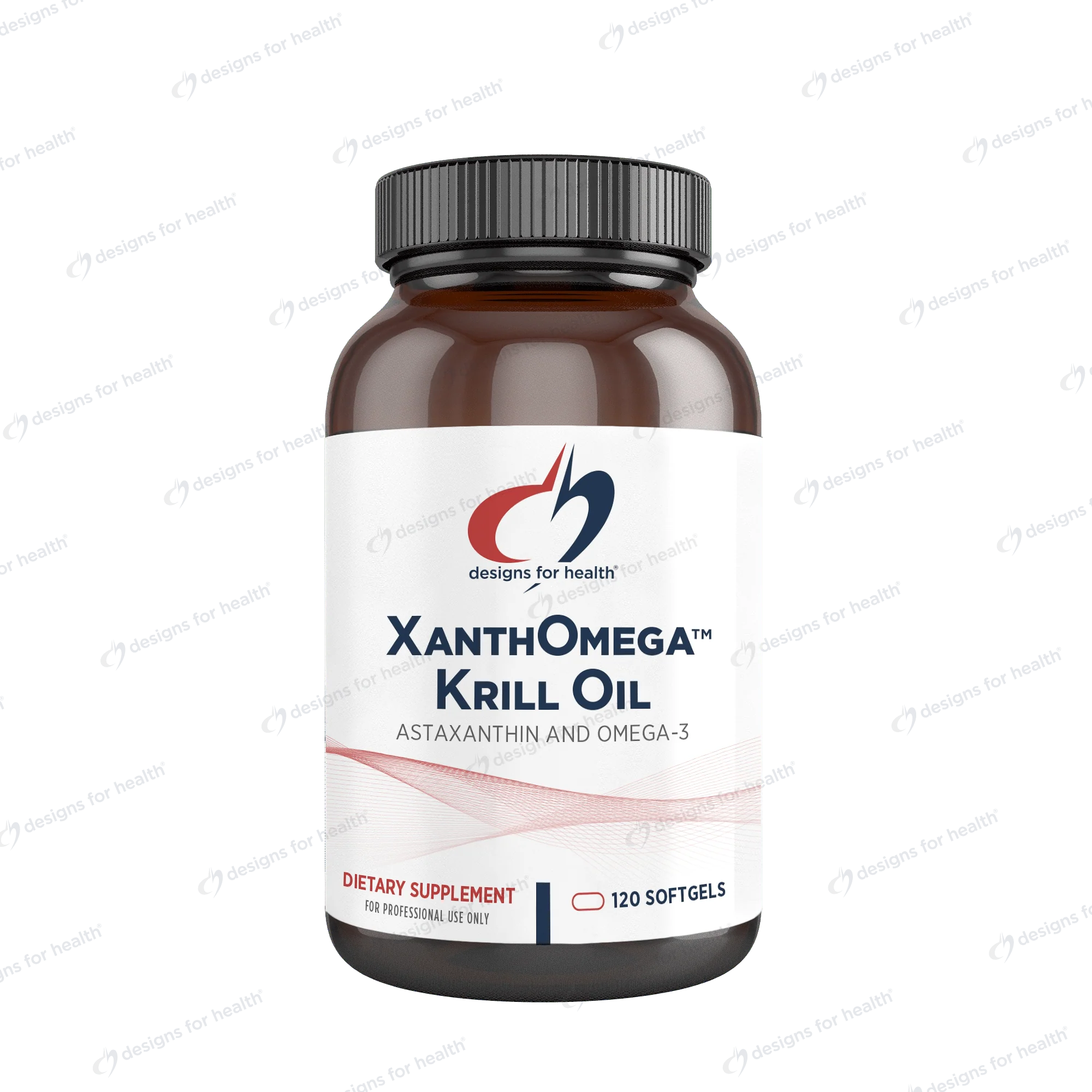
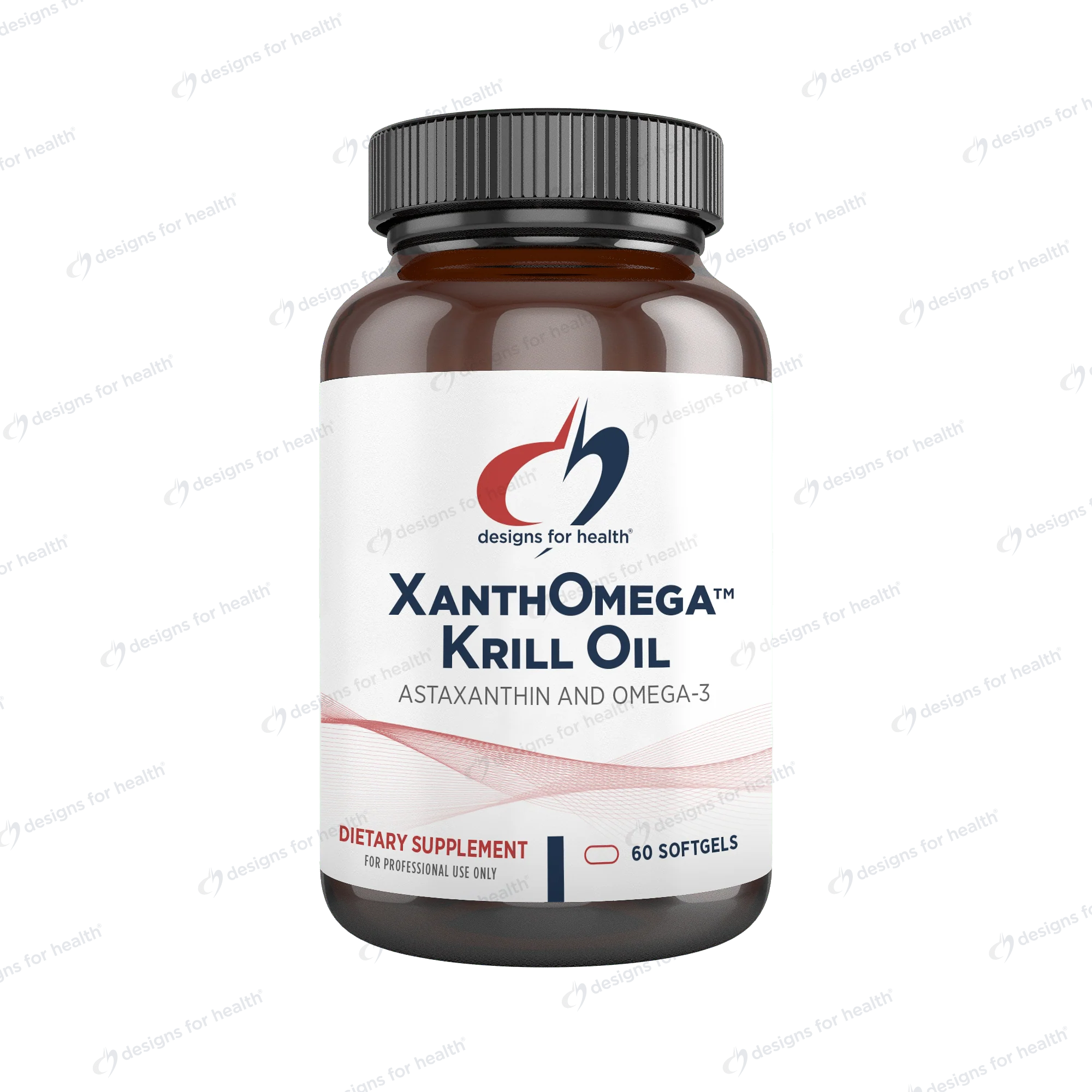
XanthOmega™ Krill Oil
Designs For Health XanthOmega™ Krill Oil
XanthOmega™ Krill Oil provides a generous 12 mg per serving of astaxanthin to help achieve optimum benefits from this potent carotenoid. It would take eight conventional krill softgels to equal the astaxanthin levels in just one XanthOmega™ softgel. XanthOmega™ Krill Oil has a high phospholipid content, standardized to a minimum of 40% phospholipids, mostly as phosphatidylcholine. This is considered to be a virgin krill oil, the purest form available. It contains higher phospholipid bioavailability, which enhances the absorption of astaxanthin.
Many studies suggest that this exceptionally high level of astaxanthin offers a wide array of benefits, which may include powerful antioxidant properties and support for cardiovascular, skin, eye, and gastric health. Astaxanthin also assists the body with a healthy inflammatory response.
Ingredients
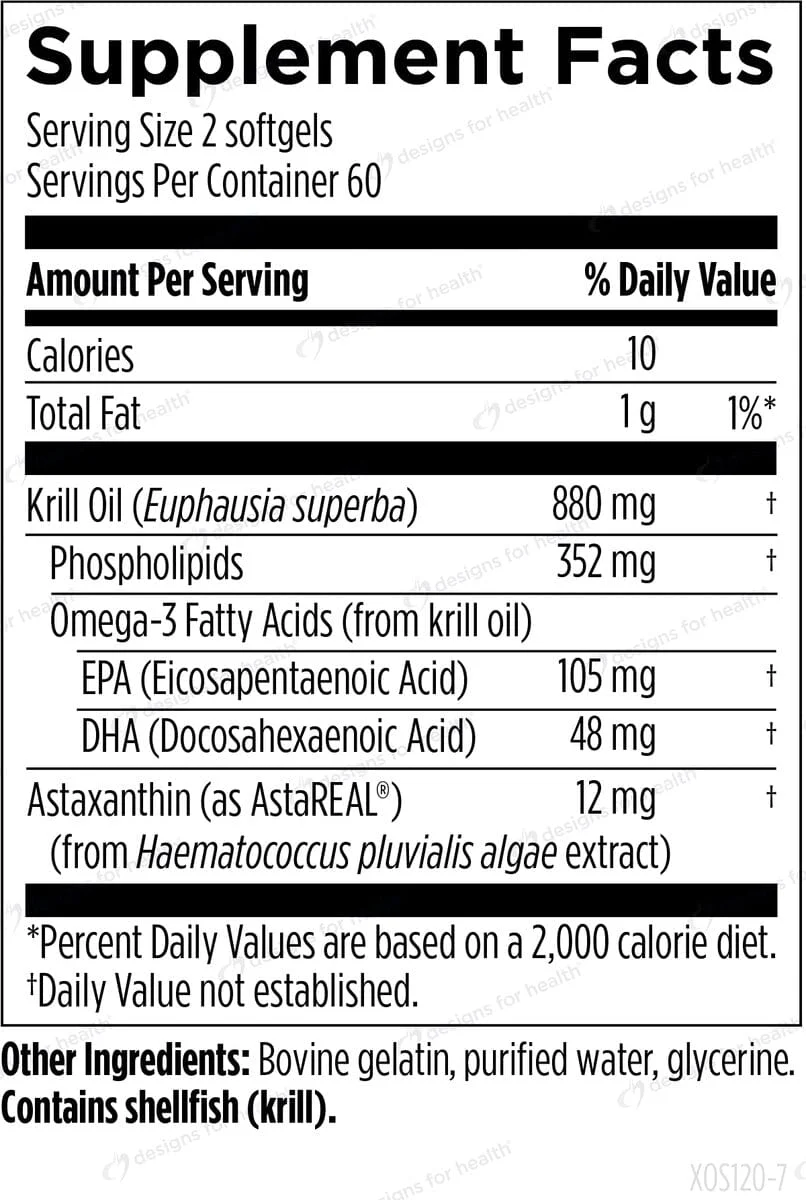
| Serving Size: 2 SoftGels |
Amount/Serving |
| Calories | 10 |
| Total Fat | 1 g |
| Krill Oil (Euphausia superba) | 880 mg |
| Phospholipids | 352 mg |
| Omega-3 Fatty Acids (from Krill Oil) EPA (Eicosapentaenoic Acid) DHA (Docosahexaenoic Acid) |
105 mg 48 mg |
| Astaxanthin (as AstaREAL®) (from Haematococcus pluvialis algae extract) |
12 mg |
Other Ingredients: Bovine gelatin, purified water, glycerine.
Contains shellfish (krill).
Gluten Free. Dairy Free. Soy Free. Non-GMO.
Suggested Use
As a dietary supplement, take 2 softgels per day with meals or as directed by your healthcare practitioner.
Warning: Consult a healthcare professional prior to use if you have a bleeding disorder or if you are taking anti-coagulants or planning to have surgery.
More Info.
XanthOmega™ Krill Oil combines omega‑3 fatty acid‑rich krill oil and astaxanthin to support the body’s antioxidant defense and promote a healthy inflammatory response. Krill oil contains considerable amounts of eicosatetraenoic acid (EPA) and docosahexaenoic acid (DHA). This formula provides a generous 12 mg per serving of astaxanthin to help achieve optimum benefits from this health‑promoting carotenoid. XanthOmega™ provides high bioavailability EPA, DHA, and astaxanthin due to their incorporation in phospholipids, which increases their absorption and utilization.
Astaxanthin is a lipid‑soluble xanthophyll carotenoid with a red‑orange pigment that is ubiquitous in nature, especially in marine environments. As a carotenoid, astaxanthin shares some functions with its family members zeaxanthin, lutein, canthaxanthin, and beta‑cryptoxanthin. It has a keto and hydroxyl group at each end of its molecule with a structure similar to beta‑carotene. However, it has 13 rather than 11 conjugated double polyunsaturated bonds, imparting unique features and making it more bioactive compared to other carotenoids. Its structure also exerts amphiphilic properties.
Astaxanthin supports redox balance. The polar end groups in its molecular structure support the reduction of free radicals and the double bonds in the middle segment support the removal of high‑energy electrons. This allows astaxanthin to both donate an electron and bond with free radicals. It can also remove free radicals from the cell interior via its carbon chain until they can be neutralized by antioxidants outside the cell. This imparts the potential for higher antioxidant activity compared to other carotenoids. Astaxanthin has the potential to integrate with cellular membranes to support cell membrane integrity and antioxidant defenses. Astaxanthin also supports the reduction of lipid oxidation. Astaxanthin promotes the activity of thioredoxin reductase and paraoxonase‑1, antioxidant enzymes involved in lipid metabolism.
In a prospective, randomized, double‑blind study in overweight and obese adults, astaxanthin supplementation significantly reduced the oxidative stress biomarkers malondialdehyde (MDA) and isoprostane, and significantly increased the markers of antioxidant defense superoxide dismutase and total antioxidant capacity after 3 weeks. In another randomized, double‑blind, placebo‑controlled study, patients with type 2 diabetes took an astaxanthin supplement or a placebo for 8 weeks. Those in the astaxanthin group experienced a decrease in plasma levels of MDA and interleukin‑6 (IL‑6), demonstrating the potential for improving antioxidant status and inflammation.
The ability of astaxanthin to reduce reactive oxygen species and support antioxidant defenses may also promote a healthy inflammatory response. Astaxanthin may also block the nuclear factor kappa B (NF‑κB) signaling pathway and inhibit gene expression of inflammatory mediators, such as monocyte chemotactic protein 1, IL‑1 beta, IL‑6, and tumor necrosis factor‑alpha. It may also inhibit cyclooxygenase‑1 enzymes (COX‑1) and nitric oxide to support a healthy inflammatory response. Studies have also found that astaxanthin may promote nuclear factor erythroid‑related factor‑2 (Nrf2) expression and regulates mitogen‑activated protein kinase and phosphoinositide 3‑kinase (PI3K)/protein kinase B (Akt) pathways, which activate anti‑inflammatory actions and support homeostasis. The PI3K/Akt pathway is also involved in metabolism, apoptosis, differentiation, and proliferation. A systematic review and meta‑analysis found that astaxanthin supplementation significantly reduced C‑reactive protein levels.
Krill Oil is sourced from the zooplankton krill or Euppausia superba that live in the clean waters of the Antarctic Ocean and may provide a sustainable omega‑3 fatty acid source compared with fish oil. Krill oil is a good source of the essential omega‑3 fatty acids EPA and DHA, the carotenoid astaxanthin, and the antioxidants vitamin A and vitamin E. Krill oil contains omega‑3 fatty acids mainly in the form of phospholipids rather than triglycerides, which enhances bioavailability. One study found similar effects from krill oil and fish oil supplementation when the participants in the krill oil group consumed just 62.8% of the EPA + DHA dose compared to the fish oil, demonstrating a higher bioavailability. The phospholipid format in krill oil may also affect its utilization in the body. One small, randomized crossover study found postprandial changes in lipids, with the EPA and DHA from krill oil preferentially incorporated into phospholipids, mainly phosphatidylcholine, whereas those from fish oil were mainly incorporated into the neutral lipids diacylglycerols and triacylglycerols.
Cell and animal studies have demonstrated that krill oil supplementation reduces inflammation and oxidative stress and supports immune function and cellular integrity. A pilot study found that krill oil supplementation containing 832 mg of EPA and DHA for 28 days led to beneficial changes to plasma lipids, and an increase in antioxidant capacity and the fatty acid anti‑inflammatory index (a decrease in AA and an increase in omega‑3 fatty acids). A meta‑analysis of randomized controlled trials using krill oil supplementation in doses ranging from 500 mg/day to 4 g/day found that krill oil supplementation reduced low‑density lipoprotein cholesterol and triglyceride levels, and increased HDL cholesterol levels. A meta‑analysis of randomized controlled trials compared the lipid‑modifying effects of fish oil and krill oil. The researchers determined that krill oil was associated with significantly lower triglyceride levels compared to controls and that there was a comparable impact on lipid levels from both krill oil and fish oil.
Original: $118.49
-70%$118.49
$35.55Product Information
Product Information
Shipping & Returns
Shipping & Returns
Description
Designs For Health XanthOmega™ Krill Oil
XanthOmega™ Krill Oil provides a generous 12 mg per serving of astaxanthin to help achieve optimum benefits from this potent carotenoid. It would take eight conventional krill softgels to equal the astaxanthin levels in just one XanthOmega™ softgel. XanthOmega™ Krill Oil has a high phospholipid content, standardized to a minimum of 40% phospholipids, mostly as phosphatidylcholine. This is considered to be a virgin krill oil, the purest form available. It contains higher phospholipid bioavailability, which enhances the absorption of astaxanthin.
Many studies suggest that this exceptionally high level of astaxanthin offers a wide array of benefits, which may include powerful antioxidant properties and support for cardiovascular, skin, eye, and gastric health. Astaxanthin also assists the body with a healthy inflammatory response.
Ingredients
| Serving Size: 2 SoftGels |
Amount/Serving |
| Calories | 10 |
| Total Fat | 1 g |
| Krill Oil (Euphausia superba) | 880 mg |
| Phospholipids | 352 mg |
| Omega-3 Fatty Acids (from Krill Oil) EPA (Eicosapentaenoic Acid) DHA (Docosahexaenoic Acid) |
105 mg 48 mg |
| Astaxanthin (as AstaREAL®) (from Haematococcus pluvialis algae extract) |
12 mg |
Other Ingredients: Bovine gelatin, purified water, glycerine.
Contains shellfish (krill).
Gluten Free. Dairy Free. Soy Free. Non-GMO.
Suggested Use
As a dietary supplement, take 2 softgels per day with meals or as directed by your healthcare practitioner.
Warning: Consult a healthcare professional prior to use if you have a bleeding disorder or if you are taking anti-coagulants or planning to have surgery.
More Info.
XanthOmega™ Krill Oil combines omega‑3 fatty acid‑rich krill oil and astaxanthin to support the body’s antioxidant defense and promote a healthy inflammatory response. Krill oil contains considerable amounts of eicosatetraenoic acid (EPA) and docosahexaenoic acid (DHA). This formula provides a generous 12 mg per serving of astaxanthin to help achieve optimum benefits from this health‑promoting carotenoid. XanthOmega™ provides high bioavailability EPA, DHA, and astaxanthin due to their incorporation in phospholipids, which increases their absorption and utilization.
Astaxanthin is a lipid‑soluble xanthophyll carotenoid with a red‑orange pigment that is ubiquitous in nature, especially in marine environments. As a carotenoid, astaxanthin shares some functions with its family members zeaxanthin, lutein, canthaxanthin, and beta‑cryptoxanthin. It has a keto and hydroxyl group at each end of its molecule with a structure similar to beta‑carotene. However, it has 13 rather than 11 conjugated double polyunsaturated bonds, imparting unique features and making it more bioactive compared to other carotenoids. Its structure also exerts amphiphilic properties.
Astaxanthin supports redox balance. The polar end groups in its molecular structure support the reduction of free radicals and the double bonds in the middle segment support the removal of high‑energy electrons. This allows astaxanthin to both donate an electron and bond with free radicals. It can also remove free radicals from the cell interior via its carbon chain until they can be neutralized by antioxidants outside the cell. This imparts the potential for higher antioxidant activity compared to other carotenoids. Astaxanthin has the potential to integrate with cellular membranes to support cell membrane integrity and antioxidant defenses. Astaxanthin also supports the reduction of lipid oxidation. Astaxanthin promotes the activity of thioredoxin reductase and paraoxonase‑1, antioxidant enzymes involved in lipid metabolism.
In a prospective, randomized, double‑blind study in overweight and obese adults, astaxanthin supplementation significantly reduced the oxidative stress biomarkers malondialdehyde (MDA) and isoprostane, and significantly increased the markers of antioxidant defense superoxide dismutase and total antioxidant capacity after 3 weeks. In another randomized, double‑blind, placebo‑controlled study, patients with type 2 diabetes took an astaxanthin supplement or a placebo for 8 weeks. Those in the astaxanthin group experienced a decrease in plasma levels of MDA and interleukin‑6 (IL‑6), demonstrating the potential for improving antioxidant status and inflammation.
The ability of astaxanthin to reduce reactive oxygen species and support antioxidant defenses may also promote a healthy inflammatory response. Astaxanthin may also block the nuclear factor kappa B (NF‑κB) signaling pathway and inhibit gene expression of inflammatory mediators, such as monocyte chemotactic protein 1, IL‑1 beta, IL‑6, and tumor necrosis factor‑alpha. It may also inhibit cyclooxygenase‑1 enzymes (COX‑1) and nitric oxide to support a healthy inflammatory response. Studies have also found that astaxanthin may promote nuclear factor erythroid‑related factor‑2 (Nrf2) expression and regulates mitogen‑activated protein kinase and phosphoinositide 3‑kinase (PI3K)/protein kinase B (Akt) pathways, which activate anti‑inflammatory actions and support homeostasis. The PI3K/Akt pathway is also involved in metabolism, apoptosis, differentiation, and proliferation. A systematic review and meta‑analysis found that astaxanthin supplementation significantly reduced C‑reactive protein levels.
Krill Oil is sourced from the zooplankton krill or Euppausia superba that live in the clean waters of the Antarctic Ocean and may provide a sustainable omega‑3 fatty acid source compared with fish oil. Krill oil is a good source of the essential omega‑3 fatty acids EPA and DHA, the carotenoid astaxanthin, and the antioxidants vitamin A and vitamin E. Krill oil contains omega‑3 fatty acids mainly in the form of phospholipids rather than triglycerides, which enhances bioavailability. One study found similar effects from krill oil and fish oil supplementation when the participants in the krill oil group consumed just 62.8% of the EPA + DHA dose compared to the fish oil, demonstrating a higher bioavailability. The phospholipid format in krill oil may also affect its utilization in the body. One small, randomized crossover study found postprandial changes in lipids, with the EPA and DHA from krill oil preferentially incorporated into phospholipids, mainly phosphatidylcholine, whereas those from fish oil were mainly incorporated into the neutral lipids diacylglycerols and triacylglycerols.
Cell and animal studies have demonstrated that krill oil supplementation reduces inflammation and oxidative stress and supports immune function and cellular integrity. A pilot study found that krill oil supplementation containing 832 mg of EPA and DHA for 28 days led to beneficial changes to plasma lipids, and an increase in antioxidant capacity and the fatty acid anti‑inflammatory index (a decrease in AA and an increase in omega‑3 fatty acids). A meta‑analysis of randomized controlled trials using krill oil supplementation in doses ranging from 500 mg/day to 4 g/day found that krill oil supplementation reduced low‑density lipoprotein cholesterol and triglyceride levels, and increased HDL cholesterol levels. A meta‑analysis of randomized controlled trials compared the lipid‑modifying effects of fish oil and krill oil. The researchers determined that krill oil was associated with significantly lower triglyceride levels compared to controls and that there was a comparable impact on lipid levels from both krill oil and fish oil.