Zinc + Copper
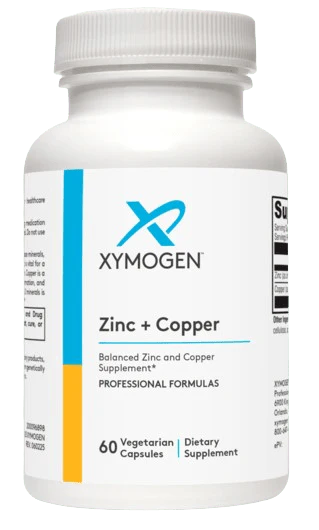
Xymogen Zinc + Copper
Balanced Zinc and Copper Supplement
Zinc + Copper provides highly absorbable forms of these essential trace minerals, which are crucial for the activity of numerous enzyme systems. Zinc is vital for a healthy immune response and plays a key role in reproductive health. Copper is a necessary cofactor for cellular energy metabolism, red blood cell formation, and catalyzing oxidation-reduction reactions. A balanced intake of these 2 minerals is important, as copper depletion can occur with increased zinc intake.
Key Benefits and Features:
- Supports Zinc and Copper Repletion
- Promotes Immune Health
- Provides Zinc, An Essential Cofactor in Reproductive Health
- May Support Antioxidant Activity
- Supports Healthy Copper Levels
Ingredients
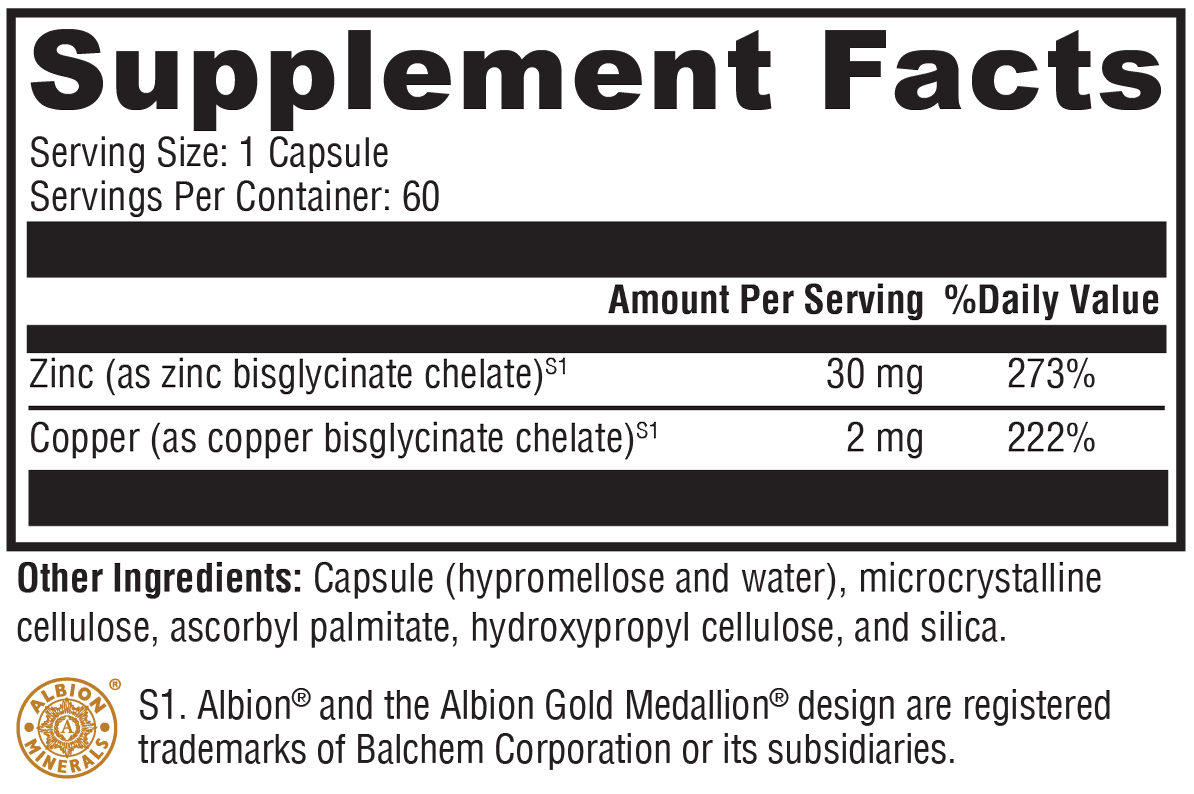
| Serving Size: 1 Vegetarian Capsule | Amount/Serving |
| Zinc (as zinc bisglycinate chelate) | 30 mg |
| Copper (as copper bisglycinate chelate) | 2 mg |
Other Ingredients: Capsule (hypromellose and water), microcrystalline cellulose, ascorbyl palmitate, hydroxypropyl cellulose, and silica.
Does Not Contain: Dairy, egg, gluten, shellfish, soy, tree nuts, wheat, peanuts, fish, yeast, GMOs, sesame, or animal products.
Suggested Use
Take 1 capsule daily, or use as directed by your healthcare professional.
Warning: Consult your healthcare professional before use. Individuals taking medication should discuss potential interactions with their healthcare professional. Do not use if the tamper seal is damaged.
More Info.
Zinc + Copper provides a balance of high-quality, amino acid–chelated forms of zinc and copper to support the repletion of these important yet antagonistic trace minerals. Both zinc and copper act as coenzymes in various catalytic, structural, and regulatory functions and may support antioxidant activity.
Zinc
As an essential mineral, zinc has many important functions. It helps maintain the structural integrity of cell membranes in addition to protecting them from oxidative damage. Hundreds of enzymes depend on zinc for catalyzing normal reactions in cellular metabolism. Zinc plays a key role in the function of immune cells, is an essential cofactor in reproductive health, and is necessary for protein and DNA synthesis, as well as growth, development, and wound healing.
Good dietary sources of zinc include meat, seafood, eggs, and dairy. Zinc is also found in plant-based foods such as beans, nuts, and whole grains; however, in these foods, zinc may be less bioavailable than in animal foods because phytates in plants can impair zinc absorption. Zinc can also be obtained from fortified foods, such as certain breakfast cereals, or from dietary supplements. Most Americans consume adequate zinc. However, certain individuals, such as older adults, vegans, and those with GI disorders or compromised immune health, may be at risk for deficiency.
Immune Health
From its role in maintaining skin barrier integrity to gene regulation within lymphocytes, zinc is involved in many immunologic mechanisms. The role of zinc in supporting immune health is emphasized in the broad evidence base that illustrates its essential role in the normal development and functioning of key tissues, cells, and immune defense mechanisms.
In a randomized, double-blind trial in nursing home residents (N = 53) with low serum zinc levels, subjects were given 30 mg of zinc per day for 3 months to assess the effect on serum levels and immune response. When compared with the placebo group, who were given 5 mg of zinc per day, the difference in the mean change in serum zinc was significantly higher in the test group. Additionally, the 30 mg/d dose of zinc resulted in an enhancement of T-cell-mediated function attributed to an increase in the number of T cells.
In a study of healthy adults (N = 147) aged 55 to 70, researchers examined the relationship between zinc status and immune markers with 15 or 30 mg/d of zinc for 6 months. Zinc supplementation was beneficial in maintaining the ratio of T-helper to cytotoxic lymphocyte responses, a ratio that tends to decline with age, suggesting enhanced adaptive immunity and the potential to respond to exogenous stimuli more readily. It should be noted that in individuals with adequate zinc status at baseline, 30 mg/d did not result in enhanced immune status, and copper status was not negatively impacted.
Antioxidant Activity
Although zinc is not directly involved in scavenging free radicals, it contributes to antioxidant defense through its role: as a cofactor for the antioxidant enzyme superoxide dismutase (SOD), in helping to stabilize cell membranes caused by oxidative stress, of inhibiting binding sites of pro-oxidants, and through stimulation of metallothioneins, the stress-response proteins that bind free radicals and help maintain metal ion homeostasis.
Reproductive Health
Zinc is an important cofactor in many processes involved in both male and female reproductive health. In males, it is essential for spermatogenesis, the structural integrity of sperm, and their motility. In females, zinc contributes to oocyte maturation and ovulatory function and is necessary for the fertilization process and embryonic development. Data extrapolated from meta-analyses indicate that zinc supplementation can significantly enhance the percentage of normal sperm, sperm motility, and semen volume. There is also evidence to suggest that zinc supplements may help support male fertility and may improve fertility treatment outcomes, but further research is needed to confirm these potential benefits.
Copper
Like zinc, copper is an essential mineral and cofactor for enzymes that are vital to many physiological processes. A key role of copper is in catalyzing oxidation-reduction (REDOX) reactions, which are essential for several immune functions. Enzymes that require copper are known as cuproenzymes and are involved in functions such as cellular energy production, brain development and function, connective tissue synthesis, regulation of cytokines, immune cell activity, and metabolism of iron.
Copper is found in a wide variety of foods; rich sources include shellfish, organ meat, nuts and seeds, whole grains, and unsweetened chocolate. Western diets typically meet or exceed the required amounts of copper; however, deficient levels may occur in individuals with genetic mutations, conditions such as Celiac disease, those who have undergone gastric bypass surgery, or those who take medications that impair absorption. Additionally, copper deficiency can impact blood lipid levels, a risk factor impacting heart health. Copper deficiency can also result from long-term ingestion of high amounts of zinc, which can impair copper absorption by increasing the protein metallothionein that binds copper and limits its bioavailability.
Antioxidant and Immune Cell Activity
Copper contributes to antioxidant activity primarily by acting as a cofactor for SOD, the essential enzyme that enables redox reactions that help neutralize superoxide radicals and the damage they cause. It is also a cofactor for enzymes such as cytochrome C oxidase and ceruloplasmin, which help manage oxidative processes and prevent iron-induced oxidative damage. Copper status is tightly controlled; however, specific physiological or pathological conditions can impair the body’s buffering capacity or lead to unbound copper, resulting in pro-oxidant activity.
In a randomized trial in healthy middle-aged adults (N = 35) with moderately elevated cholesterol, subjects were given 2 mg of copper per day for 8 weeks, with blood sample analysis taken pre- and post-study. Copper supplements were found to increase the activity of 2 enzymes that require copper, SOD and ceruloplasmin. Although some cardiovascular benefits were observed, the relevance of these changes to overall cardiovascular health would require further study.
In addition to antioxidant activity, copper also plays a secondary role in maintaining immune health by influencing the function and development of immune markers, including T cells, B cells, and macrophages.
Zinc and Copper Balance
Because zinc and copper interact biologically and can influence each other’s absorption, distribution, and function, their balance is crucial to maintaining optimal health. An imbalance of zinc and copper may compromise cellular defense against oxidative stress because both minerals serve as essential cofactors for the antioxidant enzymes Cu/Zn-superoxide dismutase. Although there are compensatory mechanisms that stabilize serum concentrations within healthy ranges, an increased ratio of copper to zinc is indicative of a reduced ability to maintain homeostasis. It may be useful as a biomarker for oxidative or inflammatory stress. Additionally, the natural aging process, some surgical procedures, and several chronic conditions are associated with an elevated ratio. Maintaining zinc and copper balance may be critical for preserving trace element homeostasis and preventing nutrient imbalances that can disrupt many physiological functions.
In studies that reference the health effects of the copper-to-zinc ratio, it is the serum ratio that is being referenced and not the dietary requirements. Although a serum ratio within the normal range (.7-1.0) does not directly translate to an optimal supplemental ratio, dietary supplements typically contain a zinc-tocopper ratio of between 8:1 and 15:1 to maintain balance. The higher end of this range may be recommended to provide adequate zinc and copper levels necessary for certain conditions and clinical applications.
Zinc + Copper delivers a balanced ratio of zinc to copper in highly bioavailable chelated forms to support the repletion of both minerals and to offset the potential for copper depletion that may occur with zinc supplementation.
Product Information
Product Information
Shipping & Returns
Shipping & Returns
Description
Xymogen Zinc + Copper
Balanced Zinc and Copper Supplement
Zinc + Copper provides highly absorbable forms of these essential trace minerals, which are crucial for the activity of numerous enzyme systems. Zinc is vital for a healthy immune response and plays a key role in reproductive health. Copper is a necessary cofactor for cellular energy metabolism, red blood cell formation, and catalyzing oxidation-reduction reactions. A balanced intake of these 2 minerals is important, as copper depletion can occur with increased zinc intake.
Key Benefits and Features:
- Supports Zinc and Copper Repletion
- Promotes Immune Health
- Provides Zinc, An Essential Cofactor in Reproductive Health
- May Support Antioxidant Activity
- Supports Healthy Copper Levels
Ingredients
| Serving Size: 1 Vegetarian Capsule | Amount/Serving |
| Zinc (as zinc bisglycinate chelate) | 30 mg |
| Copper (as copper bisglycinate chelate) | 2 mg |
Other Ingredients: Capsule (hypromellose and water), microcrystalline cellulose, ascorbyl palmitate, hydroxypropyl cellulose, and silica.
Does Not Contain: Dairy, egg, gluten, shellfish, soy, tree nuts, wheat, peanuts, fish, yeast, GMOs, sesame, or animal products.
Suggested Use
Take 1 capsule daily, or use as directed by your healthcare professional.
Warning: Consult your healthcare professional before use. Individuals taking medication should discuss potential interactions with their healthcare professional. Do not use if the tamper seal is damaged.
More Info.
Zinc + Copper provides a balance of high-quality, amino acid–chelated forms of zinc and copper to support the repletion of these important yet antagonistic trace minerals. Both zinc and copper act as coenzymes in various catalytic, structural, and regulatory functions and may support antioxidant activity.
Zinc
As an essential mineral, zinc has many important functions. It helps maintain the structural integrity of cell membranes in addition to protecting them from oxidative damage. Hundreds of enzymes depend on zinc for catalyzing normal reactions in cellular metabolism. Zinc plays a key role in the function of immune cells, is an essential cofactor in reproductive health, and is necessary for protein and DNA synthesis, as well as growth, development, and wound healing.
Good dietary sources of zinc include meat, seafood, eggs, and dairy. Zinc is also found in plant-based foods such as beans, nuts, and whole grains; however, in these foods, zinc may be less bioavailable than in animal foods because phytates in plants can impair zinc absorption. Zinc can also be obtained from fortified foods, such as certain breakfast cereals, or from dietary supplements. Most Americans consume adequate zinc. However, certain individuals, such as older adults, vegans, and those with GI disorders or compromised immune health, may be at risk for deficiency.
Immune Health
From its role in maintaining skin barrier integrity to gene regulation within lymphocytes, zinc is involved in many immunologic mechanisms. The role of zinc in supporting immune health is emphasized in the broad evidence base that illustrates its essential role in the normal development and functioning of key tissues, cells, and immune defense mechanisms.
In a randomized, double-blind trial in nursing home residents (N = 53) with low serum zinc levels, subjects were given 30 mg of zinc per day for 3 months to assess the effect on serum levels and immune response. When compared with the placebo group, who were given 5 mg of zinc per day, the difference in the mean change in serum zinc was significantly higher in the test group. Additionally, the 30 mg/d dose of zinc resulted in an enhancement of T-cell-mediated function attributed to an increase in the number of T cells.
In a study of healthy adults (N = 147) aged 55 to 70, researchers examined the relationship between zinc status and immune markers with 15 or 30 mg/d of zinc for 6 months. Zinc supplementation was beneficial in maintaining the ratio of T-helper to cytotoxic lymphocyte responses, a ratio that tends to decline with age, suggesting enhanced adaptive immunity and the potential to respond to exogenous stimuli more readily. It should be noted that in individuals with adequate zinc status at baseline, 30 mg/d did not result in enhanced immune status, and copper status was not negatively impacted.
Antioxidant Activity
Although zinc is not directly involved in scavenging free radicals, it contributes to antioxidant defense through its role: as a cofactor for the antioxidant enzyme superoxide dismutase (SOD), in helping to stabilize cell membranes caused by oxidative stress, of inhibiting binding sites of pro-oxidants, and through stimulation of metallothioneins, the stress-response proteins that bind free radicals and help maintain metal ion homeostasis.
Reproductive Health
Zinc is an important cofactor in many processes involved in both male and female reproductive health. In males, it is essential for spermatogenesis, the structural integrity of sperm, and their motility. In females, zinc contributes to oocyte maturation and ovulatory function and is necessary for the fertilization process and embryonic development. Data extrapolated from meta-analyses indicate that zinc supplementation can significantly enhance the percentage of normal sperm, sperm motility, and semen volume. There is also evidence to suggest that zinc supplements may help support male fertility and may improve fertility treatment outcomes, but further research is needed to confirm these potential benefits.
Copper
Like zinc, copper is an essential mineral and cofactor for enzymes that are vital to many physiological processes. A key role of copper is in catalyzing oxidation-reduction (REDOX) reactions, which are essential for several immune functions. Enzymes that require copper are known as cuproenzymes and are involved in functions such as cellular energy production, brain development and function, connective tissue synthesis, regulation of cytokines, immune cell activity, and metabolism of iron.
Copper is found in a wide variety of foods; rich sources include shellfish, organ meat, nuts and seeds, whole grains, and unsweetened chocolate. Western diets typically meet or exceed the required amounts of copper; however, deficient levels may occur in individuals with genetic mutations, conditions such as Celiac disease, those who have undergone gastric bypass surgery, or those who take medications that impair absorption. Additionally, copper deficiency can impact blood lipid levels, a risk factor impacting heart health. Copper deficiency can also result from long-term ingestion of high amounts of zinc, which can impair copper absorption by increasing the protein metallothionein that binds copper and limits its bioavailability.
Antioxidant and Immune Cell Activity
Copper contributes to antioxidant activity primarily by acting as a cofactor for SOD, the essential enzyme that enables redox reactions that help neutralize superoxide radicals and the damage they cause. It is also a cofactor for enzymes such as cytochrome C oxidase and ceruloplasmin, which help manage oxidative processes and prevent iron-induced oxidative damage. Copper status is tightly controlled; however, specific physiological or pathological conditions can impair the body’s buffering capacity or lead to unbound copper, resulting in pro-oxidant activity.
In a randomized trial in healthy middle-aged adults (N = 35) with moderately elevated cholesterol, subjects were given 2 mg of copper per day for 8 weeks, with blood sample analysis taken pre- and post-study. Copper supplements were found to increase the activity of 2 enzymes that require copper, SOD and ceruloplasmin. Although some cardiovascular benefits were observed, the relevance of these changes to overall cardiovascular health would require further study.
In addition to antioxidant activity, copper also plays a secondary role in maintaining immune health by influencing the function and development of immune markers, including T cells, B cells, and macrophages.
Zinc and Copper Balance
Because zinc and copper interact biologically and can influence each other’s absorption, distribution, and function, their balance is crucial to maintaining optimal health. An imbalance of zinc and copper may compromise cellular defense against oxidative stress because both minerals serve as essential cofactors for the antioxidant enzymes Cu/Zn-superoxide dismutase. Although there are compensatory mechanisms that stabilize serum concentrations within healthy ranges, an increased ratio of copper to zinc is indicative of a reduced ability to maintain homeostasis. It may be useful as a biomarker for oxidative or inflammatory stress. Additionally, the natural aging process, some surgical procedures, and several chronic conditions are associated with an elevated ratio. Maintaining zinc and copper balance may be critical for preserving trace element homeostasis and preventing nutrient imbalances that can disrupt many physiological functions.
In studies that reference the health effects of the copper-to-zinc ratio, it is the serum ratio that is being referenced and not the dietary requirements. Although a serum ratio within the normal range (.7-1.0) does not directly translate to an optimal supplemental ratio, dietary supplements typically contain a zinc-tocopper ratio of between 8:1 and 15:1 to maintain balance. The higher end of this range may be recommended to provide adequate zinc and copper levels necessary for certain conditions and clinical applications.
Zinc + Copper delivers a balanced ratio of zinc to copper in highly bioavailable chelated forms to support the repletion of both minerals and to offset the potential for copper depletion that may occur with zinc supplementation.